Clear Sky Science · en
Resetting of quartz and feldspar luminescence signals under water
Why sand that glows can tell coastal stories
Grains of sand quietly record their journey through rivers, estuaries, and coastal seas by storing tiny amounts of energy from natural radiation. Sunlight "resets" this built-up glow, so scientists can use it like a clock to date sediment layers or trace where sand came from. But under water, light is quickly dimmed by depth and murky water, and until now it has been hard to measure directly how fast this glow is erased in real coastal settings. This study reports the first detailed field experiment that tracks how the glow in individual sand grains fades with depth in a tidal channel, linking that fading to changing underwater light and cloudiness of the water.
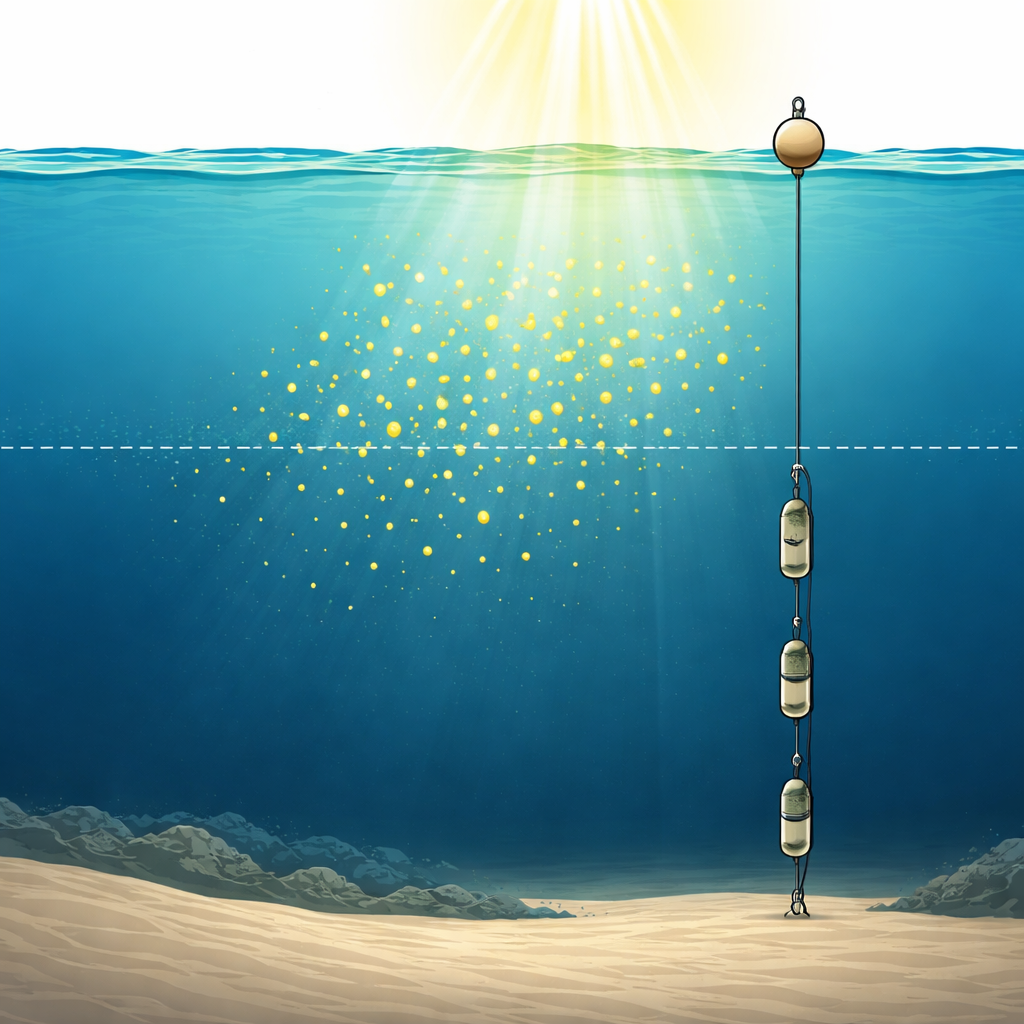
Following grains in a busy tidal channel
The researchers worked in a tidal inlet in the Dutch Wadden Sea, a shallow coastal area where water depth and muddiness change over the course of the tide. They packed purified grains of quartz and feldspar, two common minerals in sand, into thin transparent pouches and fixed them along a vertical line held between the seabed and a surface buoy. From dawn to dusk, these grains were exposed to natural daylight at different depths, while instruments continuously logged water depth, light levels and colors, and the amount of sediment clouding the water. At the end of the day, the team recovered the samples and measured the remaining glow in thousands of individual grains using a highly sensitive camera-based system.
Where light can and cannot reset the hidden clock
The measurements revealed a clear boundary in the water column: in the upper few meters, the luminescence signals in quartz were almost completely reset in a single day, while below roughly five meters there was essentially no change. Feldspar signals, which are generally harder to reset, showed a similar but shallower pattern, with strong fading confined mostly to the upper meter. This sharp change with depth, called a bleaching front, mirrors patterns seen in rocks exposed at the land surface. It shows that under natural tidal conditions, only sand grains that spend time close to the surface receive enough light to fully erase their stored signal, while those traveling deeper keep much of their luminescence "memory."
How murky water reshapes underwater daylight
To explain these patterns, the team analyzed the underwater light spectrum throughout the day. They found that blue and green light, which is most effective at resetting the luminescence signals, was strongly scattered by suspended mud and fine sand, especially during ebb tide when turbid water was flushed out of the basin. At the same time, red and near‑infrared light was absorbed by the water itself. As a result, the useful light for resetting grains dropped off quickly with depth, and the depth of the bleaching front shifted depending on how cloudy the water was. By combining the measured spectra with known light sensitivities of quartz and feldspar, the researchers could calculate how long it should take to halve the signal at each depth; those predictions agreed strikingly well with the observed bleaching fronts.
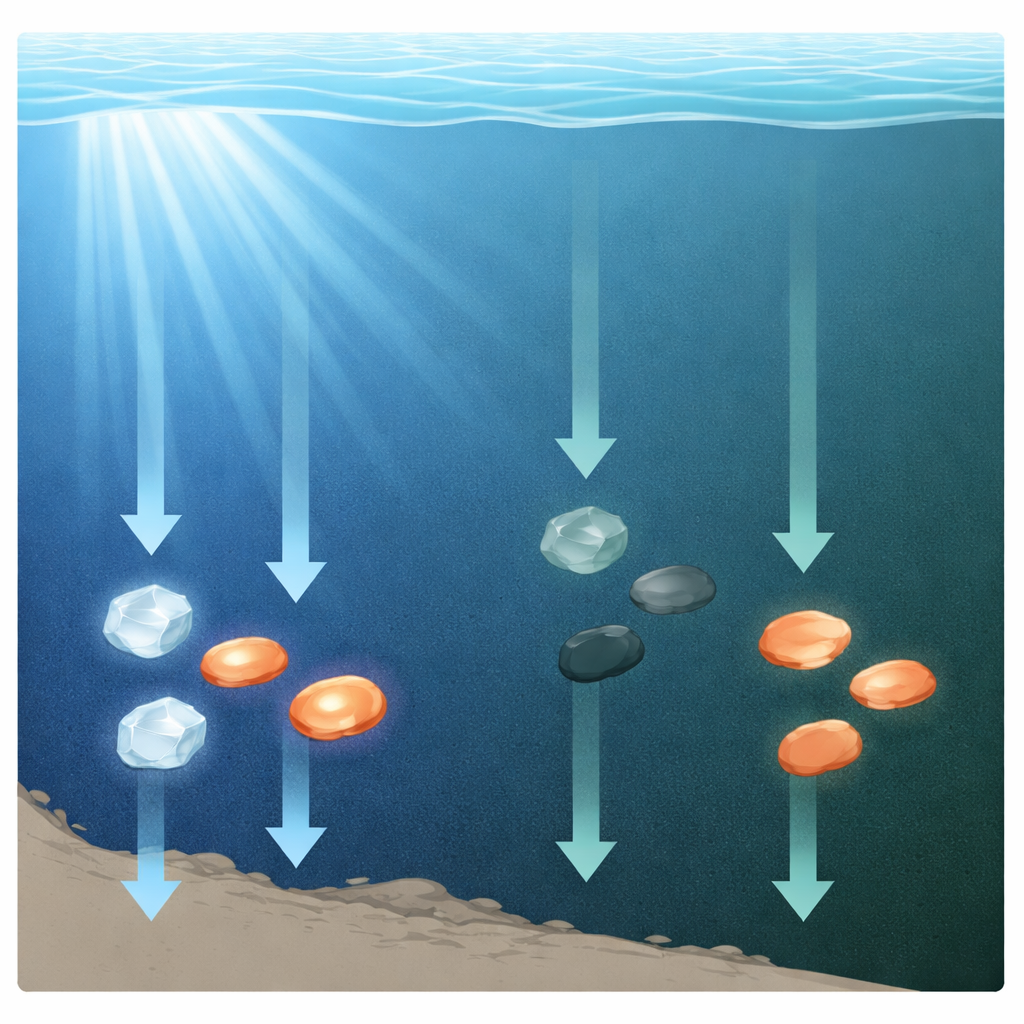
Using glowing sand to track moving coastlines
The results have important consequences for how scientists use luminescence to date underwater sediments and to trace where coastal sand has traveled. Successful dating requires that at least some grains in a sample have been fully reset before burial, which, in these settings, mainly happens in shallow, clearer waters outside the deepest tidal channels or during rare energetic events that lift sand close to the surface. On the other hand, the incomplete resetting seen at depth turns out to be a useful feature for tracking sediment pathways: different luminescence signals in the same grain fade at different rates, preserving a fingerprint of how long and how shallow the grain has traveled. By tying this fingerprint directly to measured light and turbidity, the study provides a new empirical foundation for models that aim to predict sediment movement, helping coastal scientists and managers better understand how shorelines respond to storms, sea-level rise, and human interventions.
Citation: de Boer, AM., Pannozzo, N., Pearson, S.G. et al. Resetting of quartz and feldspar luminescence signals under water. Sci Rep 16, 13735 (2026). https://doi.org/10.1038/s41598-026-44245-6
Keywords: luminescence dating, coastal sediment transport, underwater light, quartz and feldspar, tidal inlets