Clear Sky Science · en
Concurrent optimization of fracture toughness, thermal conductivity, and tribological behavior in Cf/Si3N4 composites via phase driven selection
Stronger, Safer Brakes for Extreme Conditions
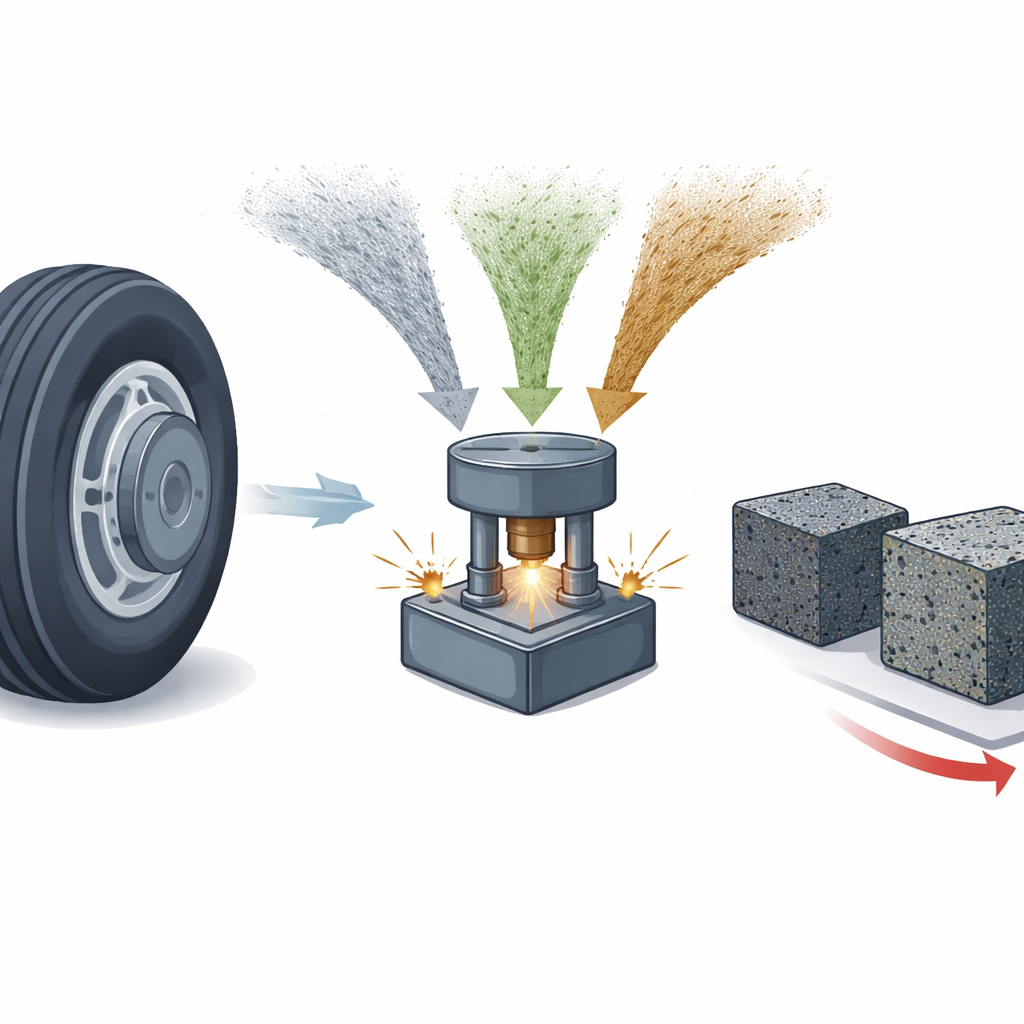
Modern aircraft and racing cars rely on brakes that must survive searing heat, huge forces, and countless stop–go cycles without cracking or wearing out too quickly. This study explores a new kind of brake material made from carbon fibers embedded in a ceramic called silicon nitride. By carefully choosing the starting form of the ceramic powder and how it is heated and pressed, the researchers show they can tune how tough the material is, how well it carries heat away, and how smoothly it grips—all at the same time.
Why Carbon and Ceramic Make a Powerful Team
Traditional metal brake discs can overheat and warp under extreme use, while today’s high‑end carbon–ceramic discs, usually based on silicon carbide, are costly and still prone to cracking and thermal shock. The team focused instead on silicon nitride, a ceramic already known for strength and heat resistance, and reinforced it with carbon fibers that act like tiny rebar. These fibers help stop cracks from racing through the material and can form a thin lubricating film at the surface during braking. The twist in this work is that silicon nitride itself can take on different internal forms—called phases—labeled alpha, beta, and gamma. The authors asked a simple but powerful question: if you start with different phases of the same ceramic under exactly the same high‑temperature pressing process, can you steer the material toward a “sweet spot” where strength, heat handling, and wear all work together?
Shaping the Material from the Inside Out
To find out, the researchers made three versions of the composite, each using carbon fibers plus one of the three silicon nitride phases, along with small amounts of aluminum and yttrium oxides that help the material densify. They mixed the powders and short carbon fibers in liquid, dried them, and then used a rapid high‑current pressing method known as spark plasma sintering to fuse the ingredients into solid discs. X‑ray measurements and electron microscope images revealed that, while all three recipes contained the same elements, their internal structures after sintering were very different. The composite that began with the alpha phase ended up mostly filled with long, needle‑like grains of the beta phase that locked together into an interwoven network around the carbon fibers. In contrast, the beta‑based composite remained less dense and the gamma‑based one grew very hard but also formed more pores and brittle secondary phases.
Balancing Toughness, Heat Flow, and Grip
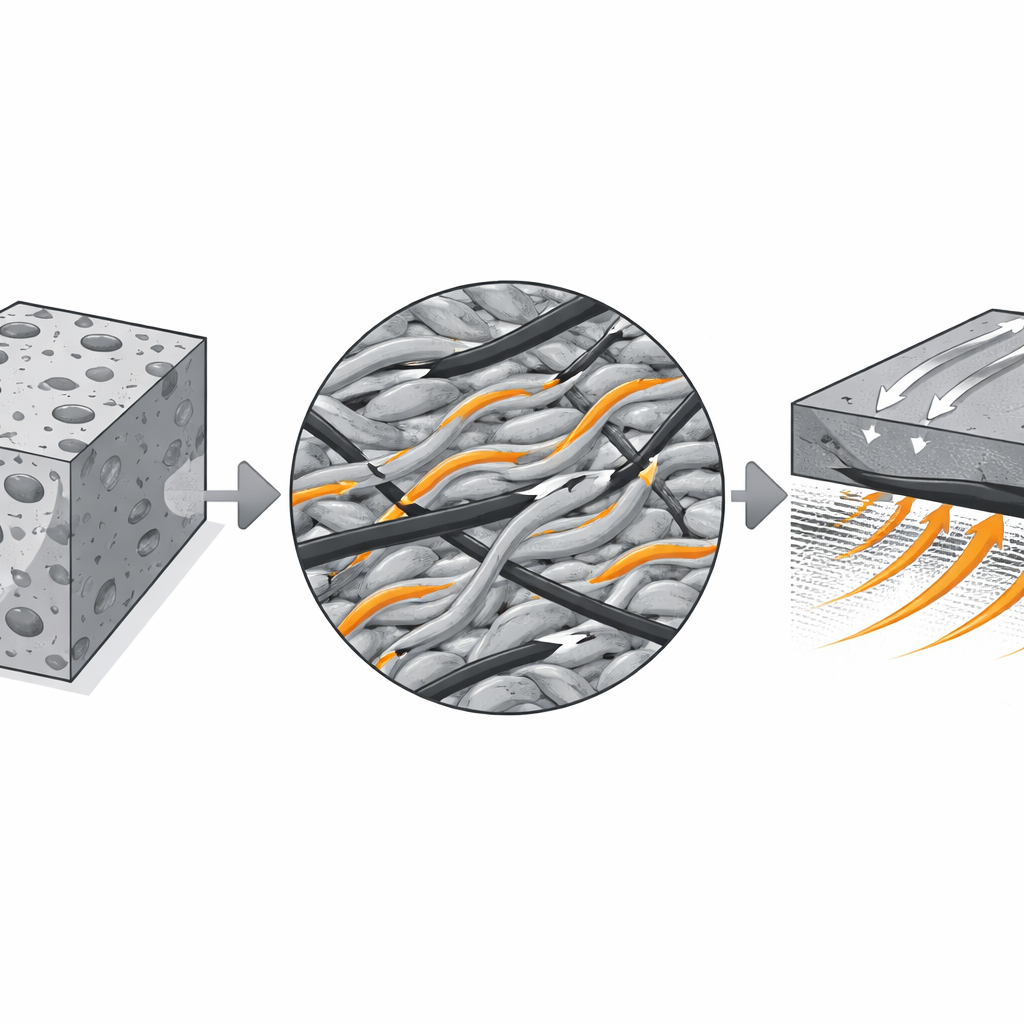
The differences inside the material translated directly into performance. The alpha‑based composite reached the highest density, meaning fewer hidden pores where cracks can start, and showed the best combination of strength and resistance to cracking. When the team pressed a sharp diamond tip into the surface, the resulting cracks twisted and branched as they tried to cut through the forest of elongated grains and carbon fibers, a sign that the material was absorbing energy rather than shattering. This sample also carried heat more effectively than the others, an important trait for braking: it was conductive enough to spread frictional heat through the disc, but not so conductive that it would instantly cool the contact area and reduce braking effectiveness. Meanwhile, wear tests that slid an alumina ball over the surface under high contact stress showed that the alpha‑derived composite had a stable friction level close to that used in aircraft brakes and experienced the lowest wear. Microscopy of the worn tracks revealed a smooth protective film rich in smeared carbon, along with fibers spanning tiny cracks like bridges, both of which helped maintain consistent grip.
What Makes the Best Version Stand Out
Although the gamma‑based composite was the hardest and the beta‑based one had similar ingredients, neither achieved the same all‑around performance as the alpha‑based material. Extra glassy and nitride‑oxide phases in the gamma sample, combined with higher porosity, made it more brittle under wear, leading to deeper grooves and more material loss. The beta‑based composite lacked both the tightly interlocked needle‑like grain structure and the uniform fiber distribution needed to blunt cracks and form a robust surface film. Quantitative image analysis confirmed that only the alpha starting powder transformed into a substantial fraction of long grains with high aspect ratio, which forced cracks to zigzag, bridged them from behind, and worked in tandem with fiber pull‑out to toughen the material at multiple scales.
From Laboratory Discs to Real‑World Brakes
In everyday terms, this work shows that choosing the right “starting flavor” of the same ceramic lets engineers steer how a composite behaves, without changing its overall recipe. Beginning with alpha‑phase silicon nitride and processing it under carefully controlled conditions leads to a brake‑like material that is dense, crack‑resistant, and able to handle heat while keeping a steady grip and low wear. Compared with many current carbon–silicon‑carbide systems, it offers a more balanced package of toughness, thermal management, and friction stability. That makes these carbon fiber–reinforced silicon nitride composites promising candidates for future aircraft and other high‑demand braking systems, where safety depends on parts that keep working reliably under the most punishing conditions.
Citation: Hoseinzadeh, S., Estarki, M.R.L., Ghasemi, A. et al. Concurrent optimization of fracture toughness, thermal conductivity, and tribological behavior in Cf/Si3N4 composites via phase driven selection. Sci Rep 16, 10739 (2026). https://doi.org/10.1038/s41598-026-44244-7
Keywords: aerospace brakes, silicon nitride composites, carbon fiber ceramics, high temperature materials, tribology