Clear Sky Science · en
Development and validation of a cardiometabolic multimorbidity prediction model in middle-aged and older adults
Why this matters for everyday health
As people grow older, many do not just develop one chronic illness, but several at the same time—high blood pressure, high blood sugar, and unhealthy blood fats often travel together. This cluster, known as cardiometabolic multimorbidity, sharply raises the chances of heart attacks, strokes, disability, and soaring medical bills. The study summarized here asks a practical question with direct relevance for families and doctors: can we use simple, routine health information to spot, years in advance, who is most likely to slide into this high‑risk state, so that care and prevention can start earlier?
A growing tangle of heart and metabolism problems
Across the globe, longer life spans, changing diets, and more sedentary routines have fueled a surge in conditions such as hypertension, diabetes, and abnormal cholesterol. When two or more of these strike the same person, doctors call it cardiometabolic multimorbidity. Compared with facing just one of these illnesses, people with the combination lose more years of life, feel worse day to day, and spend more on medical care. In China, where the population is aging rapidly, this has become a major strain on families and the healthcare system. Yet most research and screening tools still focus on single diseases, missing the bigger picture of how these problems cluster together.
Turning big survey data into a five‑year risk picture
To tackle this gap, the researchers tapped into CHARLS, a large, nationally representative study that has followed middle‑aged and older Chinese adults for years. They started with more than 21,000 participants surveyed in 2015 and, after filtering out people who already had multiple cardiometabolic diseases or lacked key lab tests, ended up with 5,388 adults aged 45 and older. None had cardiometabolic multimorbidity at the start. The team then watched who went on to develop it over the next five years, up to 2020; about one in five did. Using 31 possible health and lifestyle measures—from blood pressure and blood tests to sleep, smoking, and pain—they set out to build models that could predict each person’s five‑year risk. 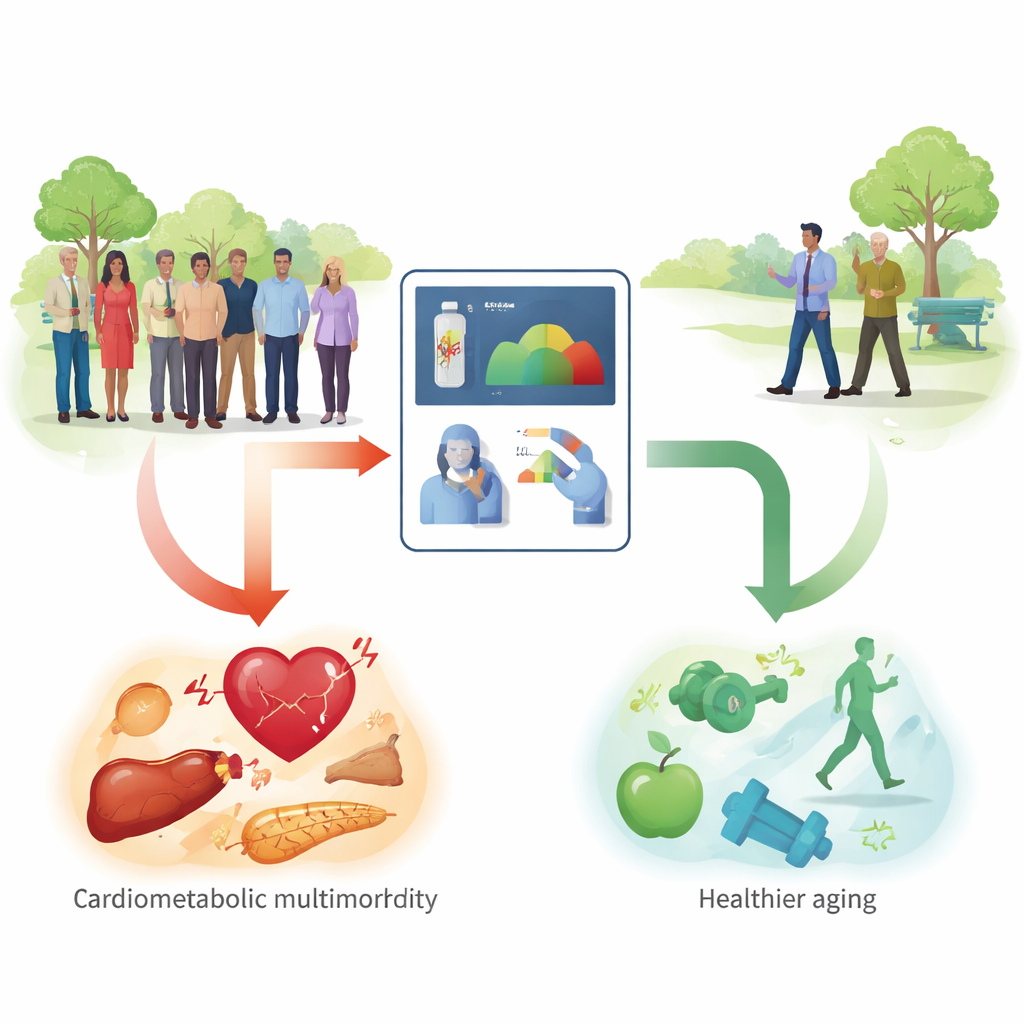
Nine everyday measures that tell a powerful story
Instead of guessing which variables mattered, the authors used a statistical filter to let the data decide. This process narrowed the list to 11 promising predictors, and further checks removed two that overlapped too closely with others. The final model relied on just nine pieces of information that are familiar in routine checkups: systolic blood pressure, body mass index, fasting blood sugar, total cholesterol, triglycerides, uric acid, age, the presence of other long‑term illnesses, and reports of bodily pain. With these nine inputs, they built two types of prediction tools: a modern machine‑learning model called XGBoost and a more traditional logistic regression model that can be easily drawn as a nomogram—a kind of visual scorecard a clinician can read at a glance.
Why the simpler tool wins in practice
On paper, the high‑tech XGBoost model looked very strong on the data used to train it, but its accuracy dropped noticeably when tested on new participants, a classic sign of overfitting. The simpler logistic regression model, in contrast, performed more steadily, correctly separating higher‑risk from lower‑risk people with moderate but reliable accuracy. Statistical checks showed that its predictions lined up well with what actually happened over five years and that using it would give doctors more benefit than treating everyone the same or ignoring risk scores entirely. Importantly, the nine‑factor model clearly beat a stripped‑down version that used only four standard measures, showing that including uric acid, pain, and overall comorbidities adds real value. The team also showed that the model worked reasonably well in different age groups and in people with and without an existing single cardiometabolic disease. 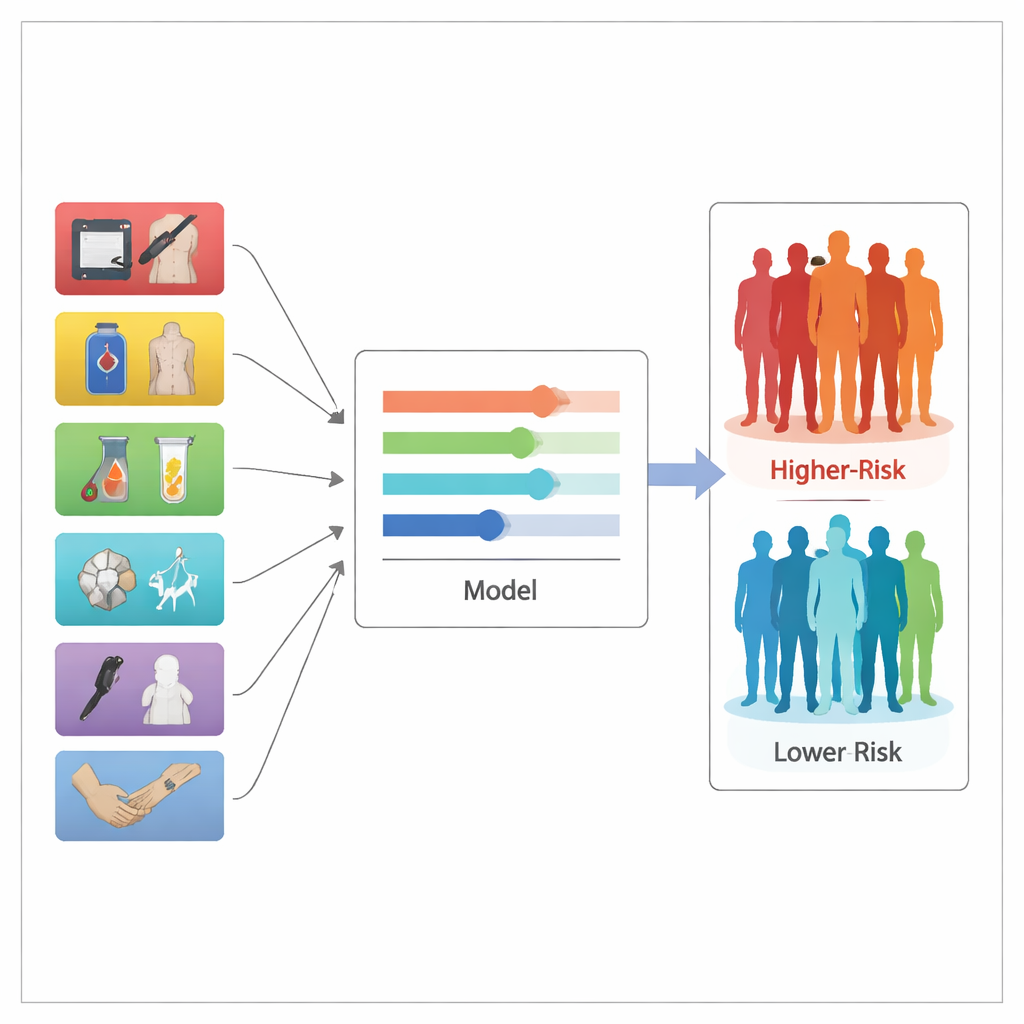
How this tool could change care—and its limits
For front‑line doctors and community clinics, the appeal of this work lies in its practicality. The model uses tests and questions that are already common in basic health exams, yet it combines them into an individualized five‑year risk estimate for developing multiple heart‑ and metabolism‑related diseases. In nomogram form, a clinician can add up points for each factor and read off a person’s risk, then decide who most urgently needs lifestyle counseling, closer monitoring, or medication. The study does have limits: it cannot yet replace diagnosis, it misses factors like detailed physical activity and mental health, and it has only been tested within one Chinese cohort. Still, it marks an important step from reacting to single diseases toward anticipating dangerous clusters of illness. For lay readers, the take‑home message is clear: everyday measures such as blood pressure, weight, blood sugar, blood fats, uric acid, existing illnesses, and even pain complaints together sketch a powerful early warning system for future cardiometabolic trouble.
Citation: Li, H., Ma, X., Cui, T. et al. Development and validation of a cardiometabolic multimorbidity prediction model in middle-aged and older adults. Sci Rep 16, 13300 (2026). https://doi.org/10.1038/s41598-026-44213-0
Keywords: cardiometabolic multimorbidity, risk prediction model, older adults, China cohort study, cardiovascular metabolism