Clear Sky Science · en
Performance and combustion characteristics of an HCCI engine fueled with n‑Butanol/diethyl ether blends under varying intake‑air temperatures
Cleaner cars without giving up engines
Many people worry that cleaner transportation means giving up familiar gasoline engines entirely. This study explores a middle path: making future engines run far more cleanly and efficiently by pairing them with smarter fuels and carefully tuned air temperatures. The work focuses on a special type of engine operation, called homogeneous charge compression ignition (HCCI), which can dramatically cut emissions but is notoriously hard to control. By blending two alternative fuels and adjusting how warm the incoming air is, the researchers show how to tame this tricky combustion process and point toward cleaner range‑extender engines for hybrids.
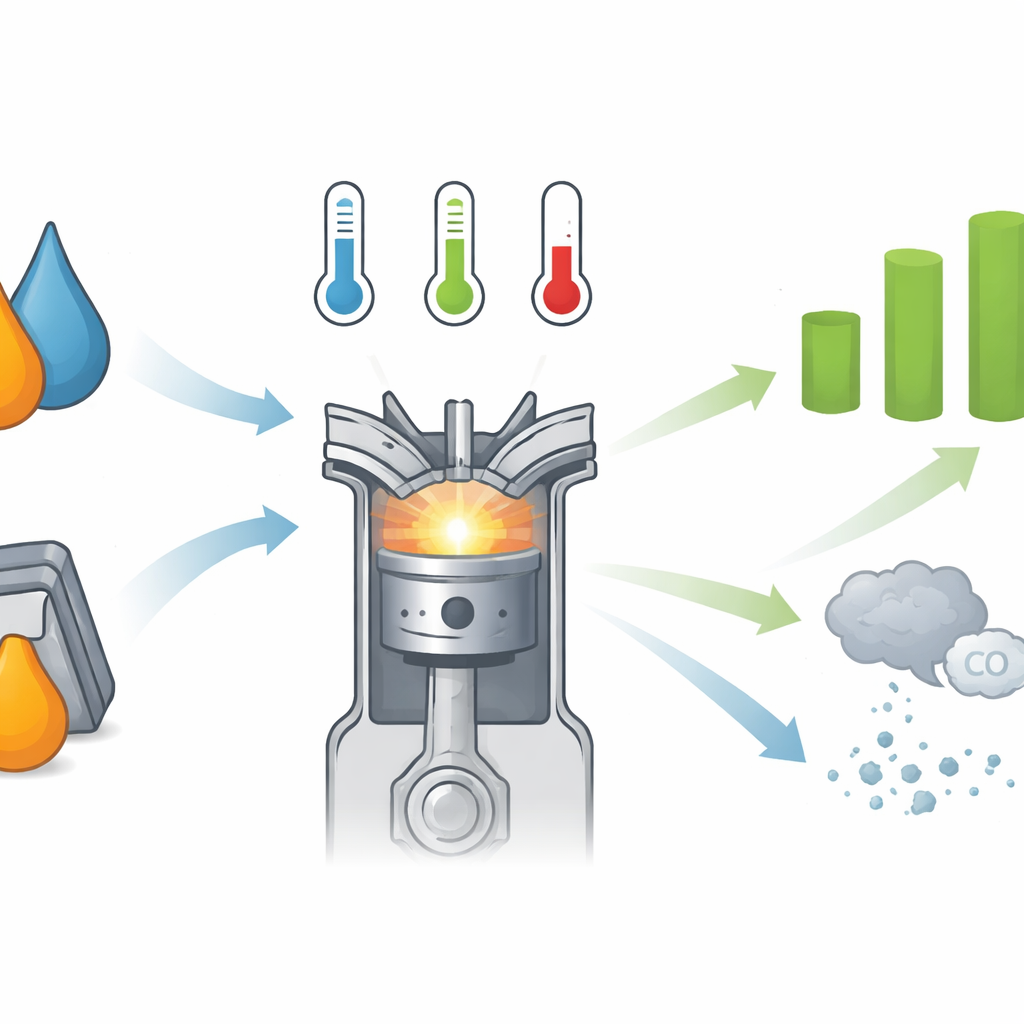
Why this new engine style matters
Transportation still relies heavily on fossil fuels, and even with the rise of electric cars, limited battery range and slow charging keep internal‑combustion engines in the picture for years to come. HCCI engines promise diesel‑like efficiency with far lower emissions, making them attractive as compact generators in hybrid vehicles. The catch is that, unlike a regular engine with a spark plug, HCCI relies on the fuel‑air mixture igniting itself at just the right moment. If it ignites too early, the engine “knocks” harshly; too late, and efficiency suffers. This study asks whether carefully chosen blends of a bio‑derived alcohol, n‑butanol, and a highly ignitable additive, diethyl ether, combined with warmer or cooler intake air, can widen the safe operating window of HCCI while keeping emissions low.
How the tests were carried out
The team ran a single‑cylinder research engine in HCCI mode at a steady speed, changing three things: the share of butanol in the fuel (15%, 30%, or 45% by volume), how lean the mixture was (described by the excess air ratio), and the temperature of the incoming air (35 °C, 50 °C, or 65 °C). Sensitive pressure sensors inside the cylinder recorded how quickly pressure rose, when combustion started, and how long it lasted. From these data, the researchers calculated key measures such as the work produced per cycle, overall thermal efficiency, and how much the pressure spiked—an indicator of knock. They also measured exhaust gases, tracking unburned hydrocarbons, carbon monoxide, and carbon dioxide to gauge how cleanly the fuel burned.
Finding the sweet spot between power and safety
Diethyl ether ignites easily, which helps the HCCI engine run on very lean mixtures and over a broad range of operating conditions. The blend with the least butanol (B15) offered the widest window of air–fuel ratios where the engine could run, especially when the intake air was warmed. However, under richer conditions this highly reactive mix caused the pressure in the cylinder to rise too fast, crossing the usual safety limit for knock. In contrast, the blend richest in butanol (B45) was slower to ignite and shifted most of the heat release to just after the piston reached the top of its stroke. That timing turned out to be ideal: the combustion finished in a much shorter crank‑angle span, overall efficiency improved by about one‑fifth, and knocking was cut by roughly 70%, while still delivering the highest indicated work output of all blends.
Warm air, fast burn, and cleaner exhaust
Raising the intake‑air temperature made the fuel–air mixture more eager to ignite, helping all blends run stably on leaner mixtures and advancing the combustion timing. This came with trade‑offs. Earlier combustion increased so‑called negative work, slightly reducing the net work per cycle at the hottest intake setting. At the same time, warmer air and higher ether content generally lowered emissions of unburned hydrocarbons and carbon monoxide, because reactions proceeded more completely. The cleanest exhaust was seen with the ether‑rich B15 blend at the highest intake temperature, which produced very low levels of both pollutants; as expected, carbon dioxide increased when carbon monoxide fell, signaling more complete combustion.
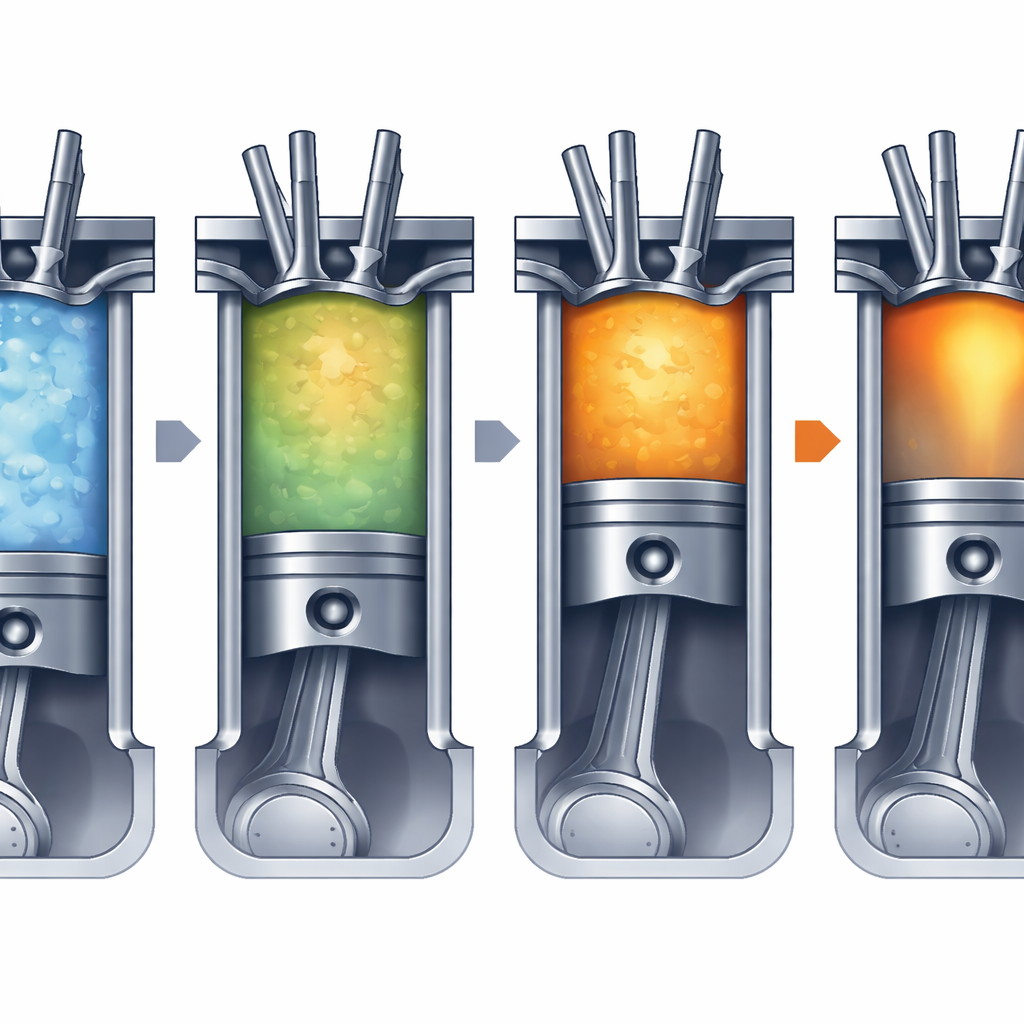
What it means for future engines
To a non‑specialist, the core message is that there is no single “best” fuel blend: B45, with the most butanol, makes the HCCI engine more efficient, smoother, and less knock‑prone, while B15, richer in diethyl ether, lets the engine operate over a wider range of very lean conditions. Intake‑air temperature adds another control knob, helping start combustion reliably but, if pushed too far, eating into efficiency. Together, these findings show that by tailoring fuel blends and intake warmth, engineers can turn HCCI from a laboratory curiosity into a practical, cleaner range‑extender engine—getting more useful work from each drop of fuel while keeping harmful emissions in check.
Citation: Ali, R., Yücesu, H.S., Calam, A. et al. Performance and combustion characteristics of an HCCI engine fueled with n‑Butanol/diethyl ether blends under varying intake‑air temperatures. Sci Rep 16, 13505 (2026). https://doi.org/10.1038/s41598-026-44203-2
Keywords: HCCI engine, butanol fuel, diethyl ether, intake air temperature, engine emissions