Clear Sky Science · en
A lightweight deep learning architecture for automatic shrimp disease classification
Why shrimp health matters to everyone
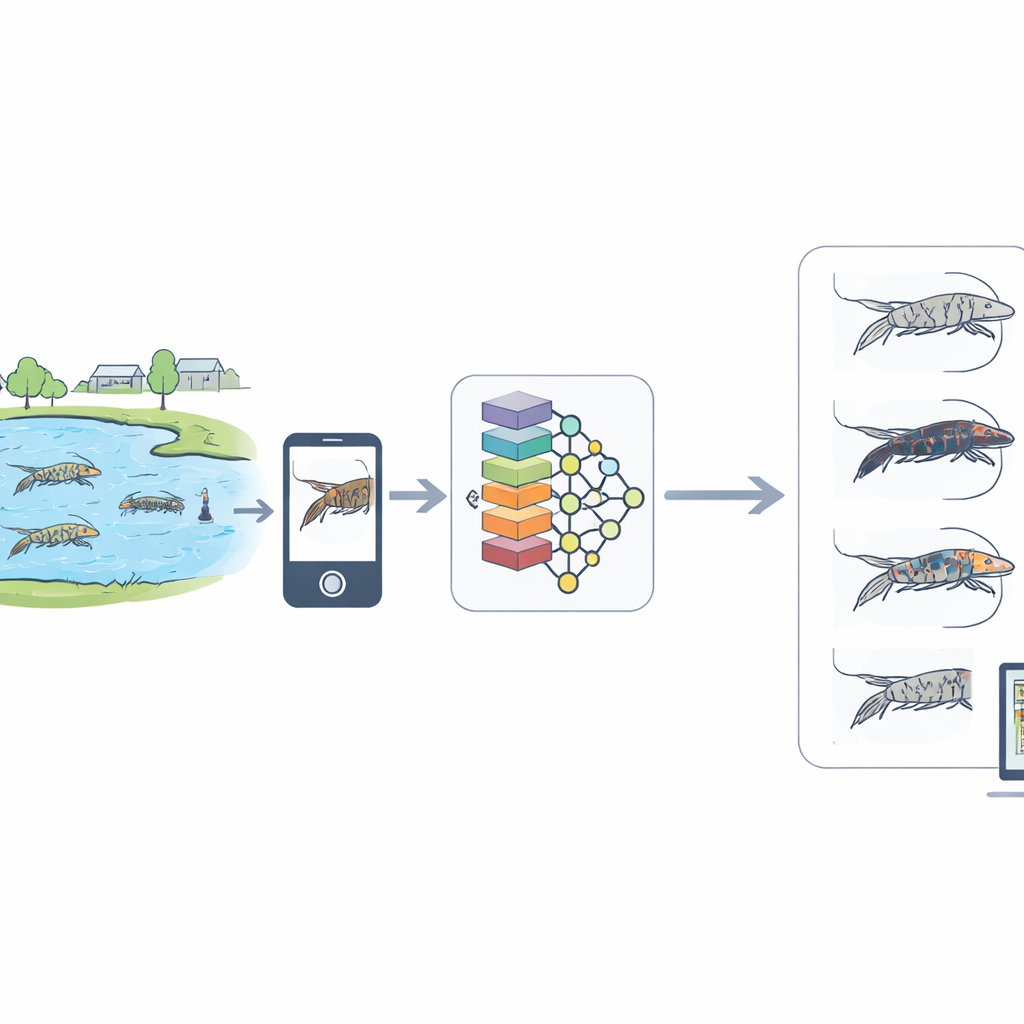
Shrimp are among the world’s most popular seafoods, and a major source of income for coastal communities. Yet shrimp farms are constantly threatened by fast-spreading diseases that can wipe out entire ponds in days. Today’s lab tests are slow and expensive, while visual checks by farmers can miss early warning signs. This study introduces a new computer tool, called FeatherNetX, that can scan photos of shrimp and quickly tell whether they are healthy or sick, even on low-cost farm computers without an internet connection.
A new way to spot sick shrimp
The researchers set out to build an automated disease “eye” for farmers that would be both accurate and practical in the field. They focused on four categories that are particularly important in Asian shrimp farms: healthy shrimp, Black Gill disease, White Spot Syndrome Virus, and Yellow Head Virus. Instead of relying on expensive lab equipment, the system uses regular color photos taken with smartphones in farm sheds. These images are then analyzed by a compact deep learning model that has been specially designed to recognize the subtle patterns and textures associated with each disease. By turning a simple photograph into a diagnosis in less than a second, the approach aims to make early disease detection as easy as checking a message on a computer.
How the smart model was trained
To teach FeatherNetX the visual language of shrimp disease, the team gathered two open image collections from shrimp farms across several regions of Bangladesh. Together, these datasets covered thousands of shrimp with different backgrounds, lighting conditions, and disease states. The images were carefully divided into training, validation, and testing groups so that the model would be judged on photos it had never seen before. During training, the pictures were randomly flipped, rotated, slightly blurred, or color-shifted to mimic the messy reality of farm photography. This helped the model learn to focus on genuine disease signs—such as darkened gills or white body spots—rather than on incidental details like camera angle or minor lighting changes.
A tiny model with a big job
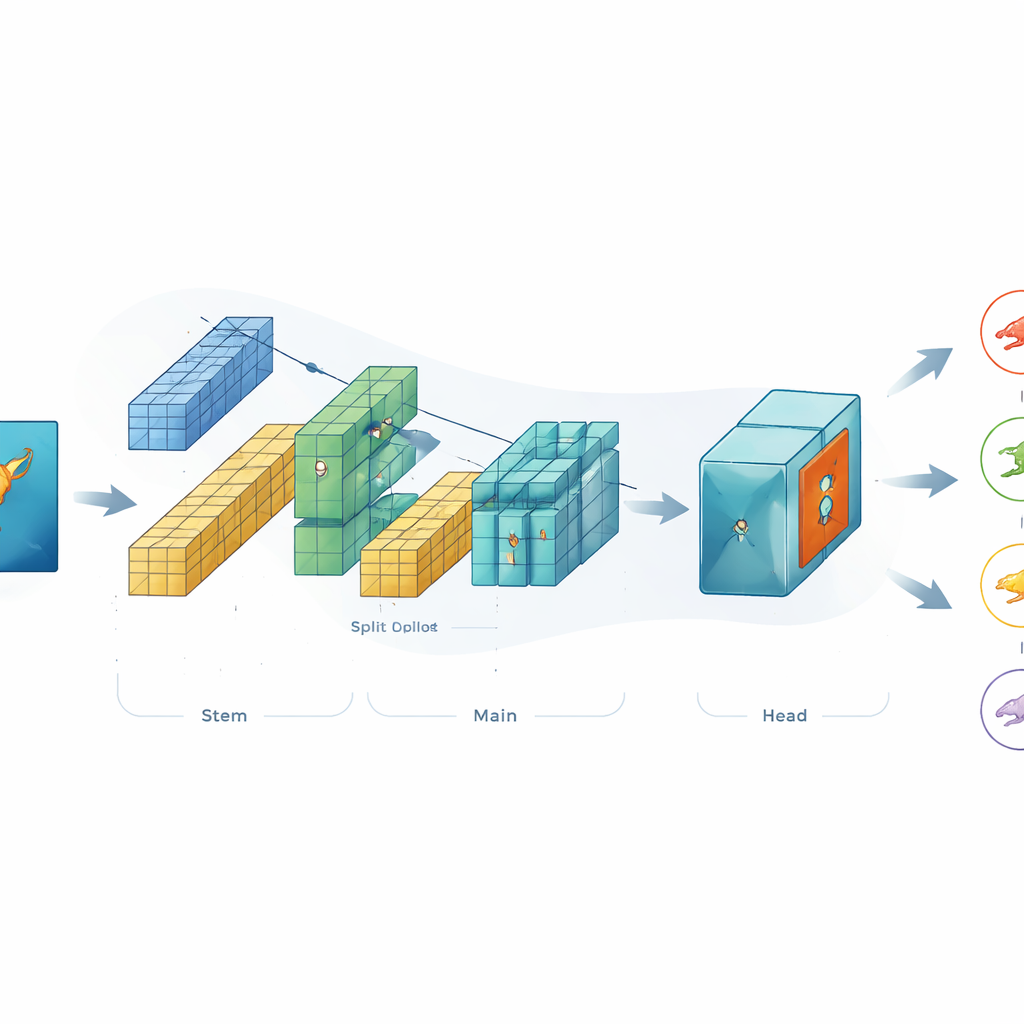
Most powerful image-recognition systems are too large and power-hungry to run on ordinary farm computers. FeatherNetX was therefore engineered to be extremely lightweight while still capturing rich detail. The network is built from repeated small building blocks that reuse and share information efficiently, cutting down the number of calculations and stored values. Attention mechanisms help the model emphasize the most informative color and texture cues in each image. As a result, FeatherNetX contains less than a million adjustable parameters and fits into only a few megabytes of memory—small enough for low-cost hardware—yet it still achieves an average correctness of about 93% when tested across many different image splits.
Seeing where the model is looking
A common concern with artificial intelligence in biology is whether its decisions make sense to human experts. To address this, the researchers used a technique that creates heatmaps showing which parts of a shrimp image most influenced the model’s judgment. In many cases, these highlighted regions lined up well with areas a veterinarian would inspect, such as damaged gills in Black Gill disease or patchy shell regions in White Spot infections. For two of the diseases, the team even measured how close the brightest spot in the heatmap was to regions outlined by experts, finding that the model’s attention often fell within just a few pixels of the marked diseased areas. This gives confidence that the network is learning meaningful biological cues rather than latching onto irrelevant background patterns.
From research code to farm-ready tool
To make the technology useful beyond the laboratory, the team wrapped FeatherNetX into a simple desktop program dubbed the “Shrimp Disease Classifier.” Farmers or technicians can load single photos or entire folders of images, view each shrimp, and receive an automatic label—healthy or one of three major diseases—along with a confidence score. On a standard computer, each image is processed in less than a fifth of a second, and the pictures are automatically sorted into folders for easier record-keeping. Tests on new, previously unseen photos showed an accuracy of about 94%, demonstrating that the system remains reliable outside the training environment.
What this means for shrimp farming
This work shows that a carefully designed, compact AI model can deliver near-laboratory-level shrimp disease detection using nothing more than ordinary photographs and an offline desktop computer. FeatherNetX does not replace traditional lab tests, but it can act as a fast early warning system, helping farmers identify troubled ponds before losses become catastrophic. Although challenges remain—such as adapting to new farms, cameras, and more subtle disease signs—the study offers a practical blueprint for bringing advanced image-based diagnosis directly to aquaculture ponds, supporting more secure and sustainable seafood production.
Citation: Sharma, S., Rumahorbo, P.S., Kondo, S. et al. A lightweight deep learning architecture for automatic shrimp disease classification. Sci Rep 16, 13837 (2026). https://doi.org/10.1038/s41598-026-44195-z
Keywords: shrimp disease, aquaculture, deep learning, computer vision, farm diagnostics