Clear Sky Science · en
Impact of the CYFIP2 R87C variant in a human neuronal model in vitro
When a Tiny DNA Change Shapes a Growing Brain
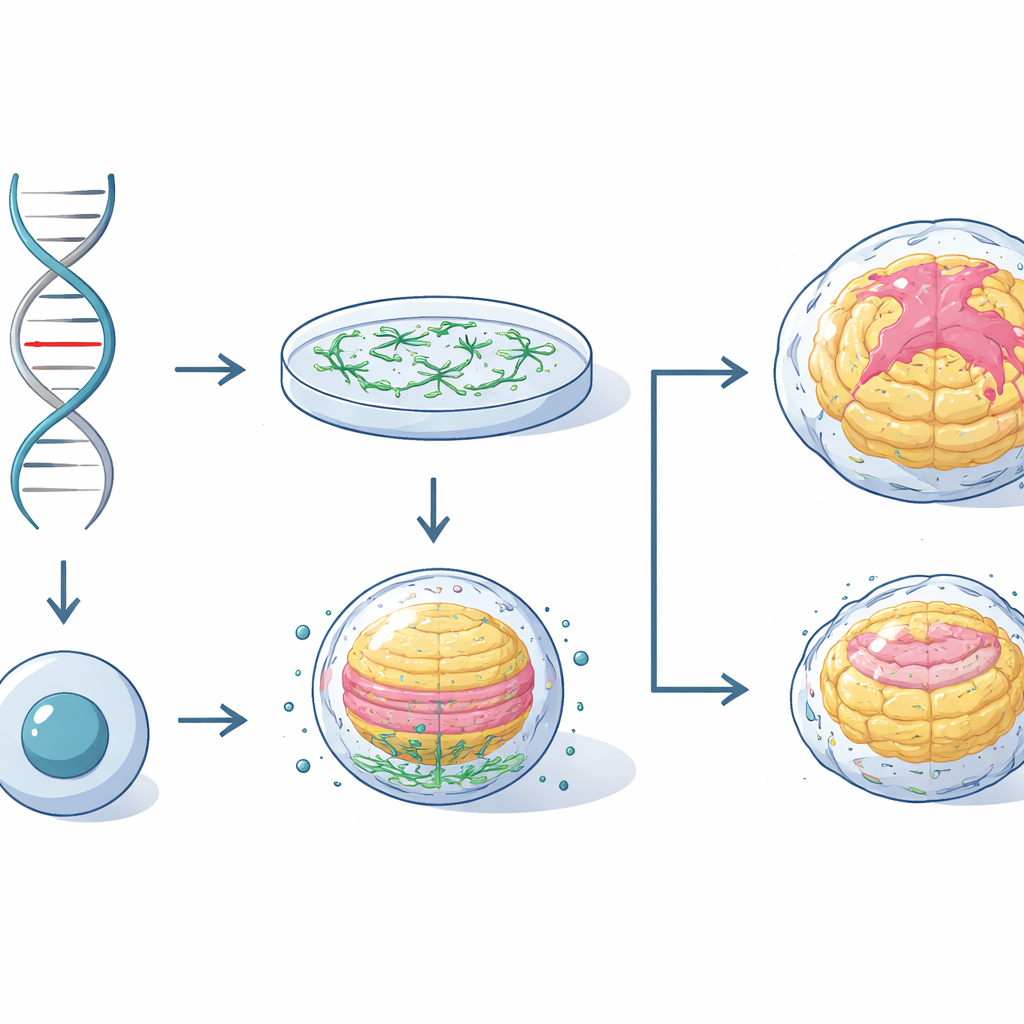
Some children with very early, hard-to-treat epilepsy carry a tiny change in a single gene called CYFIP2. This change, known as R87C, is only one letter in the DNA code, yet it is linked to severe seizures, developmental delays, and smaller brains. In this study, researchers used cutting‑edge stem cell and “mini‑brain” technologies to ask a simple but crucial question: what does this small genetic glitch actually do to young human brain cells as they form?
A Gene That Helps Young Brain Cells Move
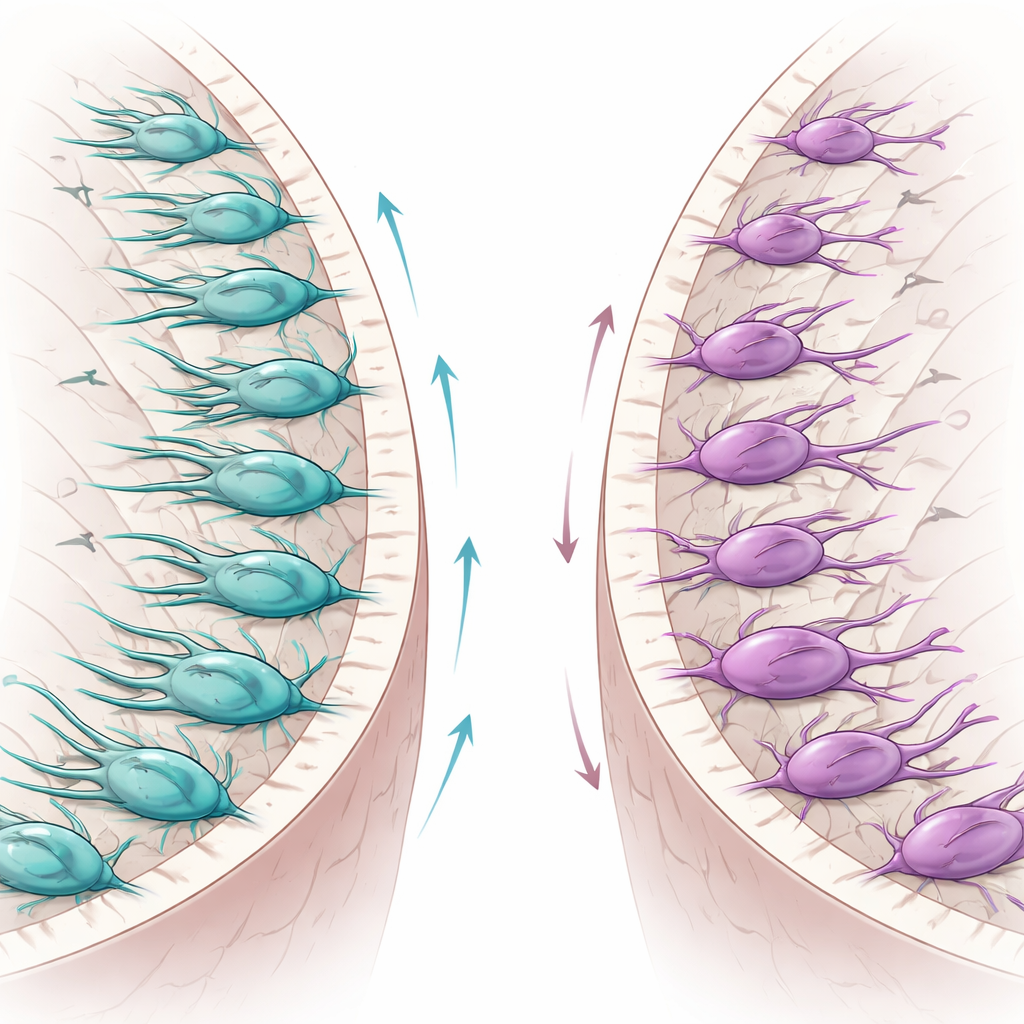
CYFIP2 makes a protein that helps organize the internal scaffolding of cells, especially in the developing brain. This scaffolding is built from actin, a molecule that allows cells to change shape, extend flat “feet” called lamellipodia, and move to where they are needed. During brain development, young cells must migrate to precise locations to build the layered structure of the cortex, the outer shell of the brain that handles thinking and sensing. Earlier work in mice suggested that the R87C version of CYFIP2 leads to smaller brains but does not fully copy the seizures seen in patients, raising the possibility that human brain cells might respond differently to this mutation.
Turning Stem Cells into Nerve Cells and Mini Brains
To explore this, the team used human pluripotent stem cells, which can turn into almost any cell type. By using CRISPR gene editing, they created cell lines that were genetically identical except for the R87C change in CYFIP2. They then guided these stem cells along several paths: into flat sheets of neural progenitor cells (the “stem‑like” builders of the brain), into mature cortical neurons, and into three‑dimensional balls of tissue called cortical organoids, which mimic key steps of early brain development. This allowed the scientists to compare how normal and R87C‑bearing cells behaved in both simple two‑dimensional dishes and more life‑like three‑dimensional mini brains.
Subtle Changes in Young Cells, Not Mature Neurons
The first surprise was that the stem cells carrying the R87C change still looked and behaved like healthy stem cells: they kept their ability to become different body tissues. When nudged toward becoming neural progenitors, both normal and mutant cells expressed the usual early brain cell markers, suggesting that the initial steps of identity were intact. But under the microscope, important differences appeared. Progenitor cells with the R87C variant made less CYFIP2 protein, formed fewer or weaker lamellipodia, and moved more slowly across the dish. These defects were confirmed using high‑content imaging and electron microscopy. In contrast, when these progenitors were pushed further to become mature cortical neurons, the resulting nerve cells from normal and mutant lines fired electrical signals at similar rates and displayed comparable overall shapes in culture.
Mini Brains Reveal Hidden Development Problems
The story changed when the team looked at cortical organoids, which better capture the crowded, layered environment of a real developing brain. By day 30, organoids carrying two copies of the R87C variant were noticeably larger than normal ones, a difference that persisted at day 60. Yet inside these enlarged mini brains, a key population of cells was missing: the SOX2‑positive neural progenitors that normally sit in radial “rosettes” and continually supply new neurons. The R87C organoids had reduced CYFIP2 protein levels and an apparent early loss of this progenitor pool, even though neurons themselves were still present. A similar pattern—reduced CYFIP2 levels, altered cell shape, and slower movement—was also seen when the researchers used patient‑derived stem cells carrying one copy of the mutation, strengthening the link between the genetic change and early developmental disruption.
What This Means for Children with Early Epilepsy
Taken together, the findings suggest that the R87C change in CYFIP2 acts mainly on young, still‑dividing brain cells by disturbing their internal scaffolding, their ability to move, and their long‑term survival. In flat cultures, these changes are subtle and do not obviously disturb the firing patterns of mature neurons. But in mini brains that more closely mimic a real cortex, the variant leads to enlarged structures that quickly lose their pool of builder cells, hinting at abnormal growth patterns and wiring that could underlie seizures and developmental problems. While much remains to be learned, especially about how these early defects translate into full‑blown epilepsy, this work shows how a single DNA change can derail brain development from its earliest stages, and it highlights human stem cell–based models as powerful tools for designing future, more targeted treatments.
Citation: Zaboroski-Silva, I., da Silva Brandão, E., de Freitas Brenha, B. et al. Impact of the CYFIP2 R87C variant in a human neuronal model in vitro. Sci Rep 16, 13967 (2026). https://doi.org/10.1038/s41598-026-44176-2
Keywords: epileptic encephalopathy, CYFIP2, cortical organoids, neural progenitor cells, human stem cell models