Clear Sky Science · en
Methylprednisolone as an adjunct to intravenous immunoglobulin in pediatric Guillain–Barré syndrome: a prospective comparative study
Why this matters for families
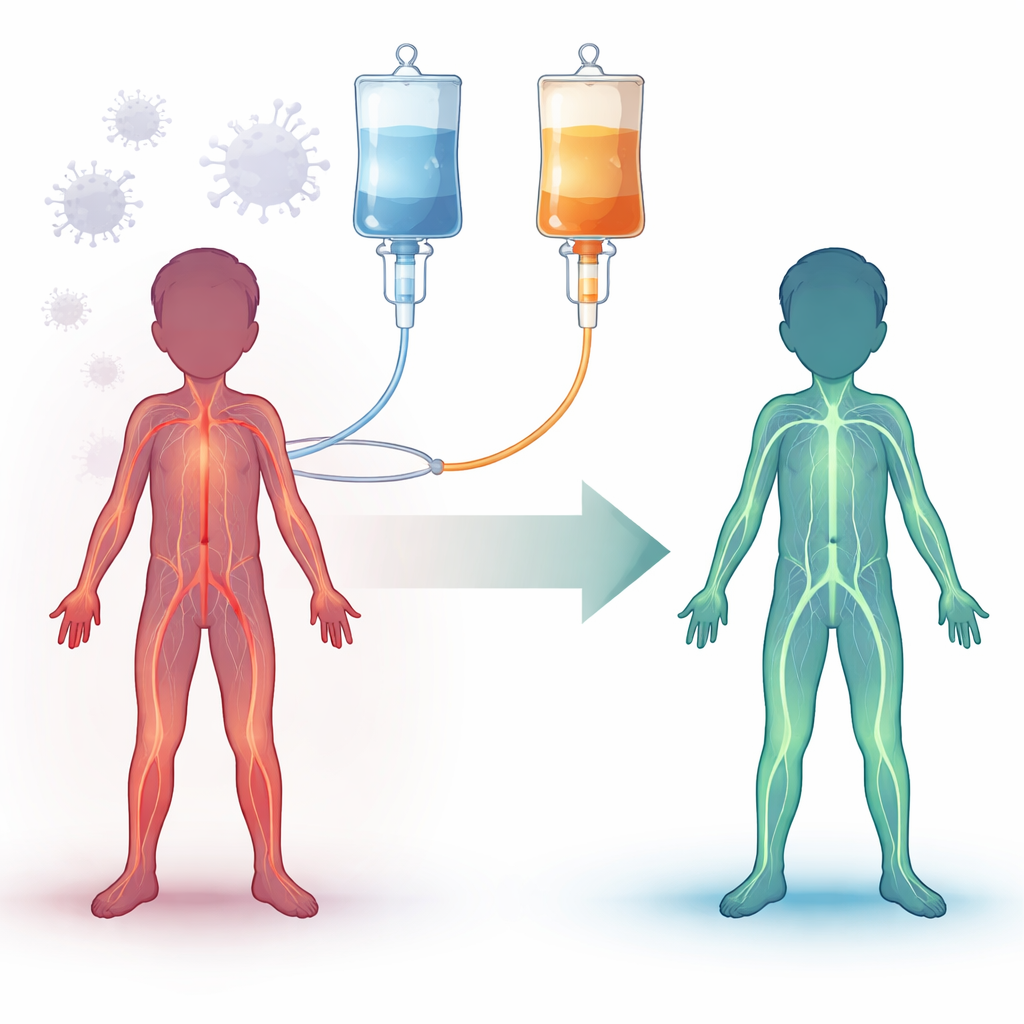
Guillain–Barré syndrome is a sudden nerve illness that can leave previously healthy children weak, in pain, and sometimes unable to breathe on their own. The standard treatment, intravenous immunoglobulin (IVIG), usually works well but is expensive and not always enough to quickly ease suffering. This study explored whether adding a short course of a common steroid medicine, methylprednisolone, to IVIG could help children recover a bit faster and, most importantly, reduce the burning, aching nerve pain that often follows this condition.
Understanding the childhood nerve attack
Guillain–Barré syndrome happens when a child’s immune system mistakenly attacks the nerves that carry signals to and from the muscles. This can cause rapid-onset weakness, difficulty walking, facial drooping, and even breathing problems. Many children also develop neuropathic pain—sharp, tingling, or burning sensations that can make movement and rehabilitation very difficult. IVIG, a purified blood product made from many donors, is currently the main treatment and can stop the immune attack and allow nerves to heal. Steroids such as methylprednisolone can also calm inflammation, but when used alone in this illness they have not shown clear benefits. Researchers therefore wondered whether a brief steroid “boost” on top of IVIG could give children an early advantage.
How the study was carried out
The research team at an Egyptian university hospital followed 28 children with confirmed Guillain–Barré syndrome over six months. All were sick enough at the start that they needed help to walk or were unable to walk at all. The children were randomly assigned to one of two groups. One group received standard IVIG over two days. The other group received the same IVIG plus a high dose of intravenous methylprednisolone given daily for five days. Doctors then watched how quickly the children improved, when they could walk independently, how disabled they remained using a standard scale, whether nerve pain persisted, and what side effects occurred.
What the doctors observed
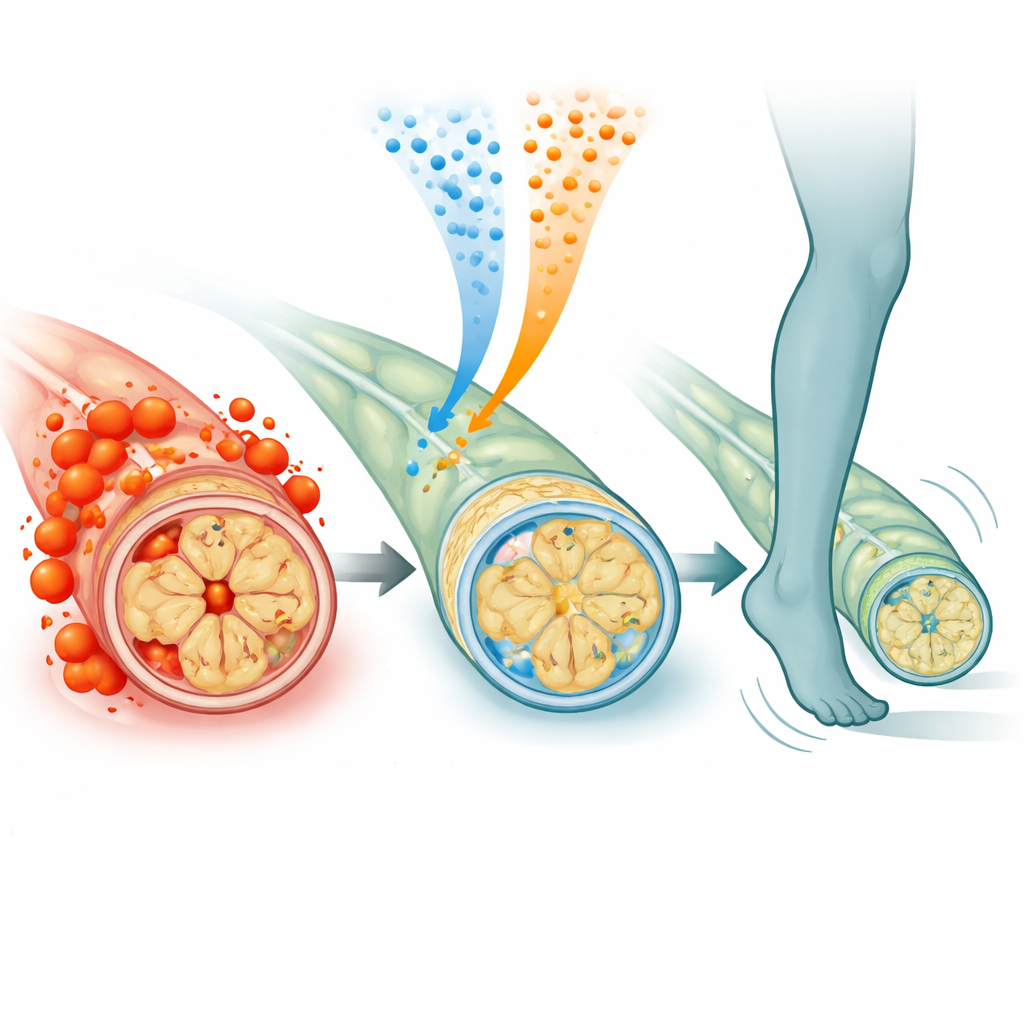
Both groups of children improved over time, and by six months nearly all had returned to normal or near-normal function. However, the group that received both IVIG and steroids showed signs of earlier improvement. On average, these children started to get better a little sooner and were able to walk without support about a week earlier than those given IVIG alone. On a commonly used disability score, the combination group looked slightly better at three months, although the size of this advantage was small and may not translate into a big difference in everyday life. Hospital stays and the need for breathing machines were somewhat lower in the steroid group, but these differences were not strong enough, statistically, to rule out chance.
A striking change in nerve pain
The clearest difference involved pain. Most children in both groups started out with neuropathic pain. After treatment, more than half of the children who had received only IVIG still had ongoing pain. In contrast, none of the children who received IVIG plus methylprednisolone had lingering neuropathic pain at follow-up. This complete disappearance of nerve pain in the steroid group may be the most meaningful result for children and their families, because pain can slow rehabilitation, disturb sleep, and weigh heavily on quality of life. The authors suggest that the anti-inflammatory and immune-calming actions of steroids may help protect nerve fibers from further damage and ease pain signals.
Safety, limitations, and what comes next
The added steroid treatment brought some predictable side effects: about half of the children in the combination group gained weight and had increased appetite, and a few experienced mild stomach upset or infections. Importantly, there were no serious problems such as dangerous bleeding, high blood sugar, or blood pressure spikes. Still, this was a small, single-hospital study that was not blinded, and it did not use detailed pain scales or advanced nerve testing. Because of these limits, the authors emphasize that their findings are preliminary. For now, IVIG remains the backbone of care, but this work suggests that a short steroid course alongside IVIG might become a useful, low-cost way to reduce pain and speed early recovery in children with Guillain–Barré syndrome—especially in healthcare systems where resources are stretched and every day of faster improvement counts.
Take-home message for non-specialists
For parents and caregivers, the message is cautiously hopeful: adding a brief course of a familiar steroid medicine to standard IVIG treatment may help children with Guillain–Barré syndrome feel better sooner, walk earlier, and avoid ongoing nerve pain, without introducing major new risks. However, because the study was small and exploratory, doctors cannot yet change routine practice on this basis alone. Larger, carefully designed trials in many hospitals will be needed to confirm that this combined approach truly offers a meaningful and reliable advantage for children facing this frightening but often reversible illness.
Citation: Fayed, AG.I., Elsayeh, A.A. & Hassan, M.A.S. Methylprednisolone as an adjunct to intravenous immunoglobulin in pediatric Guillain–Barré syndrome: a prospective comparative study. Sci Rep 16, 11368 (2026). https://doi.org/10.1038/s41598-026-44160-w
Keywords: Guillain–Barré syndrome, pediatric neurology, intravenous immunoglobulin, steroid therapy, neuropathic pain