Clear Sky Science · en
Performance evaluation of stabilized clay using sodium lignosulphonate
Why stronger ground matters for cities
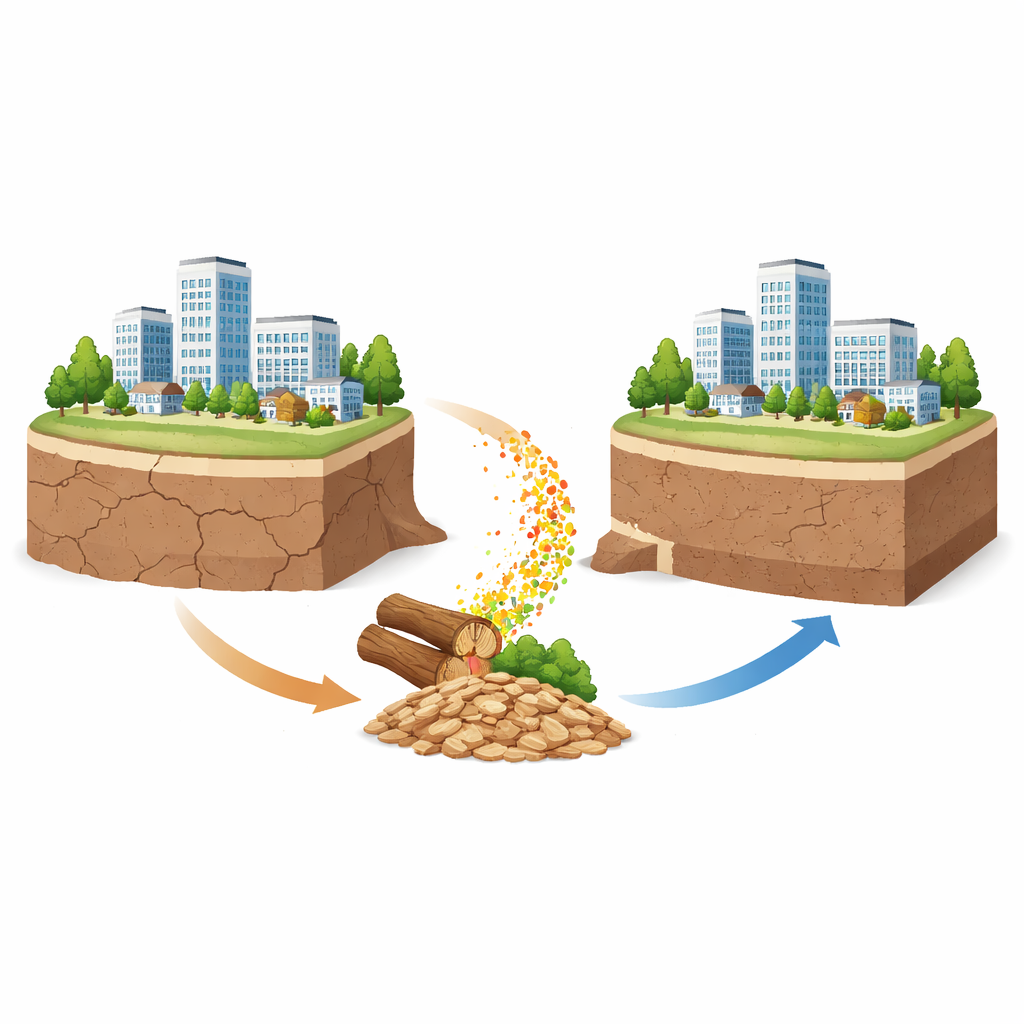
Modern cities are spreading fast, often onto soft, clay-rich ground that does not naturally support heavy traffic, buildings, or pipes. When these clays get wet or dry out, they can swell, shrink, and lose strength, leading to cracked roads, uneven pavements, and damaged buried services. This study explores a greener way to make such soils stronger and more reliable by reusing a by-product from the wood and paper industry, aiming to cut both construction problems and environmental impacts.
A helpful ingredient from wood waste
The researchers focused on a material called sodium lignosulphonate, which comes from processing wood into paper and pulp. Instead of being treated as low-value waste, this dark, water‑soluble powder can interact with the fine particles that make clay soils weak and sensitive to moisture. The team worked with a common type of clay found in India that has moderate plasticity, meaning it can deform noticeably when wet but is not among the very worst “expansive” clays. Turning such soils into dependable foundations, without relying on cement or lime, could save resources and reduce greenhouse gas emissions.
Testing how the clay behaved in the lab
In the laboratory, the clay was mixed with different small amounts of sodium lignosulphonate, ranging from 0.5% to 4% of the soil’s dry weight. The researchers then carried out a suite of standard geotechnical tests. They measured how sticky and fluid the soil becomes when wet, how much pressure it can withstand before failing in compression, how well it can support traffic-like loading, and how much it tends to swell when soaked. They also allowed samples to cure—essentially rest in a controlled environment—for up to 28 days, to see how the soil’s strength evolved over time. Finally, they used high‑magnification imaging tools to inspect how the soil’s internal structure changed when the additive was present.
Finding the sweet spot for strength and stability
The results showed that a little of this wood‑derived additive goes a long way. As the sodium lignosulphonate content increased from zero to about 0.75%, the clay became less plastic and more manageable: its tendency to behave like a sticky, deformable mass when wet was reduced. At the same 0.75% level, the unconfined compressive strength—the resistance of a small cylinder of soil to being squashed—rose by about 50% after 28 days compared with untreated soil. The soil’s bearing capacity, as measured by a standard road‑design test, also increased notably over two weeks of curing. Importantly for swell‑prone clays, the treated soil’s swelling potential dropped by roughly one‑fifth, meaning it would move less when exposed to water.
What happens inside the soil
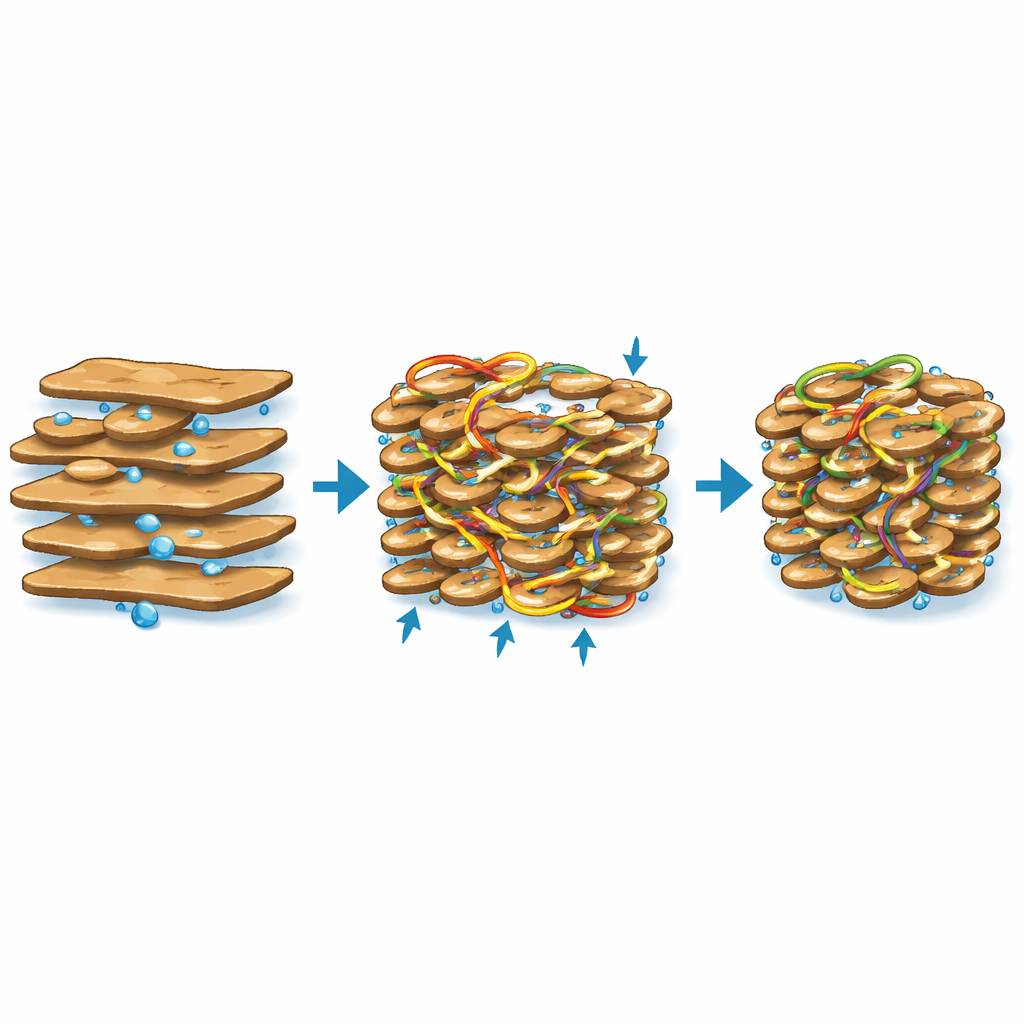
Looking more closely with electron microscopes, the researchers observed that untreated clay consists of flaky particles with many gaps between them. After treatment with sodium lignosulphonate, those particles appeared to clump into tighter clusters, with fewer and smaller pores. The additive acts like flexible chains that coat and bridge clay grains, drawing them together into stronger aggregates and pushing some water out of the spaces between them. Chemical analysis suggested that the soil’s basic mineral makeup changed very little, implying that the improvement comes mainly from physical binding and rearrangement rather than from forming new minerals. Interestingly, adding more than the optimum 0.75% caused strength to decrease again, likely because excess negatively charged chains begin to repel each other, loosening the structure.
What this means for future building
Overall, the study concludes that a small, carefully chosen dose of sodium lignosulphonate—about three‑quarters of a percent by dry soil weight—can significantly strengthen this type of clay, boost its load‑carrying capacity, and reduce its swelling, all while keeping soil acidity changes modest. For non‑specialists, the key message is that an abundant industrial by‑product from wood and paper making can help transform troublesome clay beneath our roads and buildings into a more solid, durable foundation. With further field trials and long‑term studies, this approach could support more sustainable, cost‑effective infrastructure in rapidly growing urban areas.
Citation: Kumar, A., Kumar, P., Choudhary, A.K. et al. Performance evaluation of stabilized clay using sodium lignosulphonate. Sci Rep 16, 13551 (2026). https://doi.org/10.1038/s41598-026-44155-7
Keywords: soil stabilization, sustainable construction, lignosulfonate, clay subgrade, infrastructure durability