Clear Sky Science · en
Spectrum resource sharing method for IoT based on graph matching algorithm
Why our wireless world feels crowded
From smart watches to security cameras, more and more everyday objects now talk wirelessly. All of these gadgets share a limited invisible resource: radio spectrum. When too many devices try to use the same slices of spectrum, signals collide, slowing connections or cutting them off. This paper explores a new way to let huge numbers of Internet of Things devices share spectrum more fairly and efficiently, even when conditions are noisy, changing, or under attack.
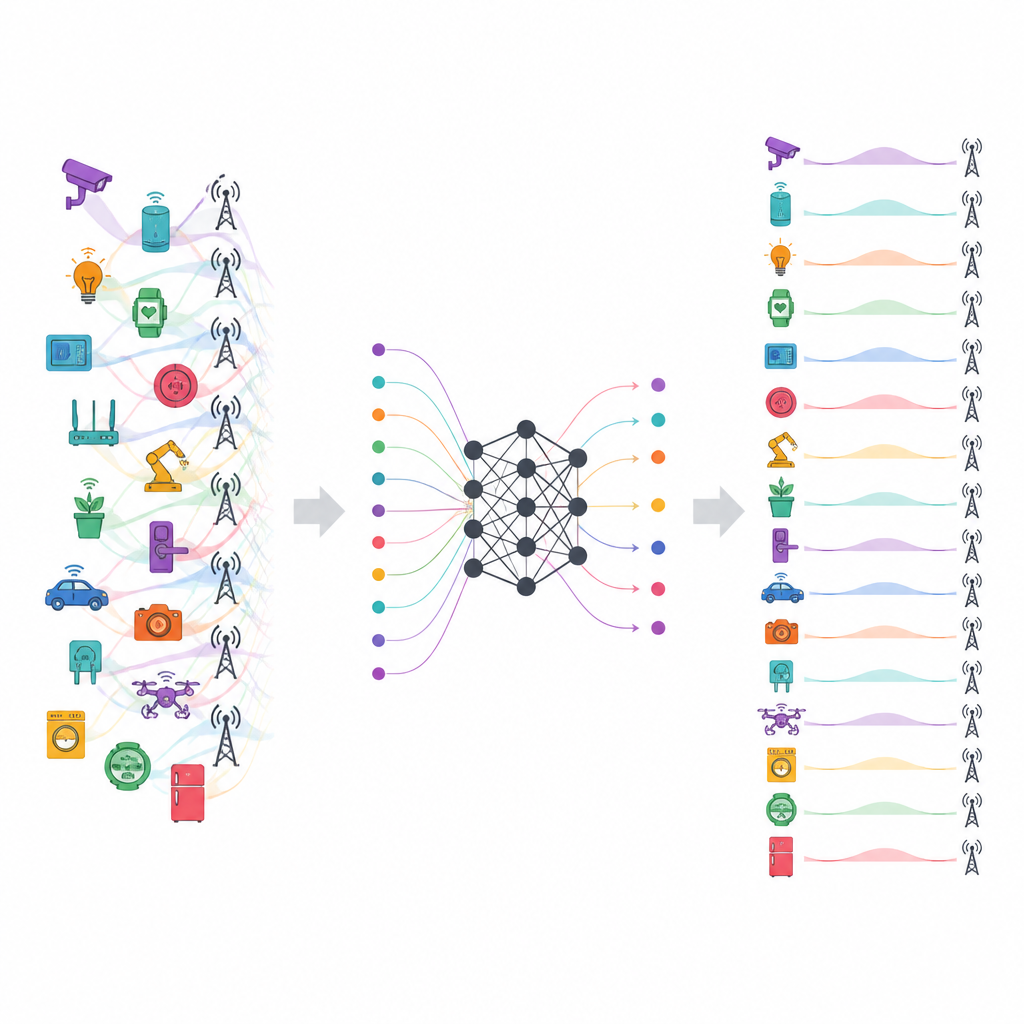
Turning a messy airwave into a simple map
The author starts by reimagining wireless sharing as a kind of matching problem. Each user and each available frequency is treated as a point in a network, and the possible links between them form a pattern of connections. This picture allows the use of a classic tool from mathematics called bipartite matching, which finds a best pairing between two groups. By building three key tables that describe who interferes with whom, which frequencies each user can see, and how valuable each frequency is to each user, the method searches for a pairing that gives the whole system the most benefit while avoiding harmful overlap.
Letting devices trade airspace like a market
Assigning frequencies once is not enough, because demand changes as devices appear, move, or sleep. The study therefore adds a trading step, inspired by auction markets. Some users act as owners who can lease out unused spectrum, while others act as renters who bid for temporary access. A set of rules called a reverse auction incentive mechanism and a unit utility auction shapes who wins which slice and at what price. The process is wrapped in digital signatures and encryption so that only verified participants can join, bids remain trustworthy, and every completed trade leaves a secure record.
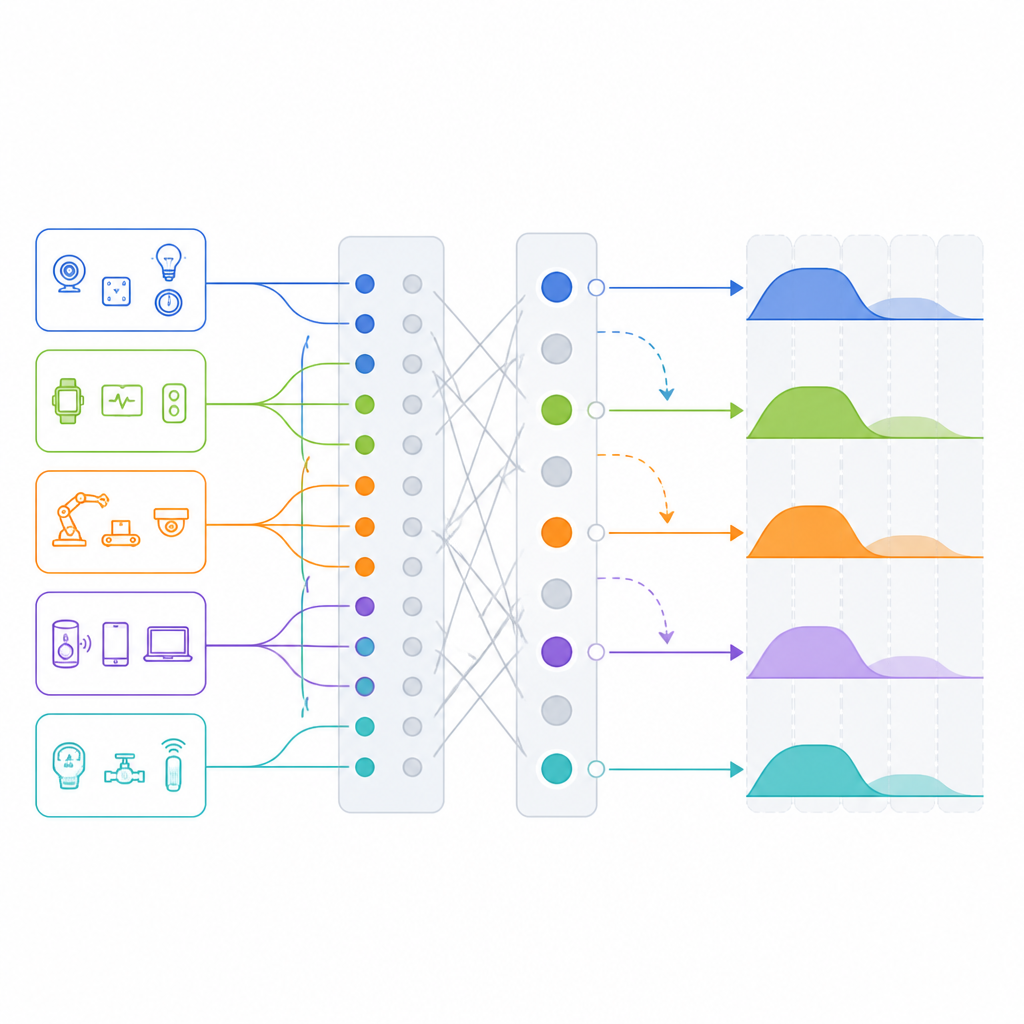
Rebalancing when conditions shift
Once trading happens, ownership of spectrum shifts and the original neat pattern may no longer be ideal. To handle this, the paper introduces a richer network picture in which one link can connect more than two users at once. This lets the method group nearby users who might interfere with each other and then color these groups so that clashing users avoid sharing the same slice. At the same time, it checks whether each user’s signal stays strong enough and whether the extra interference they see remains tolerable. If not, the method reshuffles membership in these groups and repeats the coloring, steadily steering the system back toward a balanced sharing pattern.
Putting the method to the test
The full approach, combining initial matching, auctions, and redistribution, is tested against three other popular ideas: deep reinforcement learning, a scheme built around direct device links, and a blockchain based method. Using a detailed simulator, the new method shows higher accuracy in deciding who should get which spectrum, faster and more stable learning curves, and better scores on standard quality measures. It also predicts demand more faithfully, keeps errors low across many trials, and holds up well when faced with delays, large numbers of users, or even malicious devices trying to disrupt sharing.
What this means for everyday connected devices
In plain terms, this work offers a smarter traffic controller for the airwaves that our connected gadgets depend on. By pairing users and frequencies carefully, letting them trade unused capacity like a marketplace, and regularly rebalancing as conditions change, the method keeps more devices talking clearly at once while wasting less spectrum. The study shows that this layered strategy can stay accurate and secure in realistic, messy environments, suggesting a practical path toward smoother, more reliable wireless service as the Internet of Things continues to grow.
Citation: Wang, J. Spectrum resource sharing method for IoT based on graph matching algorithm. Sci Rep 16, 14712 (2026). https://doi.org/10.1038/s41598-026-44142-y
Keywords: IoT spectrum sharing, graph matching, wireless resource allocation, auction based networking, hypergraph redistribution