Clear Sky Science · en
Quantum-resilient cross-trust evaluation for zero trust 5G security
Why safer 5G networks matter to everyday life
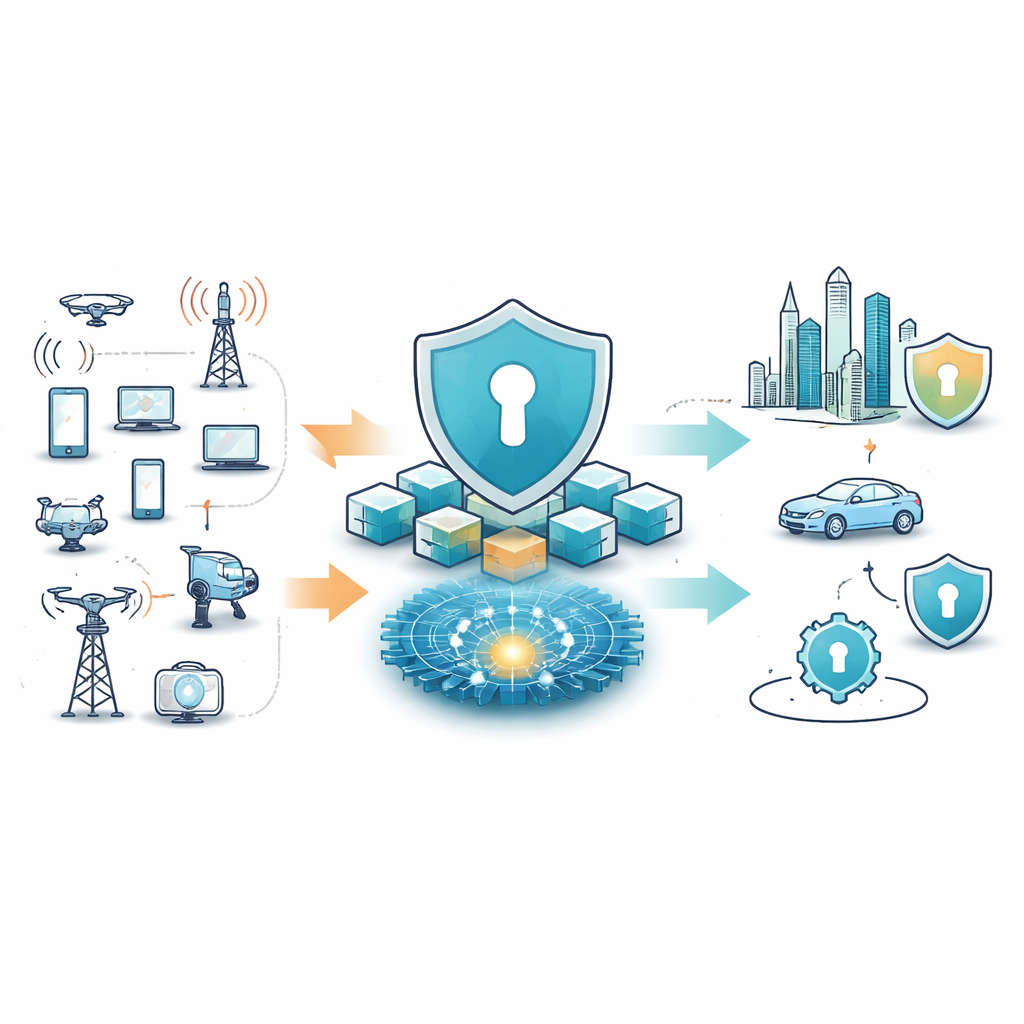
Our phones, cars, hospitals, and factories are rapidly moving onto 5G networks. This shift brings faster speeds and smoother services, but it also opens doors for new kinds of cyberattacks—especially as powerful future computers, including quantum computers, threaten today’s security tools. This paper explores a new way to keep 5G networks trustworthy end to end, so that services like remote surgery, smart traffic lights, and industrial robots can stay safe even as attackers grow more sophisticated.
The problem with today’s trust on the internet
Traditional network security was built around a “castle and moat” idea: once a device got inside the perimeter, it was largely trusted. That approach breaks down in 5G. Modern networks are highly distributed, rely on cloud software, and connect billions of tiny devices that may be poorly protected. Different companies and sectors—such as mobile operators, cloud providers, cars, and hospitals—each run their own trust systems, which rarely talk to one another. At the same time, attackers can flood networks with fake traffic (DDoS attacks), create many bogus identities (Sybil attacks), or quietly poison shared machine‑learning models. Looking ahead, quantum computers could break many of the encryption schemes that currently keep data and identities safe, turning long‑term secrets into easy targets.
A new way to never trust and always verify
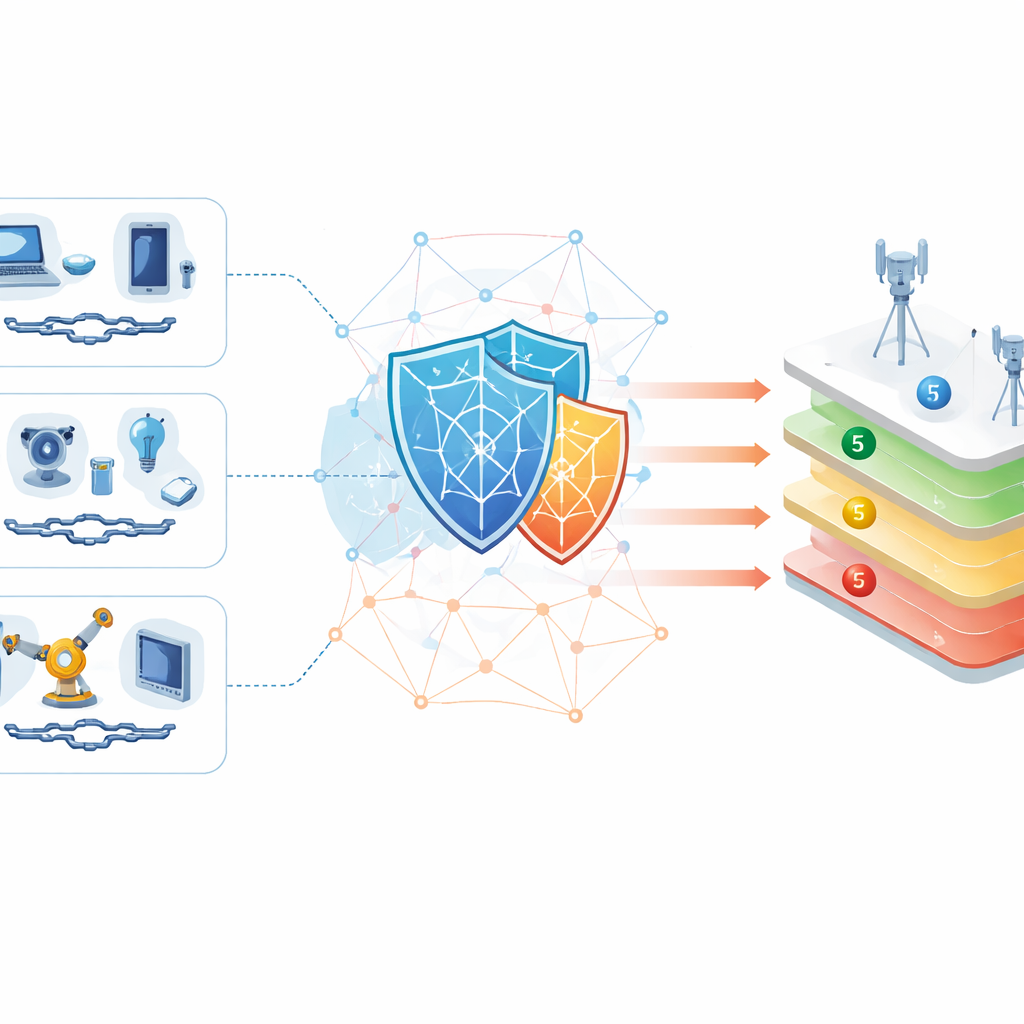
The authors propose a framework called Quantum‑Resilient Cross‑Trust Zero Trust Architecture (QR‑ZTA). Instead of assuming anything is safe by default, QR‑ZTA continuously checks the trustworthiness of every device, user, and service request. It does this at several levels: individual gadgets, network slices tailored to specific uses (like cars or hospitals), and across different administrative domains. A behavior engine watches how each device acts over time—how often it sends messages, how it accesses resources, and how risky its surroundings look. These observations are turned into a rolling trust score that rises with consistent, honest behavior and falls when patterns look suspicious. Access is granted, limited, or blocked based on this evolving score rather than on static rules alone.
Sharing trust across many owners
Modern services often span multiple organizations—for example, a connected car may use a mobile operator’s 5G slice, a cloud provider’s servers, and a carmaker’s own systems. QR‑ZTA uses blockchain technology as a shared “trust ledger” where domains can write and read tamper‑resistant records about how devices have behaved. Smart contracts on this ledger automatically apply rules, such as revoking access when a trust score falls too low. Because not all blockchains or organizations measure trust in the same way, the system includes a translation and weighting step: it converts external trust scores into a common scale and gives more influence to partners that have been more reliable over time. This federated approach lets domains cooperate on security without handing control to a single central authority.
Preparing for the age of quantum computers
To stay safe against future quantum‑enabled attackers, QR‑ZTA replaces vulnerable cryptographic building blocks with post‑quantum alternatives. It uses lattice‑based methods for encrypting data and for digital signatures, and it issues quantum‑resistant identity tokens instead of traditional certificates. These tools are designed to be hard to break even for an adversary equipped with powerful quantum hardware. Importantly, the framework is built to run on today’s ordinary 5G equipment, using software libraries that implement these new algorithms, so it can be deployed now while still being ready for tomorrow’s threats.
How well the new approach performs
The researchers tested QR‑ZTA in detailed simulations combining a 5G network model, a permissioned blockchain, and real‑world‑style traffic from a modern intrusion dataset. Under attack scenarios including Sybil, spoofing, replay, and high‑volume denial‑of‑service traffic, the system correctly distinguished trustworthy from malicious behavior with about 88% accuracy. Unauthorized access was cut to roughly one‑third of the level seen in a traditional threshold‑based model, and network throughput remained 35% more stable under heavy attack. Compared with other advanced schemes from the literature, QR‑ZTA scaled to more devices, reacted to threats faster, and reduced the impact of attacks such as man‑in‑the‑middle eavesdropping.
What this means for future connected worlds
In plain terms, the study shows that it is possible to build 5G security around continuous, data‑driven trust decisions that can be shared safely across many owners and remain robust even in a future where quantum computers exist. While there are still open challenges—such as handling extremely large floods of traffic and trimming the extra computing cost of post‑quantum methods—the proposed architecture points toward 5G and 6G networks that can support life‑critical and industrial applications with much lower risk of silent compromise. For everyday users, this translates into more reliable connections, better protection of personal data, and greater confidence in the invisible infrastructure that powers modern digital life.
Citation: Jeysuriya, K., Renjith, P.N. & Sudhakaran, G. Quantum-resilient cross-trust evaluation for zero trust 5G security. Sci Rep 16, 10714 (2026). https://doi.org/10.1038/s41598-026-44119-x
Keywords: 5G security, zero trust, blockchain trust, post-quantum cryptography, network resilience