Clear Sky Science · en
Chemical characterization and gut microbial response unveil modification of polystyrene polymer in the lesser mealworm
Why beetle larvae and plastic make an intriguing match
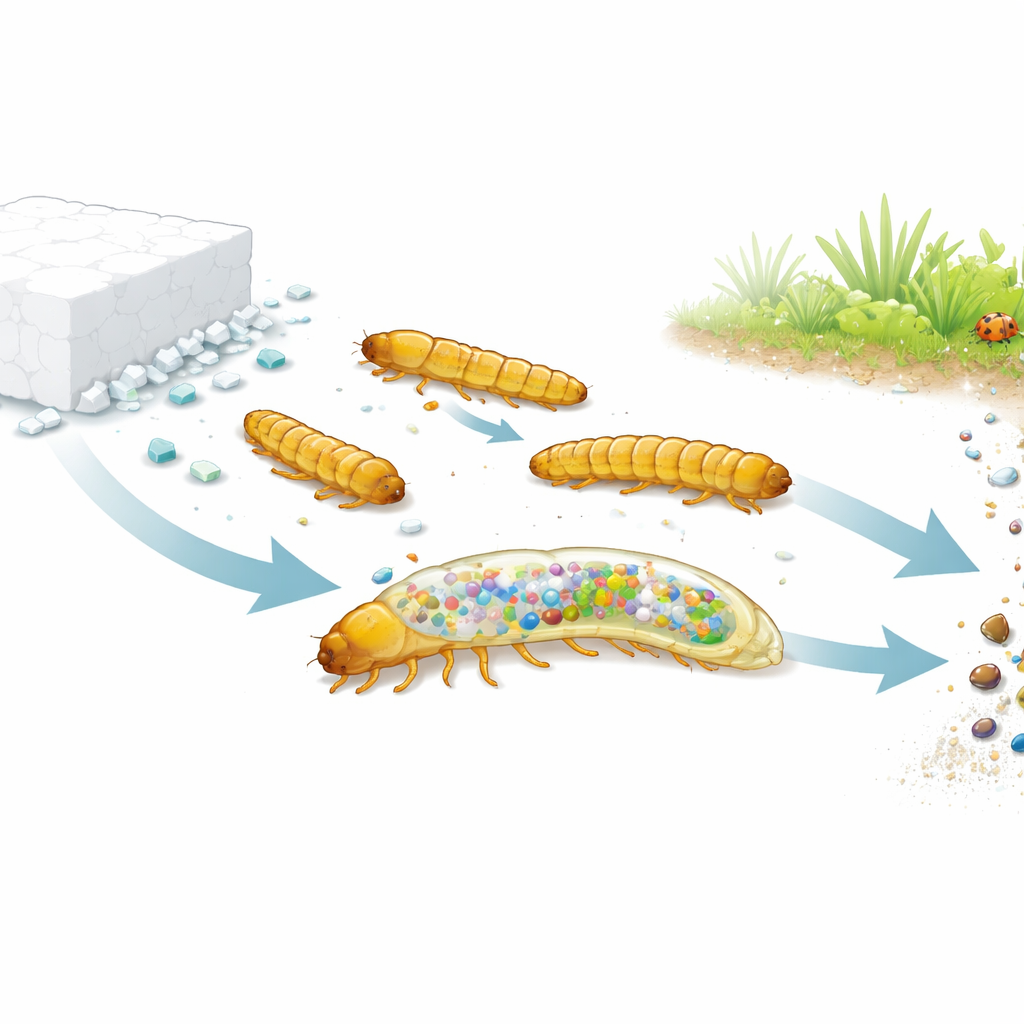
Plastic waste, especially foam packaging made from polystyrene, lingers in the environment for decades. This study explores a surprising ally in tackling this problem: the lesser mealworm, a small beetle larva that can chew and partially transform polystyrene. By tracking both chemical changes in the plastic and shifts in the larvae’s gut microbes, the researchers reveal how this insect–microbe partnership alters the polymer as it passes through the gut.
A closer look at a tiny plastic eater
The lesser mealworm (Alphitobius diaperinus) is a common beetle found in stored products and animal bedding. Earlier work showed that its larvae can nibble on polystyrene, but key details remained unclear: which life stage actually eats the plastic, what happens to the plastic after digestion, and how the gut’s microbial community responds. To answer these questions, the team reared thousands of larvae in the lab, feeding some a normal vegetable-based diet and others expanded polystyrene foam, then followed their growth, droppings, and internal microbes.
Finding the life stage that really eats plastic
The researchers first asked whether all larval stages can handle polystyrene. By measuring head capsule width as the insects developed, they linked plastic feeding to specific growth stages. They discovered that only the final larval group (their largest, last stage before pupation) consistently tunneled into and ingested the foam, and most of these larvae later pupated and became adults. This means that experiments on plastic breakdown should focus on this late stage, and that practical rearing efforts could keep colonies on a standard diet until the final larval phase, then briefly switch them to polystyrene.
How the plastic changes during gut passage
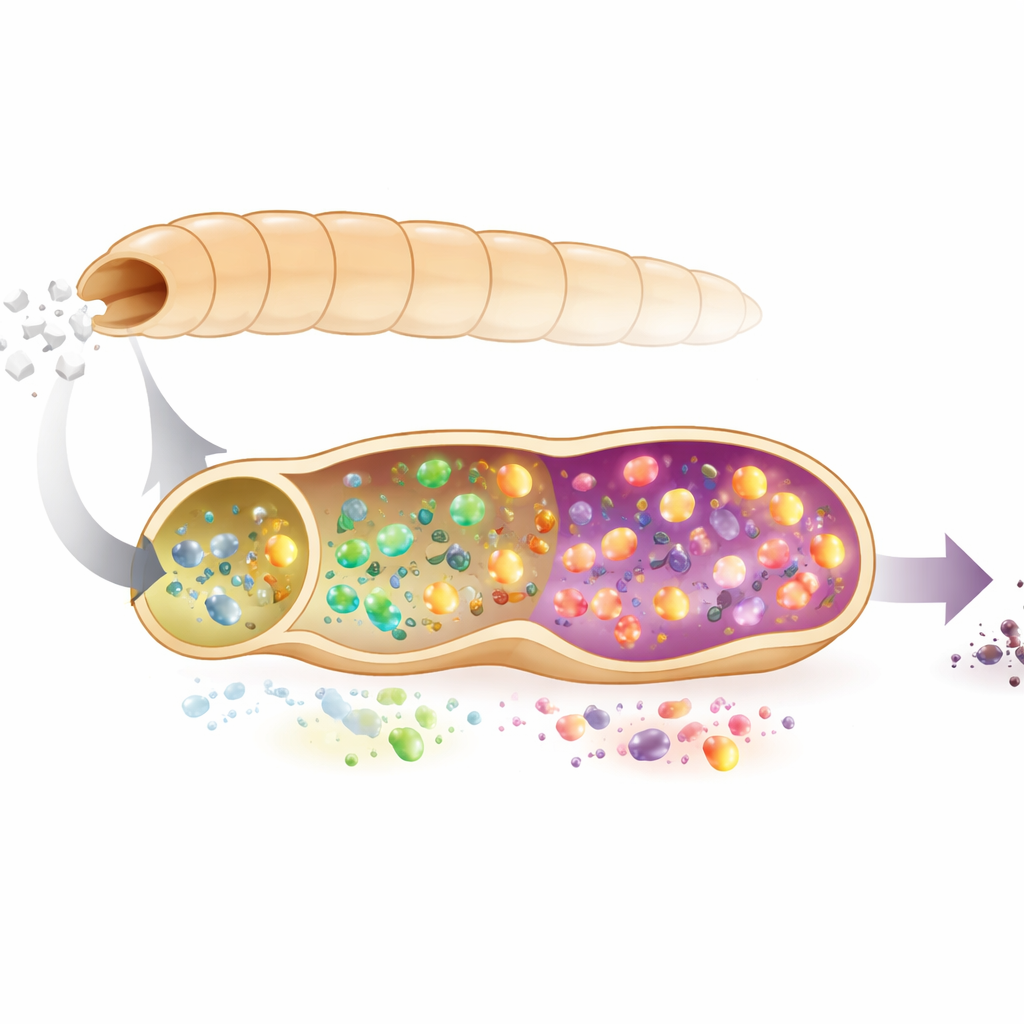
To see whether the plastic is truly altered, the team compared untouched polystyrene with tiny particles recovered from larval droppings. Using micro-FTIR, a technique that reads chemical fingerprints, they confirmed that the droppings contained polystyrene with spectra about 90% similar to the original material—suggesting the plastic remains largely intact but with detectable structural changes. A second technique, gas chromatography–mass spectrometry, revealed two small organic molecules, α-methylstyrene and cumyl alcohol, in larvae fed polystyrene but not in controls or in the plastic itself. These compounds are known hallmarks of polystyrene breakdown, indicating that the polymer undergoes partial chemical transformation inside the gut rather than simply passing through unchanged.
The shifting community inside the insect gut
The scientists then examined how the gut microbiota—the many kinds of bacteria living inside the larvae—responded to a plastic diet. Using full-length sequencing of a common bacterial marker gene, they compared whole guts from different larval stages and also separated foregut, midgut, and hindgut from late-stage larvae. Overall diversity across life stages changed little with diet, suggesting a fairly stable core community. However, in larvae fed polystyrene, specific bacterial groups became more or less common, and the pattern varied along the gut. The foregut and midgut of plastic-fed larvae differed strongly from those of controls and from the hindgut, which harbored the richest and most distinct community. In particular, bacteria in the genus Morganella, and to a lesser extent Kluyvera, were consistently more abundant in polystyrene-fed larvae, marking them as prominent members of the community under plastic exposure.
What this means for future plastic solutions
Together, the chemical and microbial findings paint a coherent picture: late-stage lesser mealworm larvae ingest expanded polystyrene, slightly alter its chemical structure, and produce identifiable breakdown products, all while their gut microbial community reorganizes—especially in the foregut and midgut. The plastic is not fully degraded but is measurably transformed during gut passage. This makes A. diaperinus a valuable model for studying how insects and their microbes act on stubborn plastics. Turning these insights into real-world waste solutions will require isolating key microbes, identifying their enzymes, and determining how efficiently they can transform plastic outside the insect. For now, the work offers a crucial step toward understanding how a small beetle larva can nudge a persistent plastic toward breakdown.
Citation: Zarra, F., Funari, R., Cucini, C. et al. Chemical characterization and gut microbial response unveil modification of polystyrene polymer in the lesser mealworm. Sci Rep 16, 13607 (2026). https://doi.org/10.1038/s41598-026-44113-3
Keywords: plastic biodegradation, polystyrene, insect gut microbiome, lesser mealworm, microplastics