Clear Sky Science · en
Structure-guided optimization of N-sulfonylpiperidines toward potent multi-target anticancer agents
Why this research matters for future cancer treatment
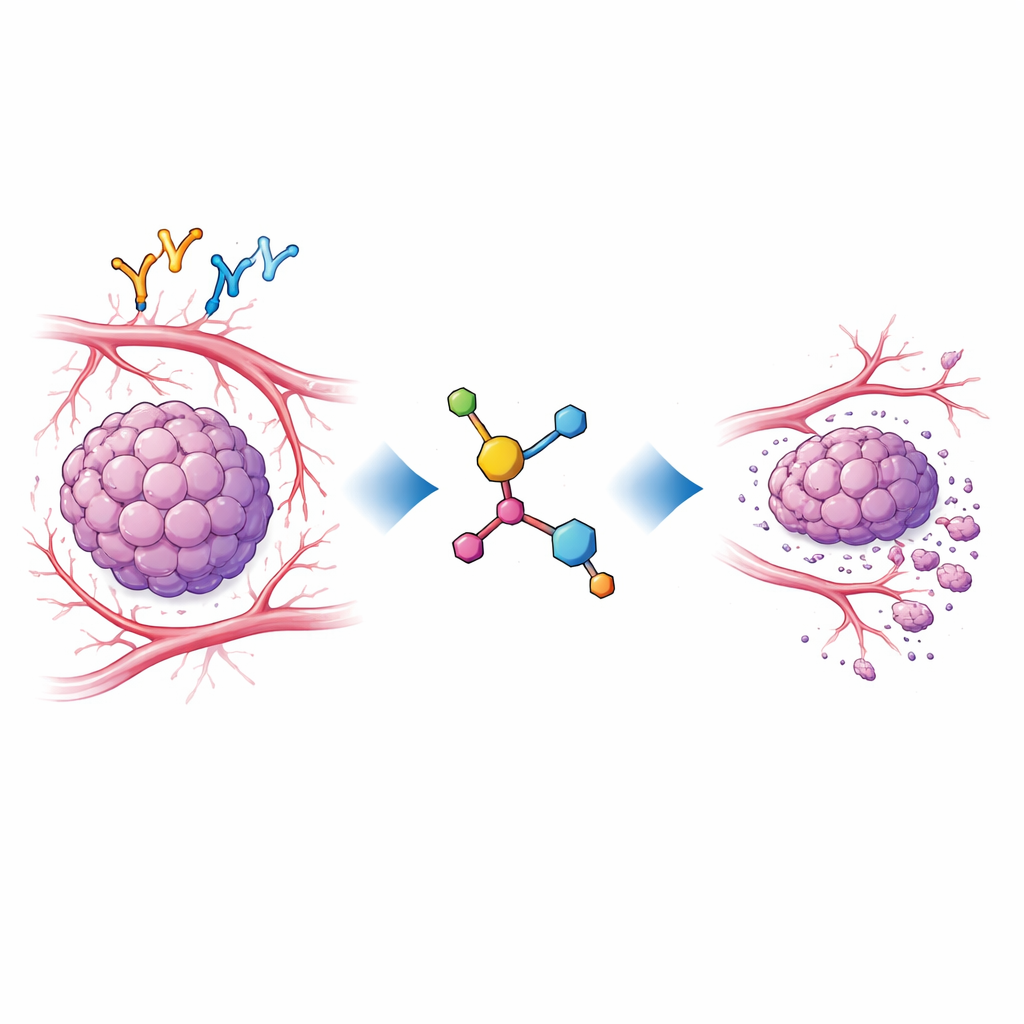
Cancer is hard to treat because tumors often rely on several survival tricks at once and quickly become resistant to drugs that hit only a single target. This study describes a newly designed experimental compound, called 16, that was built to attack cancer cells on multiple fronts at the same time. By carefully reshaping an earlier molecule, the researchers created a new candidate that can block key growth signals, interfere with blood supply formation, and nudge cancer cells toward programmed self-destruction, all while keeping drug-like properties that could make it suitable for further development.
Designing a smarter building block for cancer drugs
The team started from a previously reported molecule, known as compound A, which was already good at blocking VEGFR-2, a protein that helps tumors grow new blood vessels. They kept the central chemical skeleton but deliberately changed three main regions: the position of a small methyl group on a ring, the type of aromatic “head” at one end, and the flexible chemical “bridge” in the middle. By turning that flexible bridge into a more rigid ring system and adding an electron-rich aromatic group, they hoped to lock the molecule into a shape that fits its protein targets more tightly and behaves better inside the body.
Putting the new molecules to the test
The researchers synthesized a series of related compounds and tested them against three human cancer cell lines representing breast, colon, and liver tumors. Early intermediates and simpler versions of the molecules showed weak effects, confirming that the newly added structural features were doing most of the heavy lifting. When the flexible bridge was replaced by a compact ring (a thiazolidinone), the cancer-killing power increased noticeably. Among all the tested structures, compound 16, which carries a methoxy-bearing aromatic ring, emerged as the most active, with cell-killing potency comparable to or better than the reference chemotherapy drug vinblastine across the tested cell lines.
How the lead compound stops growth and triggers cell death
To understand how compound 16 harms cancer cells, the team examined its effects on breast cancer cells in more detail. They found that treatment strongly increased the fraction of cells undergoing apoptosis, a controlled form of cell death where cells dismantle themselves rather than bursting open. Flow cytometry experiments showed that many cells were caught in the early stages of apoptosis after exposure to the compound. At the same time, cell-cycle analysis revealed that 16 caused a buildup of cells in the G0/G1 phase—the starting gate of the division cycle—indicating that it blocks cells from initiating DNA copying and moving toward division, while reducing the number of cells that reach the final splitting phase.
Hitting several cancer targets at once
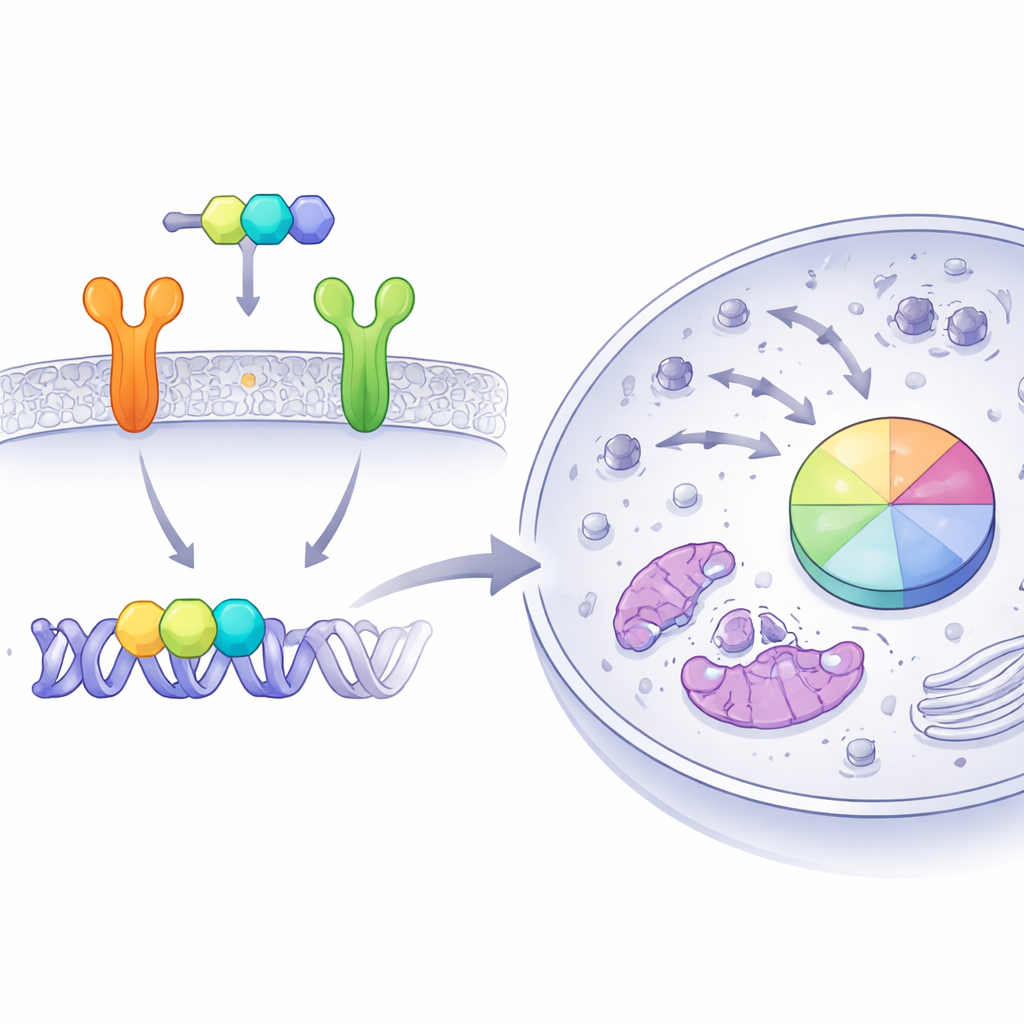
Next, the scientists measured how well compound 16 blocked three cancer-related enzymes: VEGFR-2 and EGFR, which sit on cell surfaces and transmit growth signals, and topoisomerase II, which helps manage DNA structure during replication. In enzyme assays, 16 strongly inhibited VEGFR-2 and EGFR at submicromolar concentrations, while showing moderate but weaker blocking of topoisomerase II. Computer docking simulations helped explain this performance: the rigid core of 16 positions its key groups to form multiple hydrogen bonds and snug hydrophobic contacts inside the VEGFR-2 binding pocket, including interactions with amino acids known to be crucial for drug recognition. Additional quantum-chemical calculations suggested that the molecule’s electronic structure favors efficient charge transfer and adaptable binding, which may further strengthen its grip on the target site.
Drug-likeness and structural lessons
Beyond potency, the compound’s predicted behavior in the body was assessed using in silico tools. Both the original molecule A and the optimized 16 fell largely within accepted “drug-like” ranges for size, solubility, and polarity, with 16 only slightly above the classic weight guideline but still in an acceptable zone. Neither is expected to cross the blood–brain barrier, potentially limiting unwanted effects in the central nervous system, and both are unlikely to be pumped out of cells by common efflux transporters. Comparison against large collections of known drugs suggested that this chemical scaffold is relatively new among VEGFR-2 and EGFR inhibitors, hinting at novelty while still acting on well-validated targets.
What this means for future anticancer medicines
In plain terms, this work shows that careful “reshaping” of an existing molecule can transform it into a more powerful and versatile anticancer candidate. The optimized compound 16 attacks cancer cells by blocking two major growth switches, lightly disturbing a DNA-handling enzyme, stalling the cell cycle, and promoting orderly cell suicide. While these findings are still at an early, laboratory stage and far from clinical use, they point toward a promising strategy: designing compact molecules that can hit several cancer-supporting systems at once, potentially reducing resistance and improving long-term treatment outcomes.
Citation: Al Jazairi, A.S., Elgammal, W.E., Mohamed, M.B.I. et al. Structure-guided optimization of N-sulfonylpiperidines toward potent multi-target anticancer agents. Sci Rep 16, 12230 (2026). https://doi.org/10.1038/s41598-026-44109-z
Keywords: anticancer drug design, kinase inhibitors, multi-target therapy, apoptosis, VEGFR EGFR