Clear Sky Science · en
Observer aided robust control for cyber physical power grids with event triggered sliding mode controller
Keeping Tomorrow’s Power Grids Safe
As homes, businesses, and entire cities shift toward renewable energy, our power grids are becoming more like giant computers than simple wires and transformers. That digital makeover brings new risks: hackers, faulty data, and communication delays can push voltages out of safe limits, damaging equipment or causing blackouts. This paper presents a new way to keep such “smart” grids stable and secure even when they are under attack, focusing on small self-contained networks called islanded microgrids that rely heavily on solar, wind, and batteries. 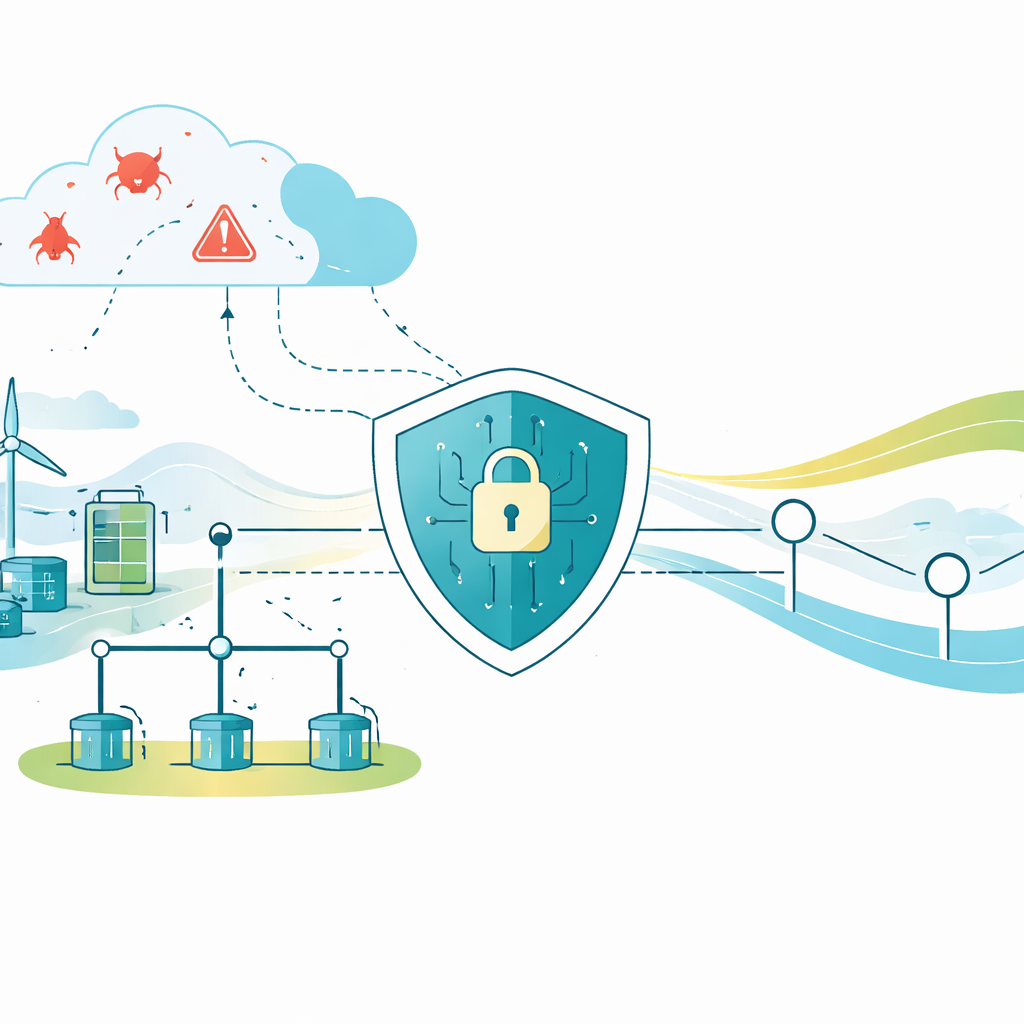
Why Small Grids Need Strong Nerves
Islanded microgrids power remote communities, campuses, and critical facilities using local solar panels, wind turbines, and batteries. To work smoothly, they must carefully balance not just how much power flows, but also “reactive power,” the component that keeps voltages at healthy levels. In modern microgrids, this balancing act depends on computers, sensors, and communication links. If false readings are injected, messages are blocked, or data arrive late, the control system can lose track of what is really happening. The result may be flickering lights, overstressed equipment, or in the worst case a cascading loss of power. Existing controllers, such as classic PID schemes or basic sliding-mode designs, were not built with these cyber dangers and communication limits in mind.
A Smarter Watchdog for Attacks and Faults
The authors propose an “observer-aided robust control” framework that adds an intelligent watchdog alongside the main controller. This watchdog combines two mathematical tools: an Extended Kalman Filter and a Sliding Mode Observer. Together, they act like a highly trained technician constantly cross-checking sensor readings against a detailed model of how the grid should behave. When data look suspicious—because of noise, faults, or malicious tampering—the observers reconstruct the hidden internal state of the system and estimate the disturbance itself. This lets the controller base its decisions on a cleaner picture of reality instead of blindly trusting every incoming measurement, sharply improving its ability to spot and withstand cyber-attacks such as false data injection and denial-of-service.
Only Speaking Up When It Matters
Another key idea is to avoid sending control updates nonstop. Instead, the proposed event-triggered sliding mode controller watches how far the system drifts from its desired behavior and only sends new commands when a clearly defined threshold is crossed. In quiet periods, the last control signal is simply held, cutting down communication traffic and computing load. The authors prove, using energy-like Lyapunov arguments, that this “speak only when needed” strategy keeps the system stable and prevents pathological behavior where updates would otherwise happen infinitely often in a short time. In plain terms, the microgrid remains calm and within safe voltage bounds, while the network is not flooded with unnecessary messages.
Putting the New Brain to the Test
The team tests their framework on a detailed three-bus islanded microgrid model with wind, solar, and battery units tied together through power electronics and a realistic communication network. They simulate a variety of stress scenarios, including sudden load changes, random wind fluctuations, and sophisticated cyber-attacks that distort measurements or temporarily block communication. In these trials, three approaches are compared: a traditional PID controller, a conventional sliding mode controller that updates continuously, and the new observer-aided event-triggered controller. 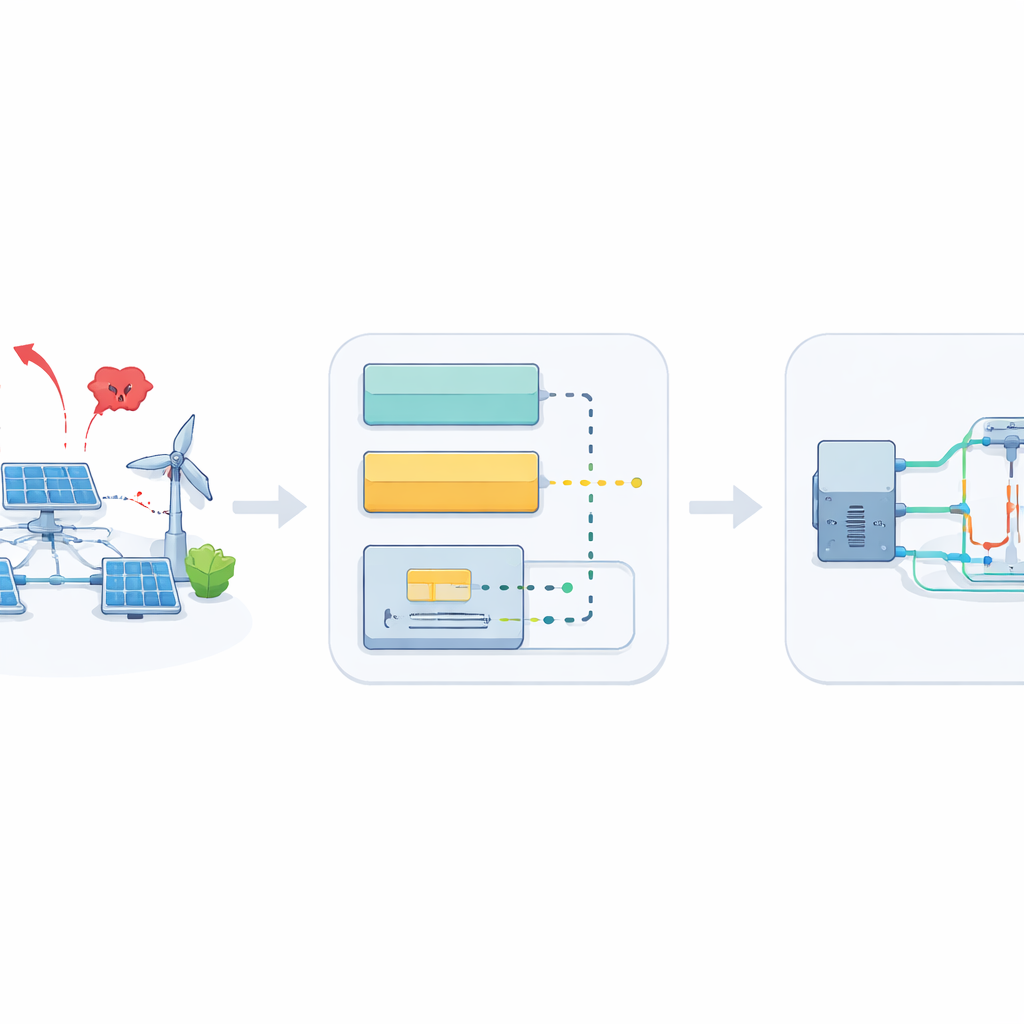
What the Experiments Reveal
Across many cases, the new controller keeps voltages closer to their targets, reduces overshoot, and settles more quickly after disturbances, all while cutting control updates by roughly half. It also markedly lowers power quality issues such as waveform distortion and trims energy losses. Importantly, these gains are not just seen in computer simulations. The authors implement the scheme on an OPAL-RT hardware-in-the-loop platform, which runs a real-time digital replica of the microgrid coupled to actual control hardware. Under programmed cyber-attacks and noisy conditions, the controller maintains voltage deviations within tight limits and preserves stability, demonstrating that the method is fast and reliable enough for real-world embedded devices.
What This Means for Future Grids
For non-specialists, the message is reassuring: it is possible to design control systems that both save bandwidth and actively defend against cyber threats without sacrificing grid stability. By blending smart state observers with an event-triggered strategy, this work shows how renewable-rich microgrids can ride through hacking attempts, bad data, and physical uncertainties while keeping lights steady and equipment safe. As more of the world’s electricity flows through digital, distributed networks, such resilient control approaches will be central to delivering clean power that people can trust.
Citation: Mohanty, A., Ramasamy, A., satpathy, A. et al. Observer aided robust control for cyber physical power grids with event triggered sliding mode controller. Sci Rep 16, 13996 (2026). https://doi.org/10.1038/s41598-026-44084-5
Keywords: microgrid security, renewable energy control, cyber-physical systems, voltage stability, smart grid resilience