Clear Sky Science · en
Aryl hydrocarbon receptor in the kidney regulates metabolic cross-talk with the liver and gut microbiome
Why the Kidney Talks to the Rest of the Body
Most people think of the kidneys as simple filters that clear waste from the blood. This study shows that the kidney also helps coordinate a chemical conversation between our gut microbes, liver, and bloodstream. By examining how this communication changes when a key sensor in the kidney is turned off in mice, the researchers reveal hidden pathways that may influence chronic kidney disease, drug side effects, and overall metabolic health.
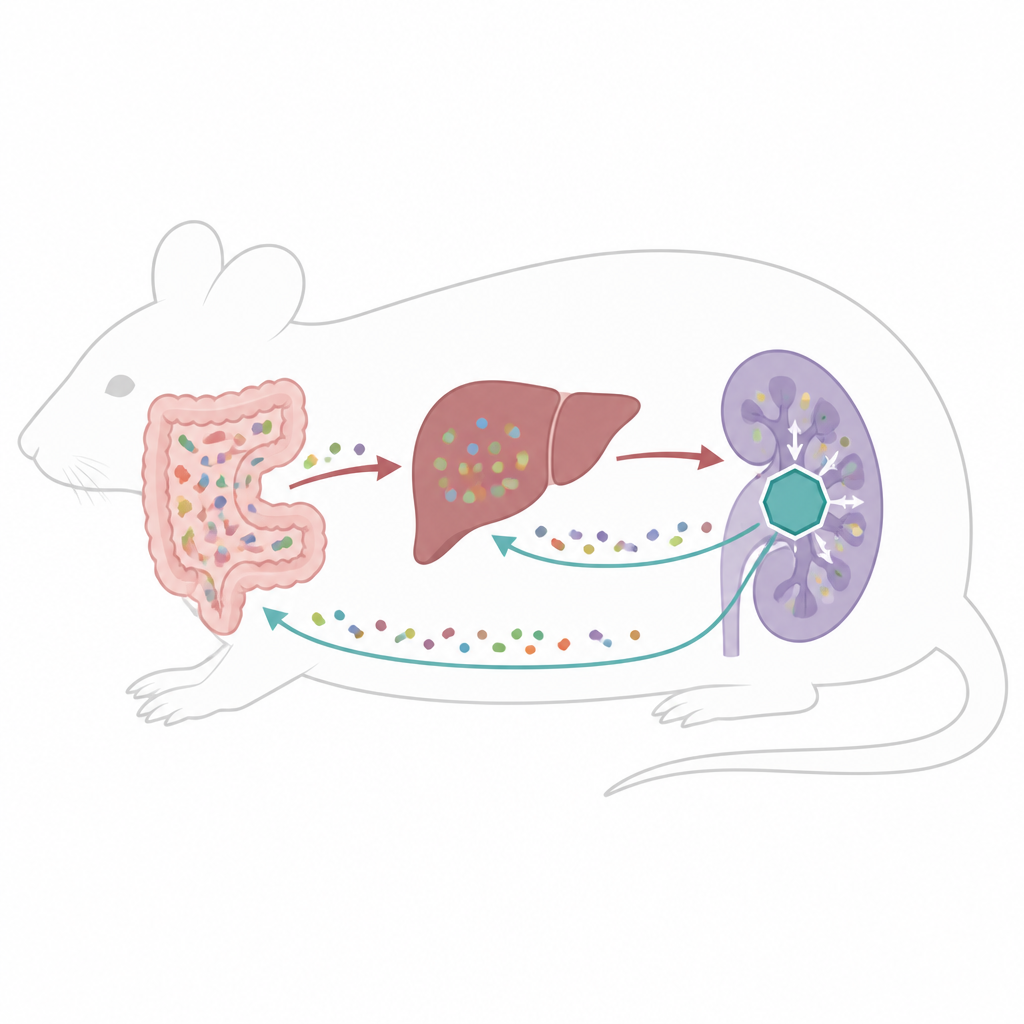
A Hidden Sensor that Listens to Chemical Signals
At the center of this work is a protein called the aryl hydrocarbon receptor, or AHR, which acts as a sensor for many small molecules. Some of these molecules come from the gut microbiome, especially from the breakdown of the amino acid tryptophan into uremic toxins that can build up when kidneys fail. AHR is found in several organs, including the kidney and liver, and helps control genes that move and modify drugs and toxins. The authors focus on what happens when AHR is missing specifically in the kidney and how that loss changes the flow of chemicals along the gut microbiome–liver–kidney axis.
Building a Virtual Map of Organ Chemistry
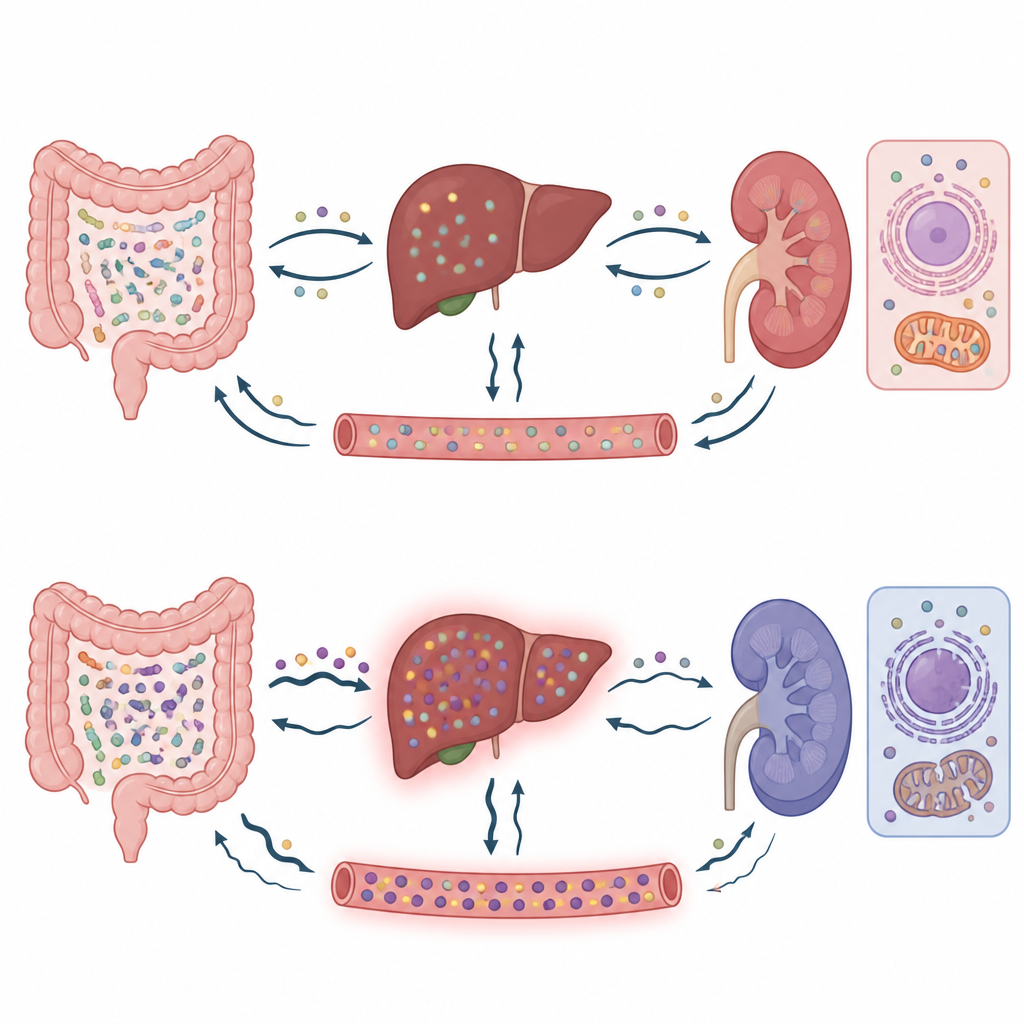
To follow this chemical conversation, the team combined several kinds of large-scale data from mice with and without kidney AHR. They measured many small molecules in kidney tissue and blood and examined gene activity in both kidney and liver. Using a detailed computer model of metabolism that links genes, enzymes, and chemical reactions, they reconstructed how hundreds of reactions might behave across organs and even within different parts of cells, such as mitochondria, nuclei, and the endoplasmic reticulum. This multi-organ metabolic reconstruction let them test how knocking out AHR in the kidney reshapes the possible chemical routes between organs.
Shifts in Chemical Traffic Across Organs
The models and measurements revealed that losing kidney AHR does not just affect the kidney. Many reaction changes actually appeared in the liver and in pathways tied to gut microbes. In the absence of AHR, pathways related to polyamines, which influence cell growth and scarring, were more active, while those handling certain organic acids, thiamine (vitamin B1), and various chemical “transfer” reactions were reduced. The liver showed altered handling of fatty acids, sugars, and amino acids, and the normal give-and-take between organelles such as the nucleus, Golgi apparatus, and endoplasmic reticulum was rebalanced. These changes suggest that the kidney normally uses AHR to help set the rules for how both kidney and liver share and transform small molecules coming from the gut.
Clues from Mismatched Signals in Blood and Kidney
Not all chemical changes could be explained by simple diffusion from kidney cells into the blood. The researchers looked for “discordant” metabolites whose levels moved in opposite directions in the kidney and in plasma. These mismatches point to active regulation, such as changes in transport or enzyme activity, rather than passive leakage. Mapping these discordant metabolites onto their reaction network highlighted a cluster of pathways involved in nitrogen handling, the urea cycle, redox balance, and polyamine production. Enzymes that directly manage nitrogen were often increased, while more distant supporting enzymes were decreased, hinting at a regulatory hub controlled by kidney AHR that helps manage nitrogen waste and oxidative stress.
Why This Matters for Health and Treatment
By weaving together data from organs, cells, and even cellular compartments, this study portrays kidney AHR as a master coordinator of chemical traffic between the gut microbiome, liver, and kidney. When this sensor is lost, the usual remote communication through small molecules is disrupted, leading to tighter and sometimes less flexible links between key reactions and pathways. For patients, this means that drugs or toxins that interact with AHR, especially gut-derived uremic toxins, may have wide-reaching and sometimes unexpected effects on metabolism across the body. The work offers a roadmap for predicting how therapies that block or tune AHR might change not just kidney chemistry but also liver function, gut microbe interactions, and the balance of nitrogen and oxidative stress.
Citation: Jamshidi, N., Nigam, S.K. Aryl hydrocarbon receptor in the kidney regulates metabolic cross-talk with the liver and gut microbiome. Sci Rep 16, 14879 (2026). https://doi.org/10.1038/s41598-026-44083-6
Keywords: aryl hydrocarbon receptor, kidney metabolism, gut microbiome, liver kidney axis, uremic toxins