Clear Sky Science · en
Oral calcium supplements to reduce the bioaccessibility and bioavailability of arsenic and lead in contaminated soil
Why Dirt on Our Hands Can Be a Hidden Threat
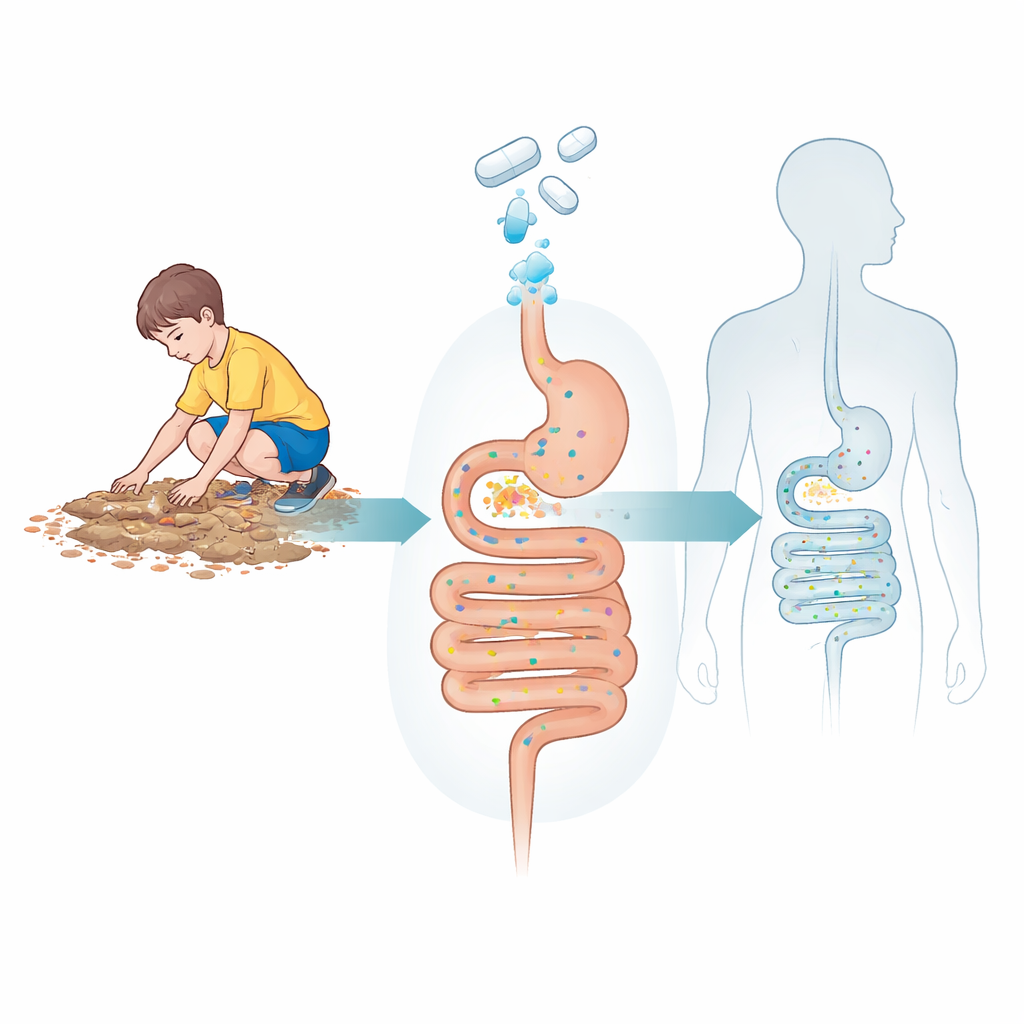
Children all over the world play in soil, put their fingers in their mouths, and swallow tiny bits of dirt without anyone noticing. When that soil is polluted with toxic metals like arsenic and lead, this everyday habit can slowly damage developing brains and raise lifelong cancer risk. This study asks a practical question with big health implications: could a simple calcium supplement, much like the ones already sold for bone health, help block arsenic and lead from entering the body when contaminated soil is accidentally swallowed?
Two Dangerous Metals in Everyday Soil
Arsenic and lead are widespread in soils near mines, smelters, and other industrial sites. Arsenic can cause cancers and skin, blood vessel, and metabolic diseases, while lead harms children’s brains and behavior. Young children are especially vulnerable because they explore the world with their hands and mouths, easily ingesting dust and soil. Once swallowed, only part of the metal actually dissolves in the stomach and intestines and gets into the bloodstream. This “available” fraction, not just the total amount in soil, determines the real health risk. Finding simple ways to shrink that fraction could protect children even when cleaning up polluted land is slow or incomplete.
Testing Different Types of Calcium
Calcium is essential for bones, but it also interacts with metals inside the gut. The researchers compared eight common calcium compounds, four “inorganic” (such as calcium carbonate, similar to antacids) and four “organic” salts (such as calcium citrate and calcium acetate). First, they mixed contaminated soils from two industrial areas in China with simulated stomach and intestinal fluids to see how much arsenic and lead would dissolve under different calcium additions. Then, they selected the most promising compounds and fed them, along with contaminated soil, to mice so they could measure how much arsenic and lead actually ended up in the animals’ livers and kidneys.
What Happened Inside the Gut
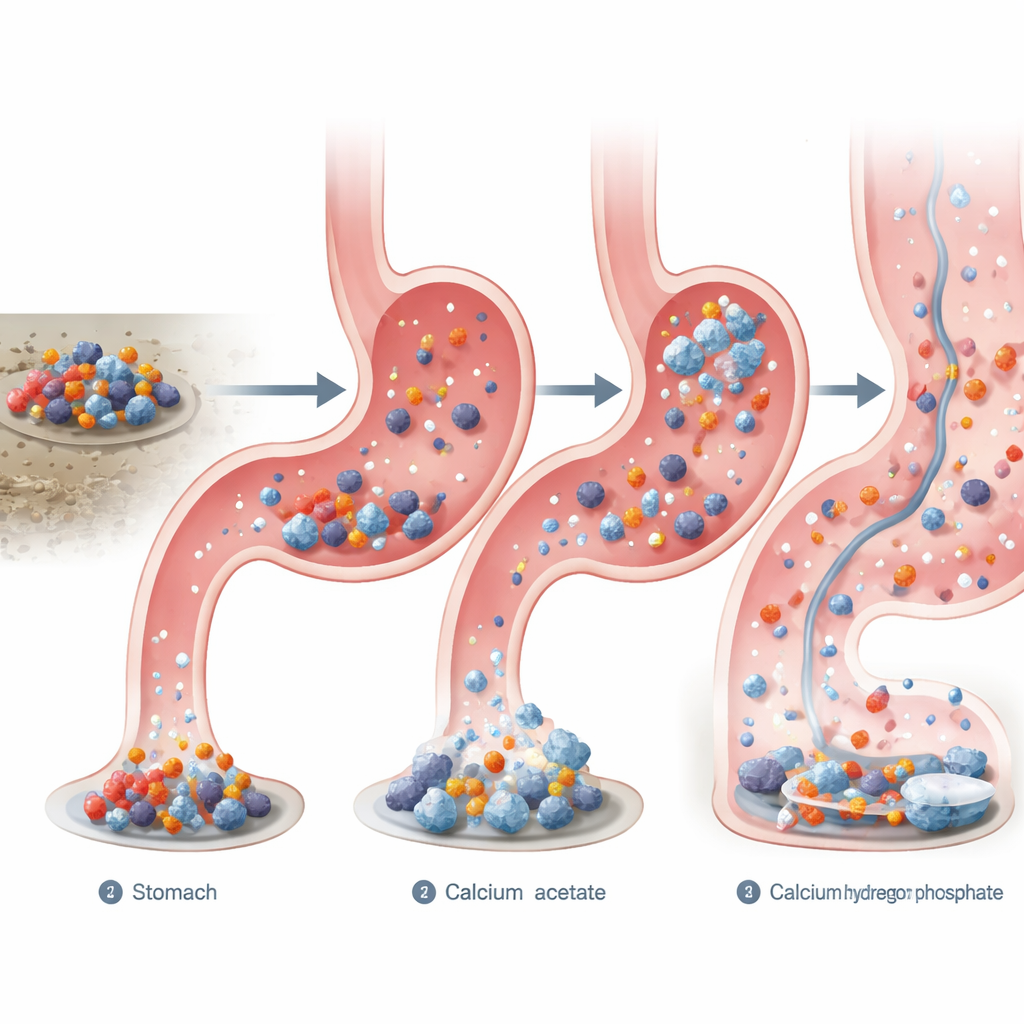
The tests showed that calcium did not behave the same way for arsenic and lead. One compound, calcium hydrogen phosphate, was very good at locking up lead during digestion. It helped form hard-to-dissolve lead–phosphate particles, especially in the more neutral conditions of the intestines, so much less lead remained in a form the body could absorb. But this same compound tended to free up arsenic from soil particles, making arsenic more available in the gut fluids. Other inorganic forms, like calcium carbonate and calcium chloride, slightly reduced arsenic release in the intestines but were less powerful for lead. Among the organic forms, calcium lactate, gluconate, and citrate often pulled arsenic off soil minerals, raising its availability, while their effect on lead was mixed and depended on dose.
A Standout Option: Calcium Acetate
Calcium acetate emerged as a rare “win–win.” In the lab digestion tests it reduced how much lead dissolved in the stomach and gradually lowered arsenic levels in the intestinal phase, without the strong arsenic-releasing effect seen for some other organic salts. In the mouse experiments, adding modest amounts of calcium acetate to the diet (comparable to realistic supplement levels) substantially reduced how much arsenic and, to a lesser extent, lead built up in the animals’ organs. Another compound, calcium hydrogen phosphate, was still the champion for cutting lead uptake, but it was less consistently helpful for arsenic.
What This Means for Everyday Protection
To a layperson, the bottom line is that not all calcium pills are equal when it comes to shielding the body from toxic soil metals. This study suggests that carefully chosen calcium supplements could act as an internal filter, causing arsenic and lead from swallowed soil to stay tied up in the gut and leave the body instead of entering the bloodstream. Calcium hydrogen phosphate is particularly effective for reducing lead exposure, while calcium acetate at realistic doses can reduce both arsenic and lead absorption at the same time. Although more work is needed to test real foods, different diets, and the role of gut microbes, the findings point toward a simple, low-cost way to lower children’s exposure in polluted areas while long-term soil cleanup continues.
Citation: Song, R., Wu, Y., Chen, S. et al. Oral calcium supplements to reduce the bioaccessibility and bioavailability of arsenic and lead in contaminated soil. Sci Rep 16, 10888 (2026). https://doi.org/10.1038/s41598-026-44078-3
Keywords: arsenic, lead, calcium supplements, contaminated soil, children’s exposure