Clear Sky Science · en
Sustainable synthesis of MgO nanoparticles from Persea americana for cultivar dependent nanostructure, environmental remediation and bioactivity supported by molecular docking
Turning avocado skins into helpful tiny tools
Avocado peels are usually thrown away, but they are rich in natural chemicals. This study shows how those discarded peels can be turned into tiny particles of magnesium oxide that fight germs and help clean polluted water. By comparing peels from two popular avocado types, Hass and Fuerte, the researchers reveal how small differences in fruit variety can change the power of these microscopic helpers.
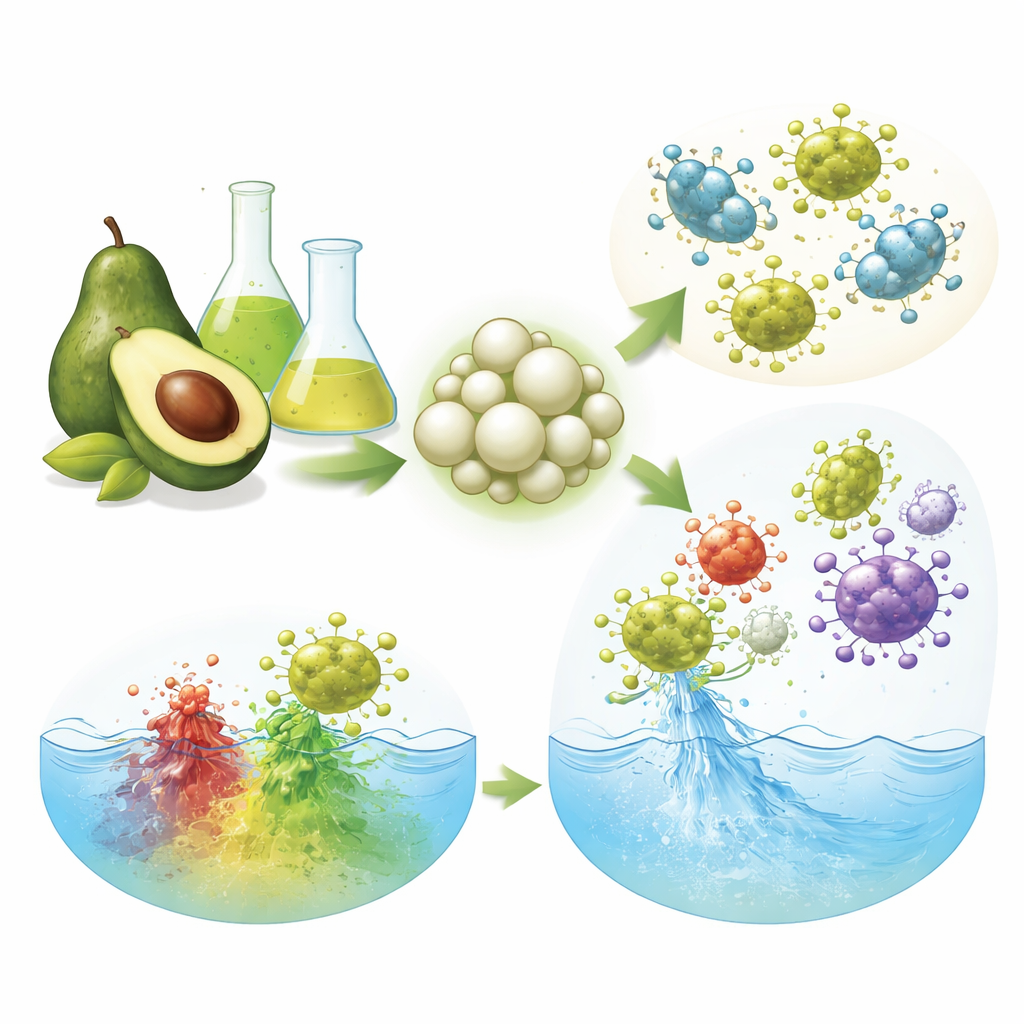
From kitchen waste to useful nanoparticles
The scientists began by collecting peels from Hass and Fuerte avocados grown in Turkey. After washing, drying, and grinding the peels, they boiled them in water to pull out plant compounds such as polyphenols and flavonoids. These natural ingredients act like gentle chemical factories: when mixed with a magnesium salt and a base, they help form solid magnesium hydroxide, which is then heated to become magnesium oxide nanoparticles. Measurements of light absorption, crystal structure, and surface chemistry confirmed that both peel types produced stable particles about 20–50 nanometers across—thousands of times smaller than the width of a human hair.
How fruit variety shapes the tiny structures
Although both Hass and Fuerte peels made the same basic material, the details differed. Electron microscope images showed that the nanoparticles clumped into porous clusters, giving them a large surface area that is useful for sticking to dyes and microbes. Infrared tests revealed that plant-based molecules from the peels coat the particle surfaces, acting as natural stabilizers. Subtle shifts in these signals, along with differences in crystal sharpness, showed that the two avocado varieties leave distinct chemical fingerprints on the particles. In practice, this means the surface of a nanoparticle made from Hass peel is not quite the same as one made from Fuerte peel, and that difference turns out to matter.
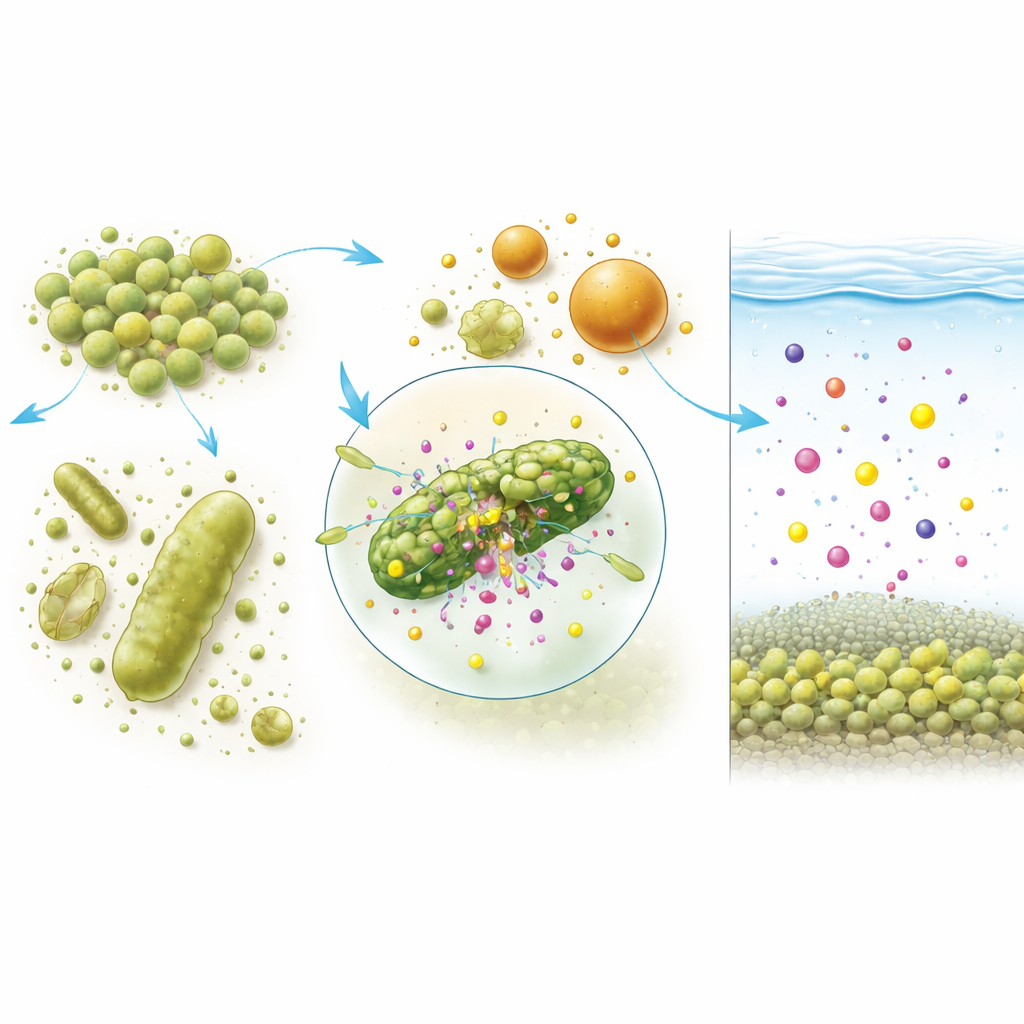
Tiny fighters against bacteria and fungi
The team tested the new particles against two common bacteria, Escherichia coli and Staphylococcus aureus, and the mold Aspergillus niger. Both types of avocado-based nanoparticles carved out clear "dead zones" where microbes could not grow on laboratory plates, with zone sizes close to those created by standard antibiotics. The particles not only slowed growth but actually killed the microbes at low concentrations, especially the fungus. Computer simulations backed this up: digital models suggested that magnesium oxide surfaces bind very strongly to key proteins in bacterial outer membranes and fungal cell-wall and membrane enzymes. These strong contacts may help explain how the particles damage cell envelopes and disturb vital processes.
Cleaning up colorful pollutants in water
Beyond fighting infection, the nanoparticles also showed promise for environmental cleanup. The researchers tested five common synthetic dyes that can contaminate wastewater from textile and other industries. By adjusting the amount of nanoparticles, temperature, and contact time, they found that some dyes were removed by more than 90 percent, as the color molecules stuck to or broke down on the particle surfaces. Performance depended on both dye structure and avocado cultivar: for example, Fuerte-based particles excelled at removing certain blue and green dyes, while Hass-based particles did better with a yellow dye. These results highlight how tailoring the fruit source can tune the particles for specific cleanup jobs.
Why this matters for people and the planet
In simple terms, this work shows that something as ordinary as an avocado peel can be transformed into a low-cost, multi-purpose material that both kills harmful microbes and pulls stubborn dyes out of water. The study also reveals that not all peels are equal: the Fuerte variety generally produced more potent antimicrobial and dye-removing particles than Hass, thanks to its distinct mix of natural chemicals. By turning agricultural waste into useful nanomaterials, this approach reduces reliance on harsh synthetic methods and opens the door to greener disinfectants and water treatments that are both effective and affordable.
Citation: Badilli, B.N., Bulut Kocabas, B., Attar, A. et al. Sustainable synthesis of MgO nanoparticles from Persea americana for cultivar dependent nanostructure, environmental remediation and bioactivity supported by molecular docking. Sci Rep 16, 13742 (2026). https://doi.org/10.1038/s41598-026-44077-4
Keywords: green nanotechnology, avocado waste, magnesium oxide nanoparticles, antimicrobial materials, water dye removal