Clear Sky Science · en
Marine cleaning stations as hotspots for cryptobenthic reef fish
Hidden Life Around Reef "Service Stations"
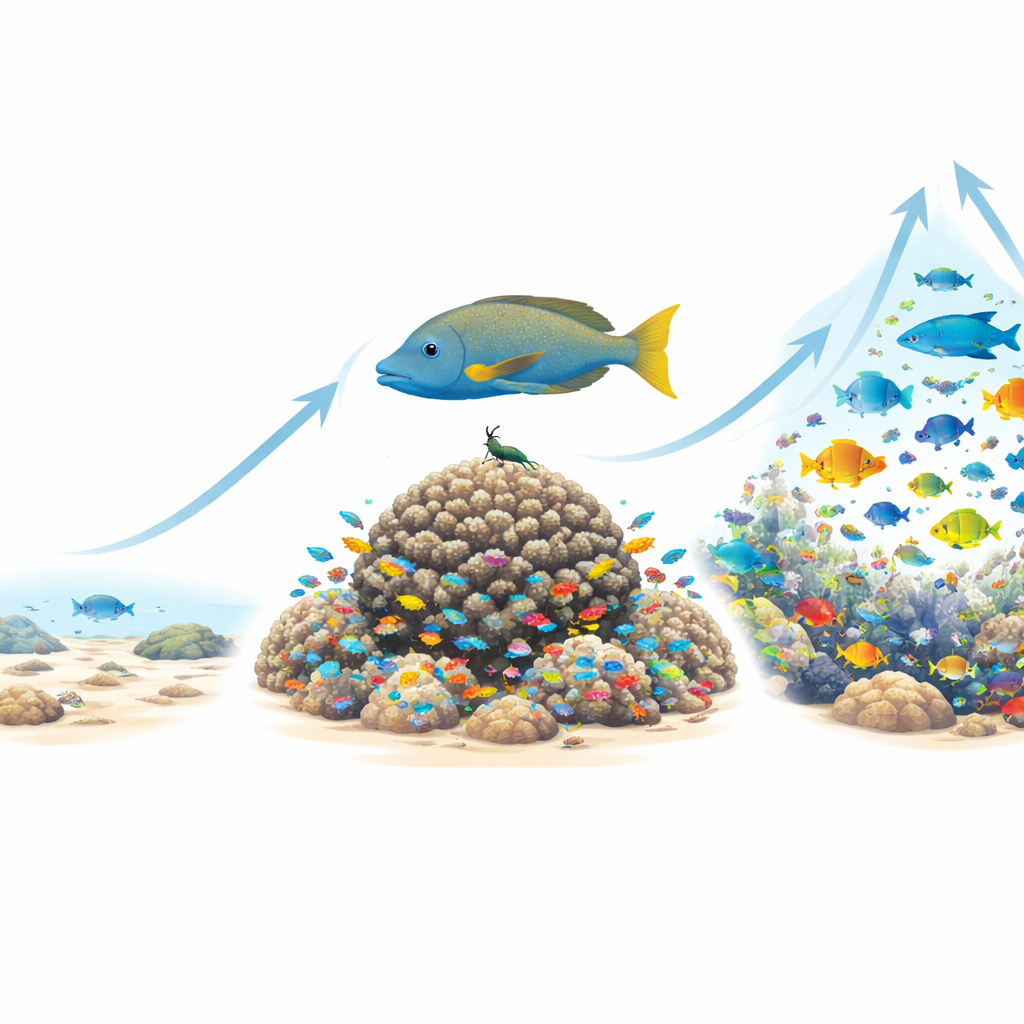
On many coral reefs, some fish run a kind of underwater car wash, picking parasites off bigger "client" fish in exchange for a meal. These cleaning stations are famous, but this study asks a new question: do these busy service spots also shelter tiny, hard‑to‑see fishes that quietly keep reef food webs running? By zooming in on these miniature residents, the authors reveal how an everyday interaction between a cleaner and its clients can ripple out to shape whole communities.
Tiny Fish With a Big Job
Coral reefs are crowded cities where species constantly interact, helping decide who lives where and in what numbers. Among their least visible residents are cryptobenthic reef fishes: tiny, bottom‑dwelling fish that hide in cracks, sand, and rubble. Most are shorter than a house key and hard to spot, but together they make up about half of all individual fish on many reefs. They live fast, die young, and are eaten by a wide range of predators, making them a crucial, ever‑renewed food source for larger animals. Despite their importance, these miniature fishes have rarely been included in studies of cleaning stations.
The Reef’s Service Bays
In the Caribbean, certain gobies act as full‑time cleaners, setting up shop on bulky coral heads. Larger fish visit to have parasites and dead tissue nibbled away. Earlier research showed that such stations can calm aggressive behavior in predators and influence where juvenile fishes choose to live, hinting that these coral heads might also be safe havens for other species watching from nearby. The team behind this study wondered whether cryptobenthic fishes are more numerous and more varied near these goby‑run cleaning stations than in similar parts of the reef without cleaners.
Counting the Uncountable
Working on shallow reefs off Utila in Honduras, divers compared fish communities at 21 active cleaner goby stations and 21 nearby areas with no cleaning activity. Around each site, they placed small square frames on the seafloor and first conducted timed visual counts of the tiny fishes. To flush out the most secretive individuals, they then used a mild clove‑oil mixture under a mesh net, which encourages hidden fish to emerge without harming them. They also surveyed 28 coral heads directly—half with cleaners present and half without—to separate the effect of cleaner presence from differences in coral shape and size. At every site they measured habitat complexity, such as how rough the surface was and how many hiding spots were available.
Hotspots for Small Lives
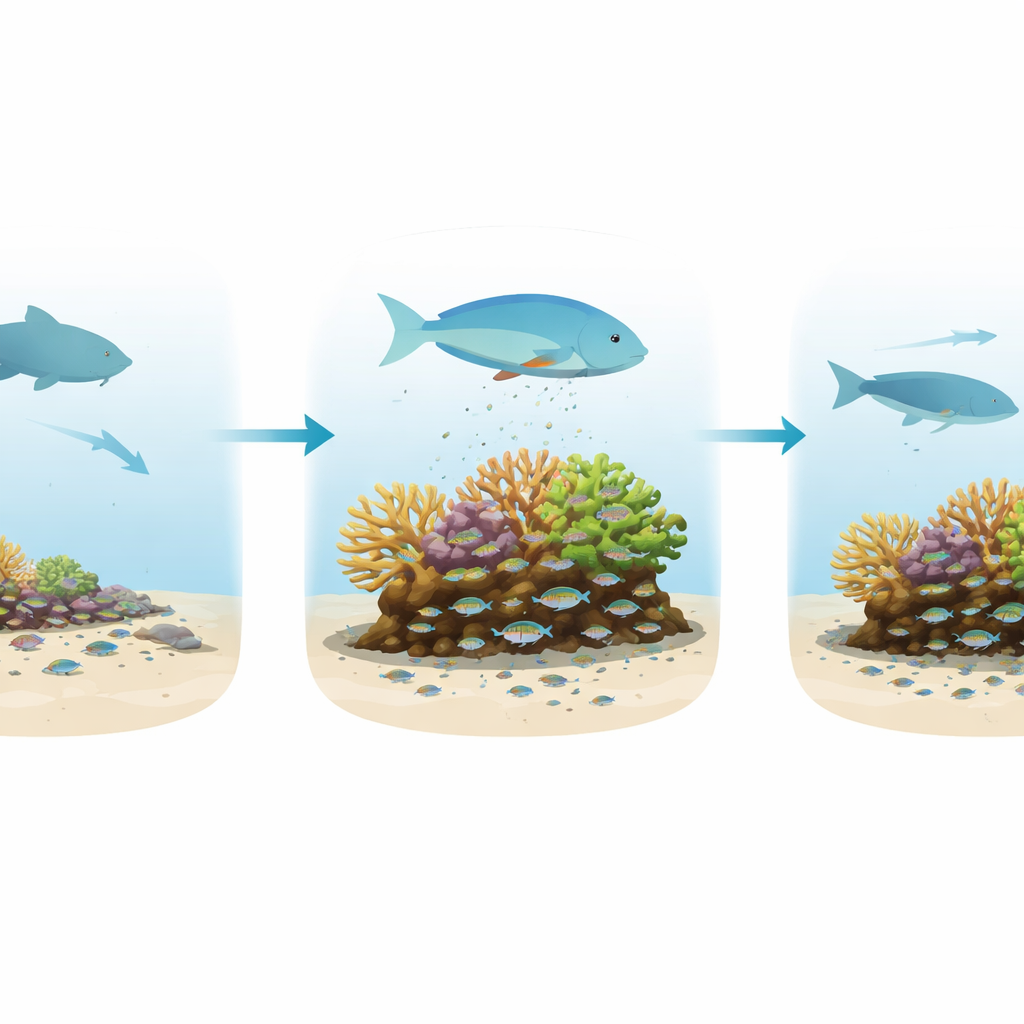
The pattern was clear: cryptobenthic fishes were more numerous, more species‑rich, and more diverse around cleaning stations than in comparable areas without them, even after accounting for habitat complexity. The same was true when looking only at the coral heads themselves: those with cleaner gobies hosted far more of these small fishes than similar corals without cleaners. Certain species that live exposed on the surface of rocks and coral were especially associated with stations, while tube‑dwelling species that already enjoy good protection showed weaker links. Many individuals that primarily feed on detritus and tiny particles were also concentrated near cleaning stations, suggesting they may benefit from the scraps—skin, scales, and parasites—that drift down during cleaning bouts.
Why This Matters for Reefs
Seen through a layperson’s eyes, the take‑home message is straightforward: spots where one fish species offers a cleaning service to another also become thriving neighborhoods for tiny bottom‑dwelling fishes that fuel the reef food chain. These stations likely combine several advantages—extra food, safer conditions around calmer predators, and complex coral structure packed with hideouts. Together, these factors turn cleaning stations into small but powerful biodiversity hotspots. Understanding and protecting these hubs may help safeguard the many overlooked species that keep coral reefs functioning from the bottom up.
Citation: Obst, C.G., Vetter, P. & Gunn, R.L. Marine cleaning stations as hotspots for cryptobenthic reef fish. Sci Rep 16, 11120 (2026). https://doi.org/10.1038/s41598-026-44074-7
Keywords: coral reef, cleaner fish, cryptobenthic fishes, marine biodiversity, reef food webs