Clear Sky Science · en
Surface water quality and heavy metal assessment in a tropical coastal zone for identifying favorable crop production seasons
Why This Coastal Water Story Matters
Along the southern coast of Bangladesh, rivers do double duty: they nourish rice paddies and other crops, and they carry the waste of growing towns and industries. This study looks closely at how the quality of that river water changes from season to season, and what that means for farmers who depend on it. By tracking salts and toxic metals through the dry months, the monsoon, and the cool winter, the researchers show when the water is safest for irrigation—and when it quietly threatens soils, harvests, and human health.
A Living Laboratory on the Bay of Bengal
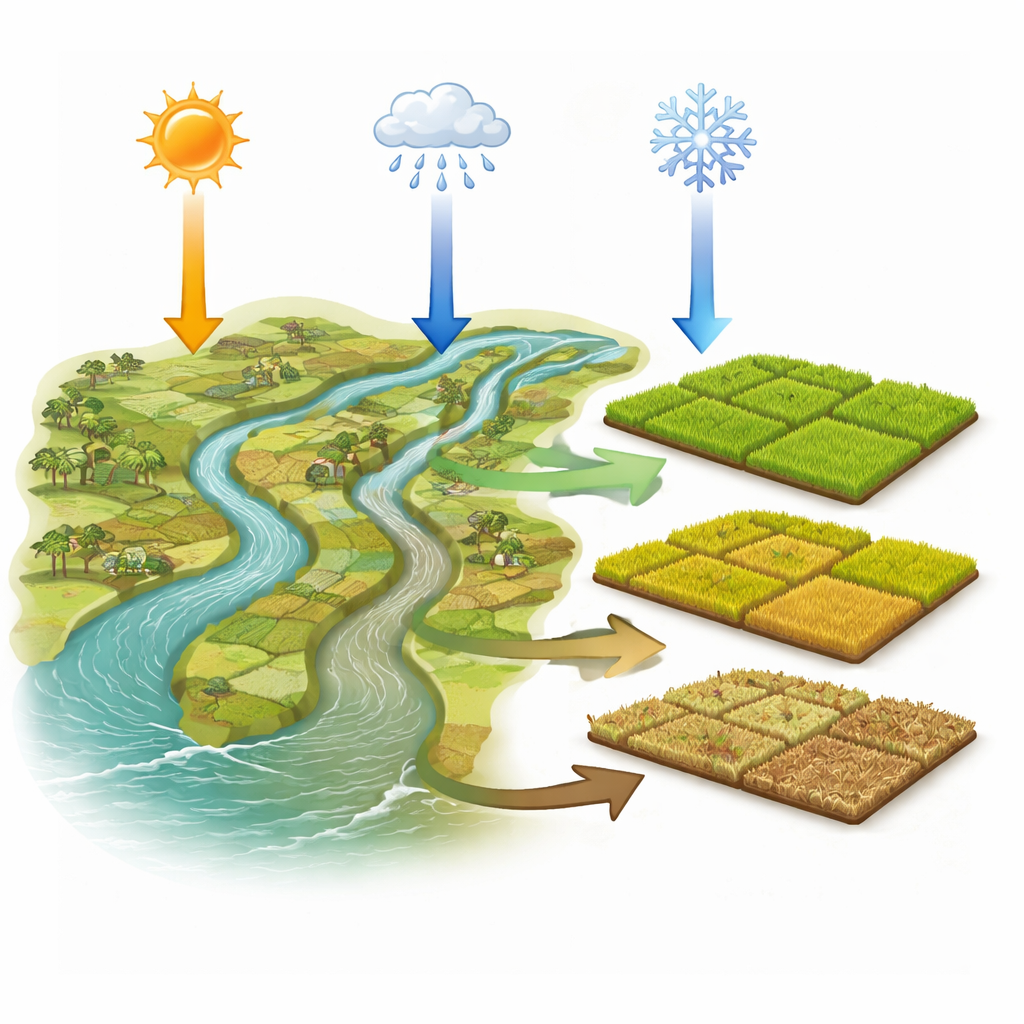
The research focuses on two coastal sub-districts, Amtali and Kalapara, perched in the low-lying delta where rivers meet the Bay of Bengal. This landscape is flat, crisscrossed by tidal rivers, and highly exposed to storms, sea-level rise, and saltwater pushing inland. The rivers here support rice, vegetables, and fisheries that feed local communities. But the same waters also receive runoff from farms enriched with fertilizers, discharges from factories and towns, and natural minerals washed out of rocks and soils. Because the region swings sharply between a hot pre-monsoon, heavy summer rains, and a cool, dry winter, it offers a natural testbed for how climate and human activity shape water quality over the year.
How the Scientists Tracked the Water
To unravel these seasonal patterns, the team collected 120 surface-water samples from rivers and canals around Amtali and Kalapara over three periods in 2020: summer (pre-monsoon), monsoon, and winter. In the field they measured basic traits such as acidity (pH), electrical conductivity (a proxy for salinity), and total dissolved solids. In the laboratory they analyzed key dissolved minerals like calcium, magnesium, sodium, potassium, phosphorus, and sulfur, along with five heavy metals of concern: cadmium, arsenic, copper, lead, and chromium. They then combined these measurements into two numerical scores. A general Water Quality Index (WQI) captured how suitable the water is for drinking, while an Irrigation Water Quality Index (IWQI) focused on what matters most for crops and soils, such as salt levels and the balance of major ions. Statistical tools, including principal component analysis and cluster analysis, were used to tease apart natural influences like rock–water reactions and evaporation from human-driven pollution.
When the Rains Heal and the Dry Season Harms
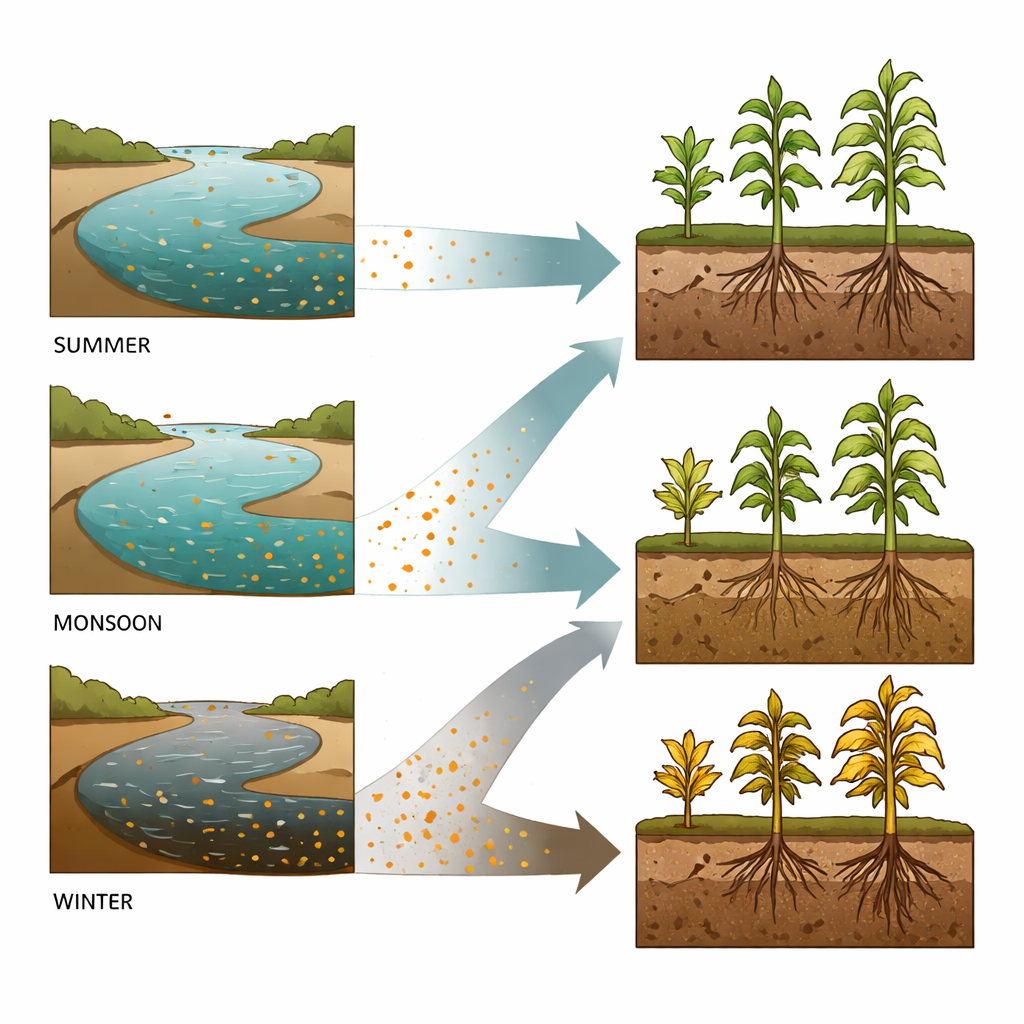
The clearest pattern to emerge is that water quality breathes with the seasons. During the monsoon, torrential rains swell rivers and dilute many dissolved substances. WQI scores were highest then, indicating relatively better overall quality, while IWQI scores suggested that irrigation water was mostly in the "excellent" to "good" range. In winter, however, river flow shrinks, evaporation intensifies, and salty or metal-rich water becomes more concentrated. Conductivity and dissolved solids rose sharply, particularly at Amtali, signalling greater salinity. The researchers observed that most chemical parameters—including minerals that harden the water—peaked in winter. Multivariate analysis showed that this pattern is driven by a combination of rock–water interaction, tidal salt intrusion, and human inputs from agriculture and wastewater.
Hidden Metals in Farmers’ Lifeline
Heavy metals told the same seasonal story. Cadmium, lead, and chromium concentrations were lowest during the monsoon and highest in winter, with summer in between. In Amtali and Kalapara, cadmium roughly doubled from summer to winter and exceeded World Health Organization limits for drinking water, even though it stayed below international thresholds set for irrigation. Arsenic levels remained well below guideline values, and copper stayed low across all seasons. While the irrigation index still classified most water as suitable for crops, the build-up of metals in winter is worrisome because these elements can slowly accumulate in river sediments, soils, plants, and ultimately in people through the food chain. The study’s correlation and clustering analyses revealed that some metals likely share common sources, such as fuel combustion, urban runoff, and industrial activity, adding a human fingerprint to the natural background.
What It Means for Farmers and the Future
The authors conclude that not all seasons are equal for using river water on fields. Monsoon and the early post-monsoon period offer the safest window for irrigation, when salinity and heavy metal levels are at their lowest. Winter, by contrast, brings saltier, more contaminated water that can stress crops, degrade soil structure, and raise long-term health risks. For farmers, this suggests shifting the most water-intensive cropping to wetter months, using more salt-tolerant varieties in winter, and, where possible, storing monsoon water for later use. At a broader scale, the work provides urgently needed baseline data to guide coastal water management, align farming calendars with water safety, and support global goals on clean water, food security, and healthy oceans.
Citation: Roy, T.K., Joy, M.N.H., Shahriar, S. et al. Surface water quality and heavy metal assessment in a tropical coastal zone for identifying favorable crop production seasons. Sci Rep 16, 10622 (2026). https://doi.org/10.1038/s41598-026-44051-0
Keywords: coastal water quality, heavy metals, irrigation, Bangladesh agriculture, seasonal variability