Clear Sky Science · en
Improving elderly-oriented transportation in rural areas through a case study of Zhenglu Town
Why safer journeys for rural elders matter
As populations age, many older adults in the countryside still need to shop, see doctors, visit family, and work their fields. Yet the roads, buses, and safety features around them were often designed with faster, younger travelers in mind. This study looks closely at one rural area in eastern China—Zhenglu Town near Changzhou—to explore how everyday trips for older villagers can be made safer, easier, and more comfortable. The authors combine on-the-ground inspection, travel surveys, and online data to design a step‑by‑step plan for elder‑friendly rural transport that could inspire changes in many similar regions.
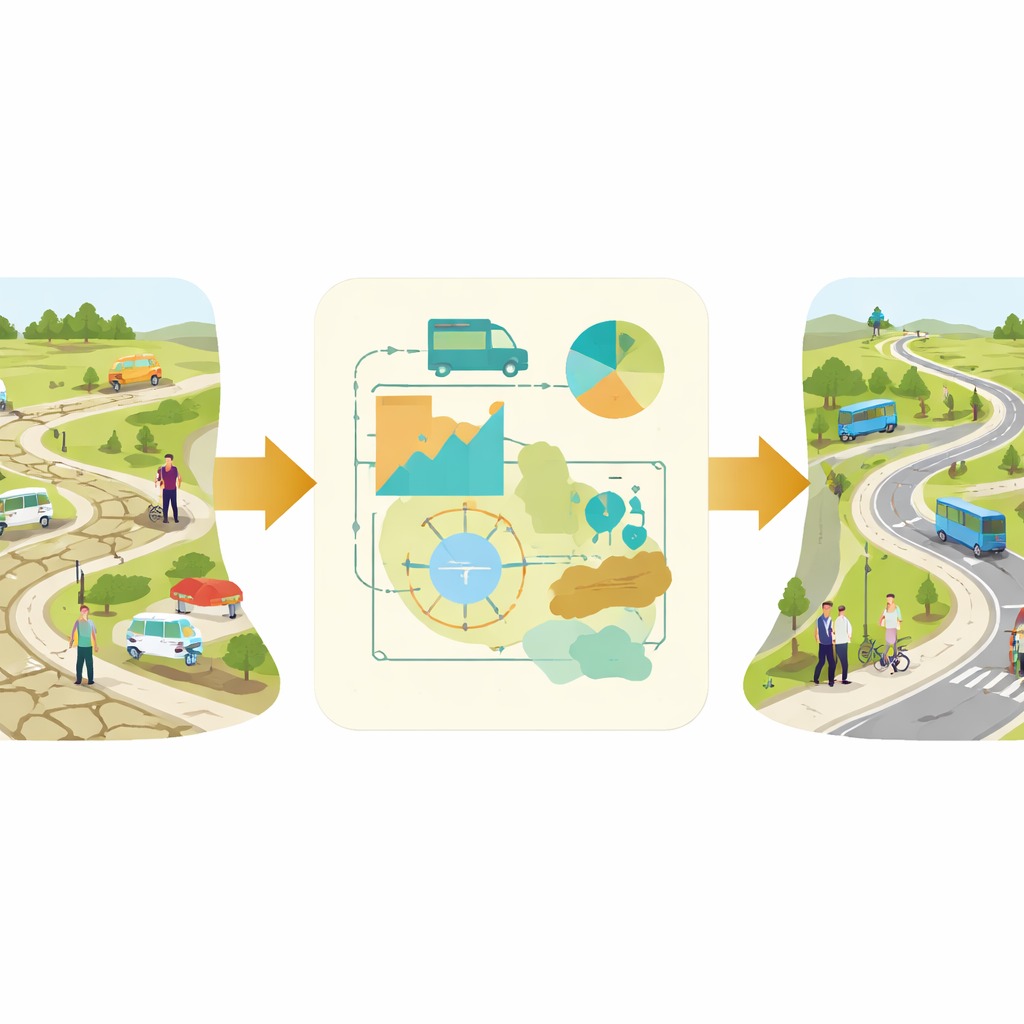
How life and travel look today
The researchers began by mapping the basic transport setting in Zhenglu Town: about 17 square kilometers of fields and villages served by a patchwork of road types, from wide paved routes to narrow gravel lanes. They inspected road surfaces, markings, lighting, signs, bus stops, and bridges, and pulled in map data and bus‑app information. They also gathered 286 anonymous travel records from older residents and scanned government notices and social media posts about transport problems. Together, these sources revealed that most everyday trips are local—such as shopping or farming—but nearly half of destinations lie outside the study area, often in nearby urban districts for better medical care and shopping.
Where the system fails older travelers
The picture that emerges is of a network that functions, but not very well for vulnerable users. Many village roads lack clear lane markings, sidewalks, or barriers between cars, motorcycles, e‑bikes, and pedestrians, even though older residents rely heavily on walking and e‑bikes. Crossings are scarce along long stretches of road, pushing people to dash across traffic wherever it seems convenient. Some cement roads are cracked or uneven, and sudden height changes between the roadway and the roadside create tripping and falling hazards. Lighting is patchy, particularly on small village streets and sharp bends, raising risks for evening trips—when one of the identified groups of older travelers tends to be on the move.
Gaps in buses and daily experiences
Public buses are present but poorly matched to actual needs. Twenty‑six stops are concentrated along just a few corridors, leaving service “blind spots” where around 30 percent of villages fall outside a comfortable walking distance to a stop. Most routes simply pass through the area on their way between distant terminals, with long intervals between departures and long total route lengths. Standard 35‑seat buses are used even when passenger volumes are low, wasting capacity and making boarding harder for frail riders because of high steps. Survey and interview data suggest older residents take about 2.2 trips per day, yet many ride the bus only once or twice a week, partly because of inconvenient timings, long waits, and unsafe or uncomfortable access to stops. Accident discussions with locals indicate frequent conflicts between e‑bikes and cars, emphasizing that safety is their top concern, ahead of convenience, comfort, and punctuality.
Finding patterns in older people’s trips
To better understand these daily journeys, the authors used a simple clustering method to group trips by departure time and duration. They identified six typical patterns, such as short morning runs for nearby errands, medium‑length afternoon trips, and long morning or afternoon journeys that usually require a bus. Each group favors different travel modes and values different aspects of the system: some prioritize safety above all, others place more weight on convenience, and still others are especially sensitive to road connectivity and lighting. These insights help match infrastructure and bus changes to the people who will benefit most—for instance, targeting safe walkways and lighting where short local trips dominate, and improving bus access and ride comfort where long journeys are common.
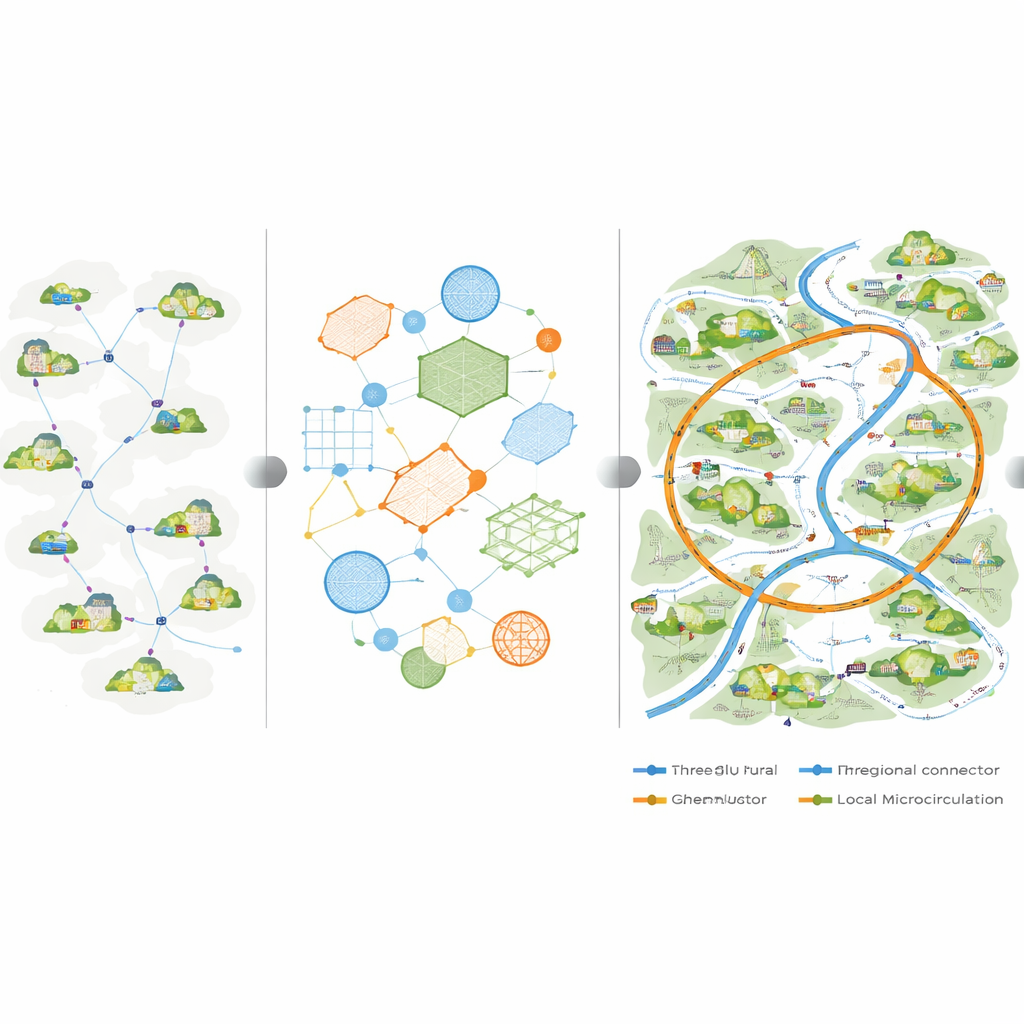
A layered plan for better roads and buses
Building on this diagnosis, the study proposes a three‑level improvement framework. At the largest scale, the road network would be upgraded by adding or rebuilding key north–south and east–west links and creating a central ring of roads, so older travelers can reach destinations without long detours or rough field paths. At the middle scale, the bus system would be reshaped into three tiers: fast trunk routes along main roads for long and inter‑regional trips, regional routes connecting important local destinations, and flexible “microcirculation” routes that weave through villages on narrow streets. At the finest scale, safety and comfort would be tackled through more crosswalks and speed‑control markings, better placement of mirrors and guardrails at blind corners, smoother pavements and side slopes, improved night lighting and reflective markings, and stronger protection and monitoring on rural bridges.
What these changes mean for everyday life
When the authors apply simple performance measures to their proposed bus network, they estimate that service coverage would rise from about 64 to 90 percent of the area, and the average walking distance to a bus line would be cut by more than half, at the cost of roughly one‑third higher daily operating expenses. Combined with safer roads and clearer separation between fast vehicles and slow walkers or e‑bikes, these changes promise fewer crashes, less stressful journeys, and more reliable access to shops, clinics, schools, and family. In plain terms, the study shows that with careful planning grounded in real travel behavior, it is possible to turn a patchy, risky rural system into one where older people can move around their communities with far greater ease and dignity.
Citation: Ai, Q., Zhang, J. Improving elderly-oriented transportation in rural areas through a case study of Zhenglu Town. Sci Rep 16, 13380 (2026). https://doi.org/10.1038/s41598-026-44046-x
Keywords: rural transportation, elderly mobility, bus network planning, road safety, China case study