Clear Sky Science · en
Impact of body mass index on aortic valve stenosis and its clinical outcomes in early adulthood: a long-term study of young men
Why Your Teenage Weight Can Echo Decades Later
Most of us think of heart valve disease as something that strikes late in life, far removed from teenage habits. This long-term Swedish study, however, shows that the weight a young man carries in late adolescence can shape his odds of developing a serious heart valve problem—called aortic valve narrowing—many decades later, and can even influence how well he fares once the disease appears.
Following a Generation of Young Men
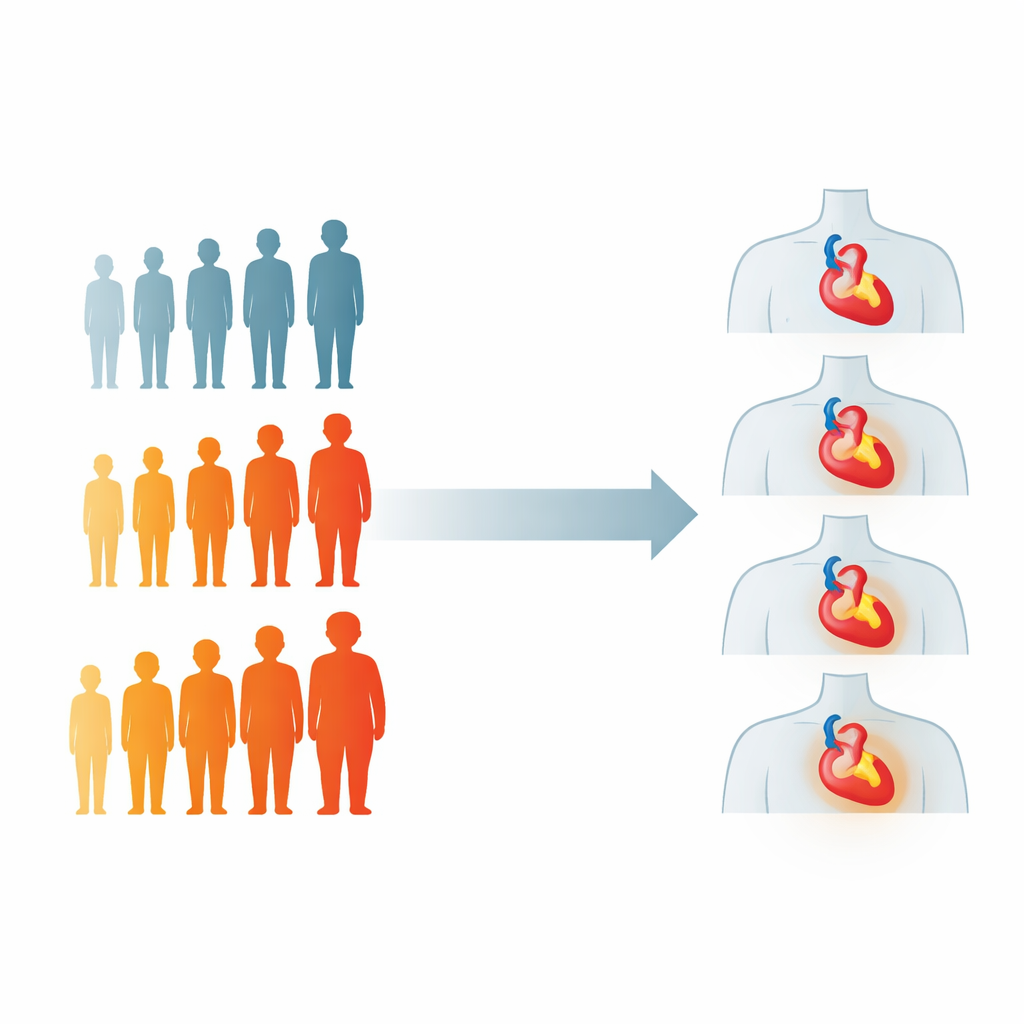
Researchers drew on health examination records from compulsory military service in Sweden, covering more than 1.7 million young men examined between 1969 and 2005. At an average age of 18, their height, weight, blood pressure, fitness, muscle strength, and cognitive test scores were measured, and information about their parents’ education and early illnesses was recorded. The team then linked these baseline records to national health and death registers, tracking who went on to develop aortic valve narrowing and, among those men, who later suffered heart-related complications or died.
Early Extra Pounds and Valve Disease Risk
Over a typical follow-up of 32 years, 5,766 men were diagnosed with aortic valve narrowing, usually in their mid‑50s. When the researchers grouped the men by their teenage body mass index (BMI), a clear pattern emerged. Those who were underweight at 18 had a lower risk of developing valve disease than peers of low‑normal weight. Above that low‑normal level, the risk climbed steadily: even young men whose BMI sat in the high‑normal range had more cases, and the likelihood continued to rise through the overweight and obese ranges. Each single step up in BMI at 18 slightly increased a man’s later risk, and this trend held even after accounting for blood pressure, fitness, intelligence scores, family background, and early medical conditions.
When Valve Disease Meets Long-Term Obesity
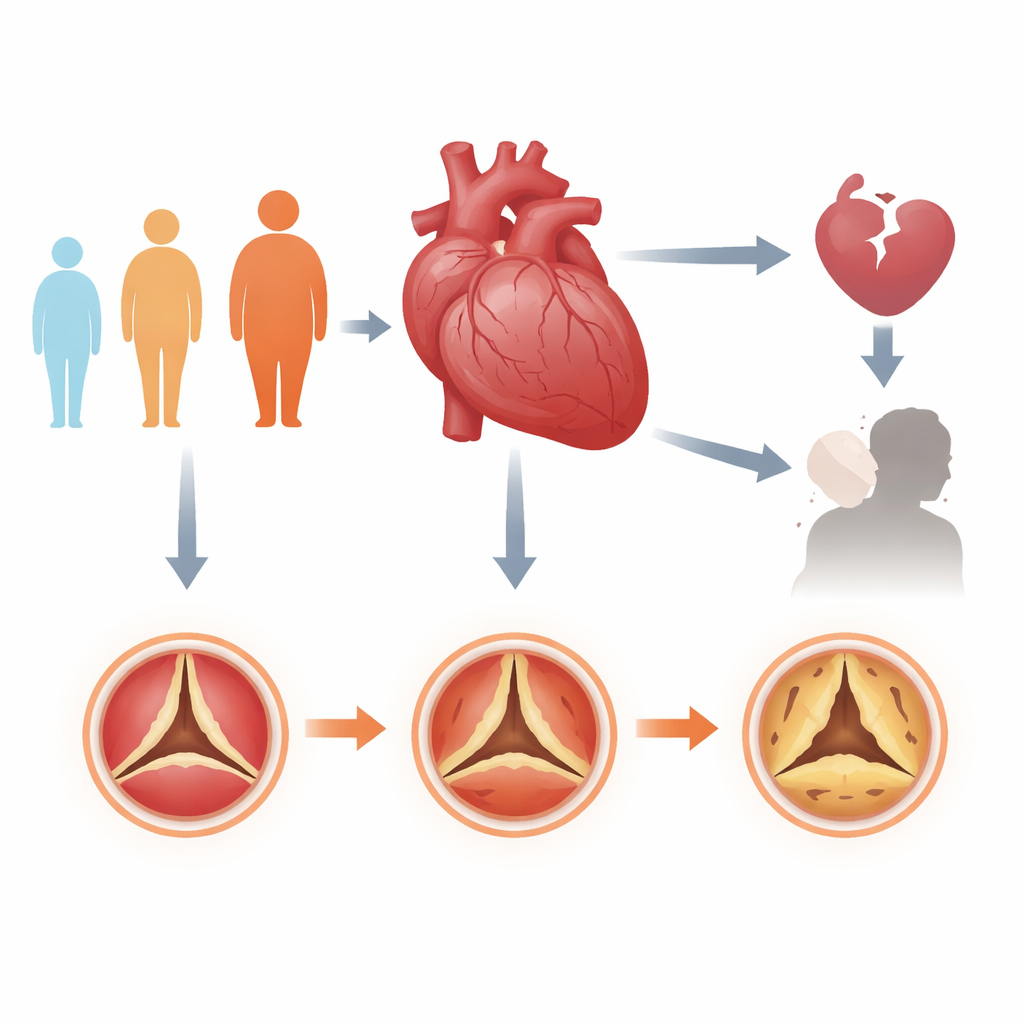
The study also zoomed in on the men who did develop aortic valve narrowing and followed them for about five and a half years after diagnosis. Here, teenage weight again mattered. Men who had been obese in late adolescence faced far worse outcomes than those who had been lean. Their risk of dying from any cause or from cardiovascular causes was roughly four to five times higher, and their chance of developing heart failure was nearly three times higher. Overweight men also faced clearly elevated risks. In contrast, the links between early-life BMI and later rhythm problems, heart attacks, or strokes were weaker and in some cases uncertain, suggesting that excess weight in youth is especially important for the combination of valve disease and heart failure.
Possible Pathways from Fat to a Failing Valve
Why might extra weight in youth set the stage for a stiffened heart valve decades later? The authors point to several likely pathways. Carrying more body mass raises blood volume and the workload on the heart, potentially straining the valve that controls blood flow out of the heart. Obesity is also tied to higher blood pressure, unfavorable cholesterol levels, and a constant low‑grade inflammatory state driven by fat tissue. Together, these factors can damage the delicate lining of the valve, promoting scarring and calcium build‑up that eventually narrow the opening. Although this study could not directly measure such biological changes or track weight across adulthood, the consistent, dose‑like rise in risk from normal through obese BMI strongly suggests that heavier bodies in youth help drive valve disease later on.
What This Means for Young People and Clinicians
To a layperson, the message is straightforward: the pounds you gain in your teens and early twenties do not just affect how you feel then—they can shape your heart’s plumbing many decades down the line. In this large, nationwide group of Swedish men, even slightly higher “normal” weight in youth was linked to more valve disease, and obesity in youth foretold a much worse outlook once valve disease set in. While the study was limited to men and cannot prove cause and effect, it underlines that keeping weight in a healthy range early in life may be one of the most powerful long-term protections against both developing aortic valve disease and surviving it if it occurs.
Citation: Lindgren, M., Kontogeorgos, S., Djekic, A. et al. Impact of body mass index on aortic valve stenosis and its clinical outcomes in early adulthood: a long-term study of young men. Sci Rep 16, 10492 (2026). https://doi.org/10.1038/s41598-026-44041-2
Keywords: aortic valve stenosis, adolescent obesity, body mass index, heart failure risk, long-term cohort study