Clear Sky Science · en
Allophycocyanin inhibits HIV-1 gp120 and reverse transcriptase through enthalpy-driven binding and antioxidative protection: integrative computational and experimental insights
A New Idea in the Fight Against HIV
For people living with HIV, today’s medicines can keep the virus in check but cannot completely remove it from the body. Patients often need lifelong treatment that can cause side effects and lose power as the virus mutates. This study explores an unusual helper from nature—a colorful protein called allophycocyanin (APC), found in blue‑green algae—to see whether it can both slow the virus and protect human cells from damage caused by infection.
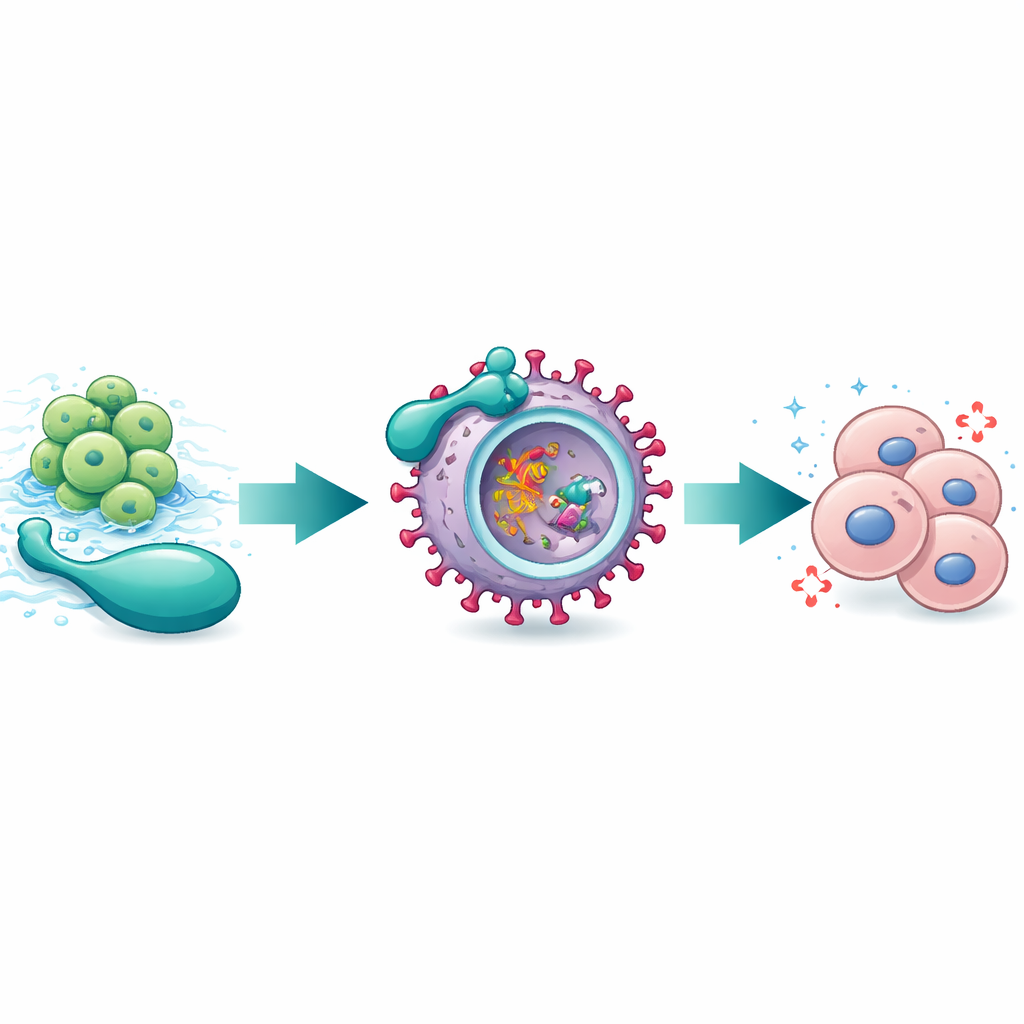
A Colorful Protein with Hidden Powers
APC is best known as a light‑harvesting pigment that helps algae capture sunlight, but it also has strong antioxidant and cell‑protective properties. The researchers wondered whether this natural protein could do double duty against HIV: first, by physically sticking to important viral parts and getting in the way of infection, and second, by calming the burst of oxidative stress—an overload of harmful reactive molecules—that HIV triggers inside our cells. Because APC is a large, flexible protein rather than a small drug molecule, it acts more like a soft, adaptable scaffold that can cover and shield sensitive regions on viral proteins.
How APC Grabs Onto the Virus
To test this idea, the team used detailed computer simulations to see how APC might latch onto three HIV proteins: gp120, which sits on the virus’s surface and is essential for entering human cells; protease, which helps cut viral components into working pieces; and reverse transcriptase, which copies the virus’s genetic material. The calculations showed that APC binds most strongly and stably to gp120, forming a snug interface held together by many hydrogen bonds, electrical attractions, and tightly packed contact areas. The links to protease and reverse transcriptase were weaker and more fleeting, suggesting that gp120 is APC’s preferred target.
Putting the Interaction to the Test
Computer models can be powerful but need real‑world checks. The scientists therefore measured how APC and gp120 interact in solution using a sensitive instrument that reads the heat released when molecules bind. These experiments confirmed that APC and gp120 do indeed seek each other out, forming a one‑to‑one partnership driven mainly by specific, energy‑releasing contacts. The bond is not so tight that the two proteins become locked together forever, but it is strong enough to matter biologically—exactly the kind of reversible grip that could nudge gp120 away from its normal role in helping the virus attach to human cells.
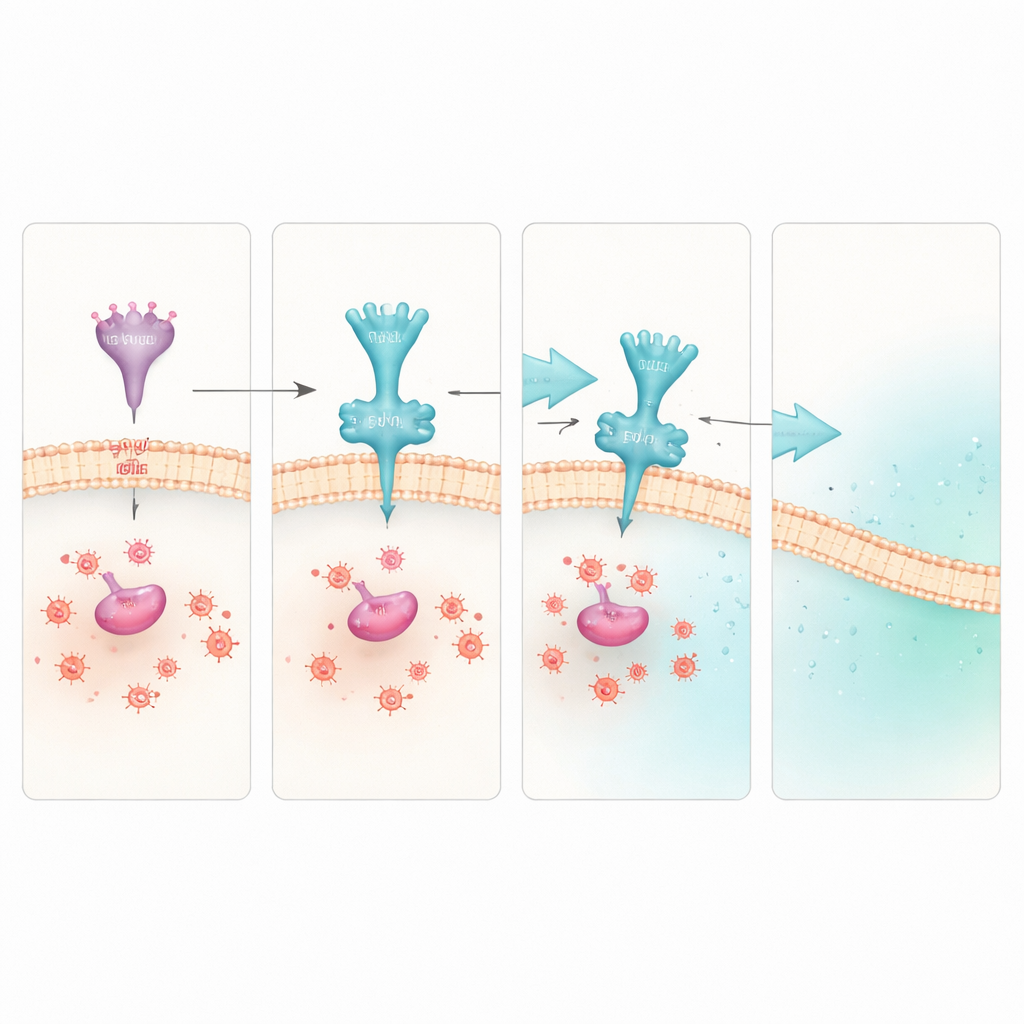
Less Viral Machinery, Less Stress on Cells
The team then moved into infected cells to see whether APC’s binding behavior translates into functional benefits. Cells treated with APC produced noticeably less of three key HIV proteins: gp120 itself, protease, and reverse transcriptase. The activity of reverse transcriptase dropped sharply as APC levels rose, pointing to a direct or indirect block on the virus’s ability to copy its genome. At the same time, APC dialed down the infection‑induced surge of reactive oxygen species, restoring the cells’ internal chemical balance close to normal. Importantly, a common housekeeping protein in the cells was unaffected, suggesting that APC was not simply poisoning the cells but acting in a targeted way.
What This Could Mean for Future Therapies
Taken together, the results paint APC as a dual‑action natural agent: it can physically interfere with the viral entry machinery by binding to gp120 and, at the same time, shield host cells from oxidative damage and help rein in viral replication. APC on its own is not a cure, and many questions remain about how it gets into cells, how it behaves in the body, and how it would perform in animals or people. But as a versatile, bioactive protein that can be built into coatings, gels, or tiny delivery particles, APC offers a promising starting point for new add‑on approaches that could complement standard HIV drugs and help make long‑term control of the virus safer and more robust.
Citation: Dubey, A., Kumar, M., Tufail, A. et al. Allophycocyanin inhibits HIV-1 gp120 and reverse transcriptase through enthalpy-driven binding and antioxidative protection: integrative computational and experimental insights. Sci Rep 16, 14068 (2026). https://doi.org/10.1038/s41598-026-44038-x
Keywords: HIV-1 antiviral, allophycocyanin, gp120 binding, reverse transcriptase inhibition, antioxidant protection