Clear Sky Science · en
Blockchain-based two-level trustable reputation framework for e-commerce platform using smart contracts
Why Trust Matters When You Shop Online
Every time you buy something online, you rely on star ratings and customer reviews to decide whom to trust. But behind those scores lurk fake accounts, paid praise, and hidden attacks meant to boost or destroy a seller’s reputation. This paper presents a new way to make those ratings far harder to cheat by combining strong login checks, advanced pattern-spotting algorithms, and a flexible form of blockchain that can both lock in history and fix mistakes when needed.
How Online Ratings Can Be Tricked
Modern e-commerce sites are under constant pressure from fraudsters who create fake buyer or seller accounts, coordinate groups of users to flood products with glowing or damaging reviews, or disappear and reappear under new identities after being caught. Traditional defenses focus mostly on blocking suspicious payments, not on protecting the review and rating system itself. Many current reputation tools are centralized: a single company stores and controls the data, which can be altered, attacked, or simply fail to spot organized manipulation. As a result, shoppers may base decisions on ratings that look legitimate but are quietly skewed by collusion and bots.
A Two-Step Check on Every Participant
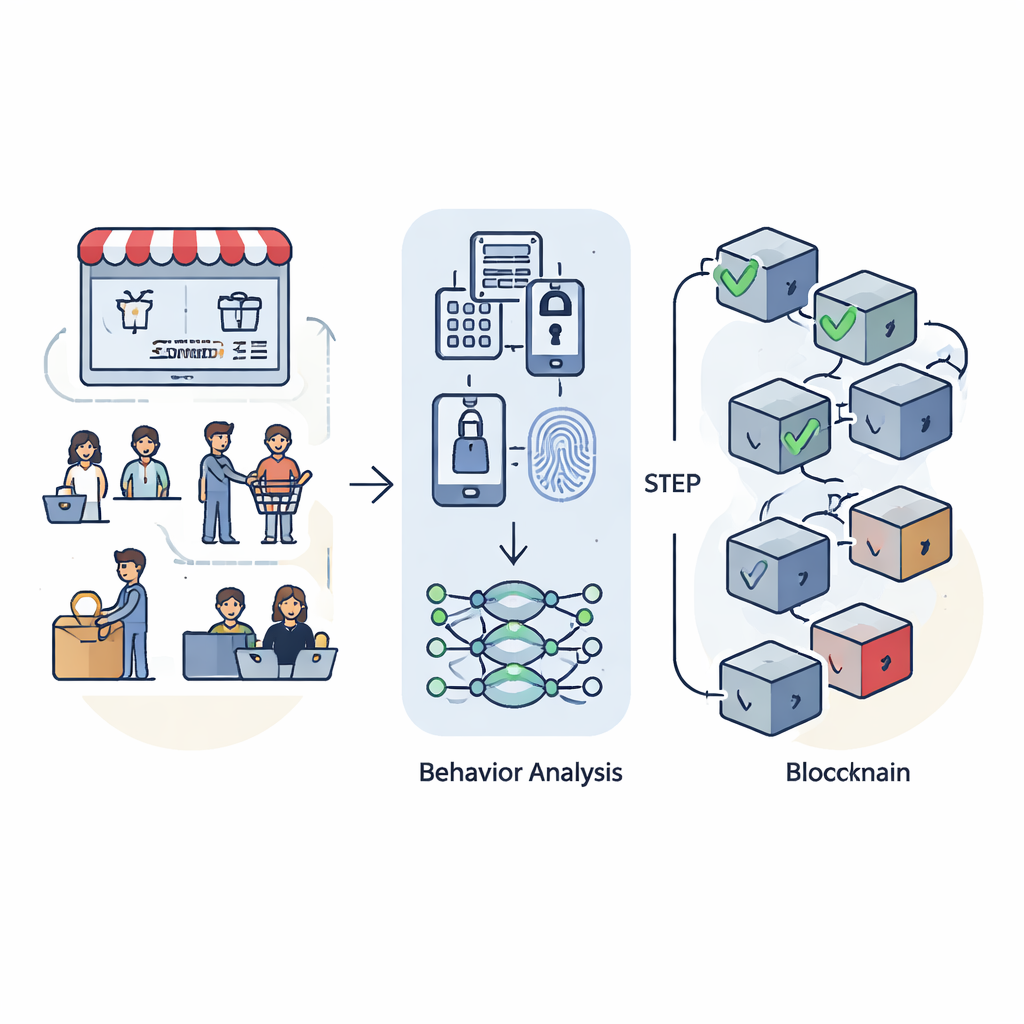
To tackle these problems, the authors design a Blockchain-based Two-Level E-Commerce Trustable Reputation Framework (BTL-ETRF). The first level focuses on confirming that each buyer and seller is really who they claim to be. This is done through multi-factor authentication that combines a personal identification number, a one-time code sent to a device, and a fingerprint scan. Only users who pass all three checks are allowed to interact with the system, greatly reducing impersonation, account takeovers, and mass creation of fake identities. All of these login events are tied into smart contracts—small programs running on a blockchain—that automatically approve or revoke access without human intervention.
Reading Behavior to Judge Reputation
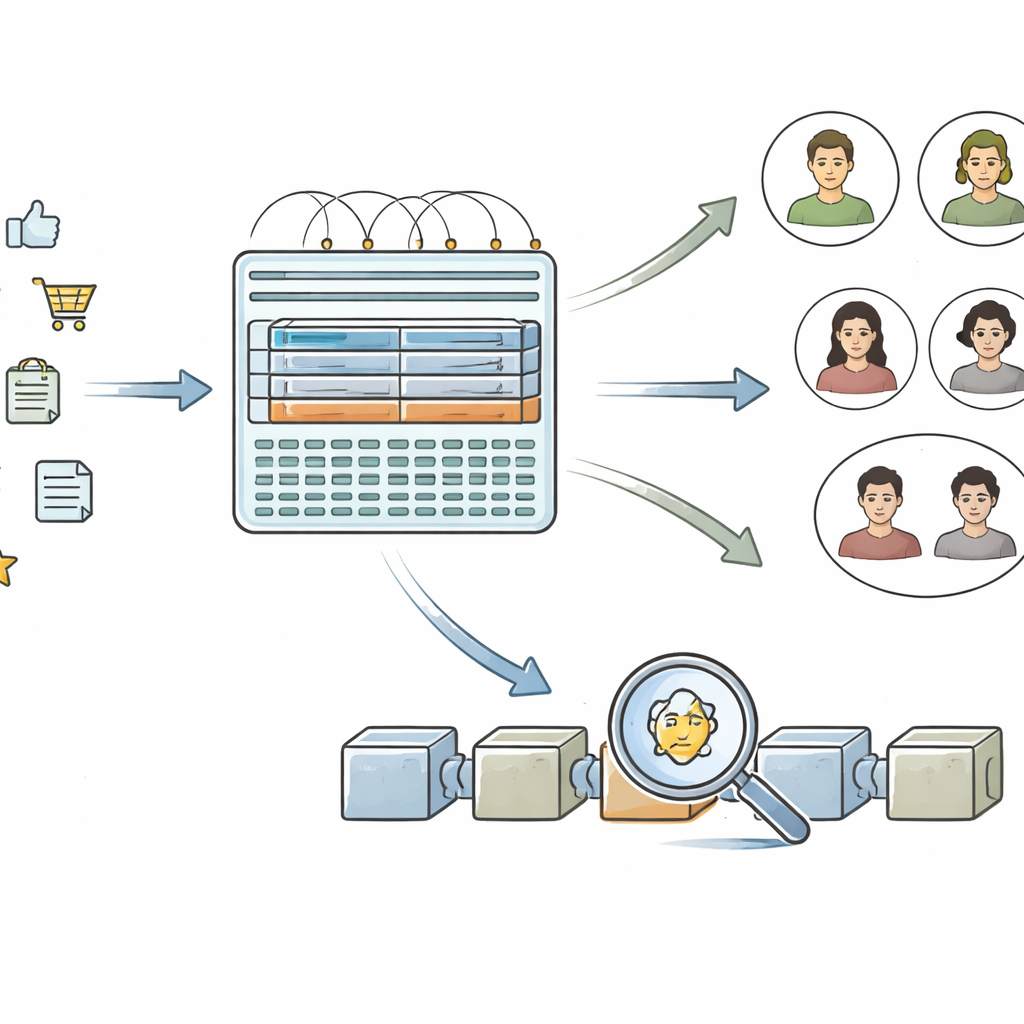
Once users are authenticated, the second level examines how they behave over time to decide whether their ratings should count as trustworthy. Instead of relying on simple averages, the framework feeds several signals—such as past reputation scores, how much money changes hands, how often transactions occur, how quickly reviews appear after purchases, and traces of social connections—into a specialized deep-learning model called a Residual Dilated Convolution Transformer. This model is designed to spot both short bursts of odd activity and slow-building patterns of collusion, such as clusters of accounts that repeatedly trade with each other and exchange extreme ratings. It then classifies participants as reputable or not, and smart contracts automatically reward, flag, or restrict users based on these results.
Using a Flexible Blockchain to Lock In and Correct Records
All key actions—purchases, reviews, reputation decisions, and enforcement steps—are stored on a blockchain, giving a tamper-resistant log that many parties can verify. Unlike standard blockchains, which cannot change past entries, this system uses a “redactable” design. Special cryptographic tools allow authorized parties to correct specific pieces of stored data, such as a clearly mistaken record or a legally required deletion, without rewriting the entire chain or opening the door to silent edits. Every change remains auditable, and the cost of updating grows only modestly with data size. Tests show that this design keeps delays low even as the number of reviews, products, and users grows, while still preventing outsiders from forging or altering reputation records.
Does It Work Better Than Existing Systems?
The researchers implemented their framework using a large public dataset of Amazon product reviews and deployed the blockchain components with Ethereum smart contracts. They measured how quickly the system could register sellers, process feedback, update reputations, and modify blocks when necessary, and compared these results with several earlier blockchain and machine-learning approaches. Their framework delivered higher accuracy in distinguishing honest from dishonest behavior and reduced waiting times for key operations by roughly one-third to two-fifths, thanks to automation by smart contracts, efficient cryptographic tools, and the behavior model’s ability to filter out most malicious activity before it hits the blockchain.
What This Means for Everyday Shoppers
In simple terms, this study shows how online marketplaces could make ratings and reviews far more dependable. By forcing would-be cheaters to pass strong identity checks, watching how users behave over many transactions, and recording all decisions on a blockchain that is both auditable and correctable, the proposed framework makes it much harder to game reputation scores. If adopted widely, such systems could give buyers greater confidence that “five stars” really reflects the experience of real customers—and give honest sellers better protection from hidden smear campaigns.
Citation: Krishnan, K.S., Devi, R.C., Ananth, C. et al. Blockchain-based two-level trustable reputation framework for e-commerce platform using smart contracts. Sci Rep 16, 14465 (2026). https://doi.org/10.1038/s41598-026-44032-3
Keywords: e-commerce reputation, blockchain, multi-factor authentication, fake reviews, smart contracts