Clear Sky Science · en
Bio-inspired synthesis of silver selenide (Ag₂Se) binary chalcogenide nanoparticles mediated by Punica granatum L. peel extract and a comprehensive evaluation of their biological activities
Fighting Germs with Fruit Waste
As antibiotic-resistant infections become harder to treat, scientists are searching for new ways to kill dangerous microbes without harming the environment or our own cells. This study shows how something usually thrown away—pomegranate peels—can be turned into tiny particles made of silver and selenium that both fight bacteria and mop up harmful molecules called free radicals. The work points toward future wound dressings and coatings that are gentle to the body yet tough on germs.
Turning Peels into Tiny Particles
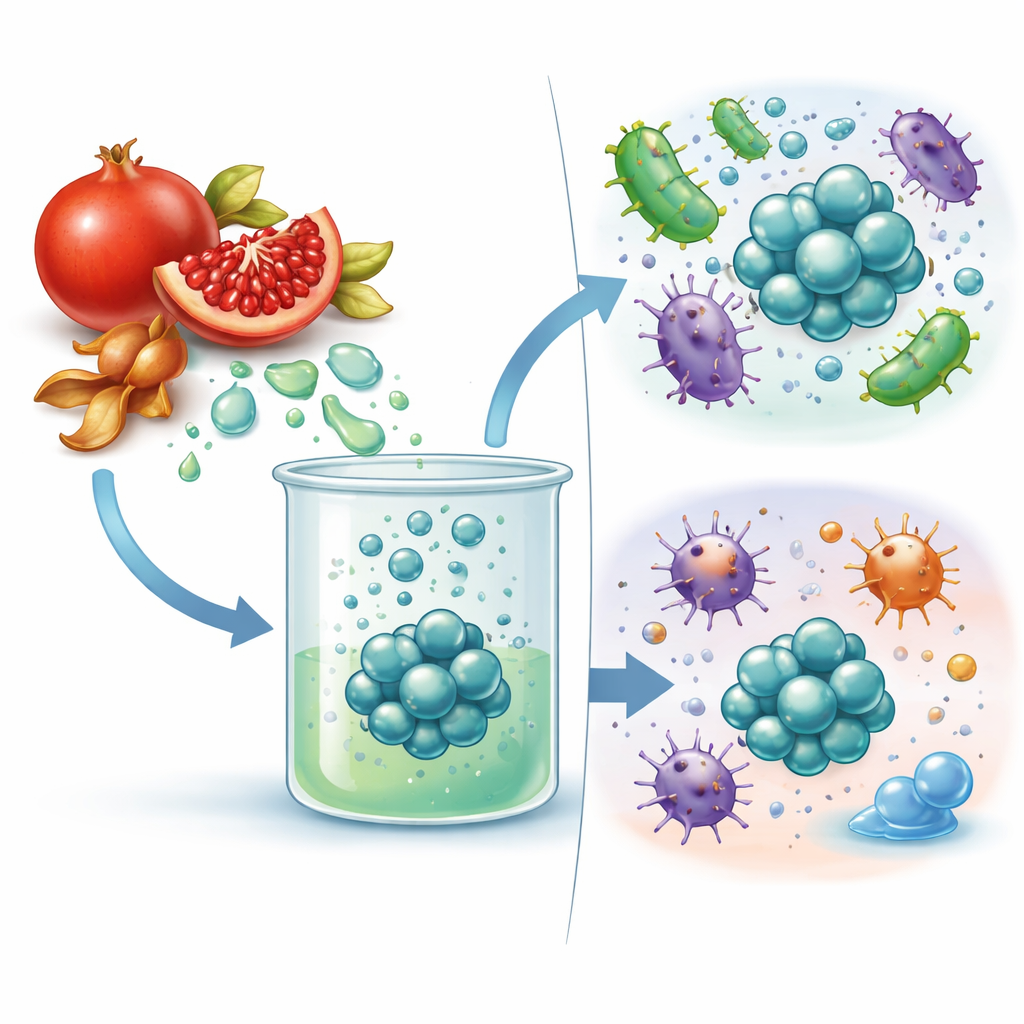
The researchers began with pomegranate peels, which are rich in natural plant chemicals such as polyphenols and flavonoids. Instead of using harsh industrial chemicals, they soaked and processed the dried peels to make a watery extract. These plant compounds act like microscopic helpers: they donate electrons to metal salts, transforming dissolved silver and selenium into solid silver selenide nanoparticles, while also wrapping around the new particles to keep them from clumping. By carefully controlling temperature, stirring, and reaction time, the team produced stable particles just a few billionths of a meter across, forming a powder that can later be redispersed in water.
Peeking Inside the New Material
To confirm that they had truly made the intended material, the scientists used a suite of tools that probe light, structure, and shape. Ultraviolet–visible measurements revealed a distinct light-absorption band, hinting at the unique electronic behavior of silver selenide. Infrared spectroscopy showed the signatures of plant-based molecules attached to the particle surfaces, evidence that pomegranate compounds were indeed stabilizing the nanoparticles. X-ray diffraction patterns matched a known crystal form of silver selenide, allowing the team to estimate a crystalline grain size of about 12 nanometers. Microscopy images showed mostly uniform particles with limited clumping, while other measurements revealed that the particles carry a negative surface charge in water, helping them stay dispersed rather than settling out.
Stopping Bacteria in Their Tracks
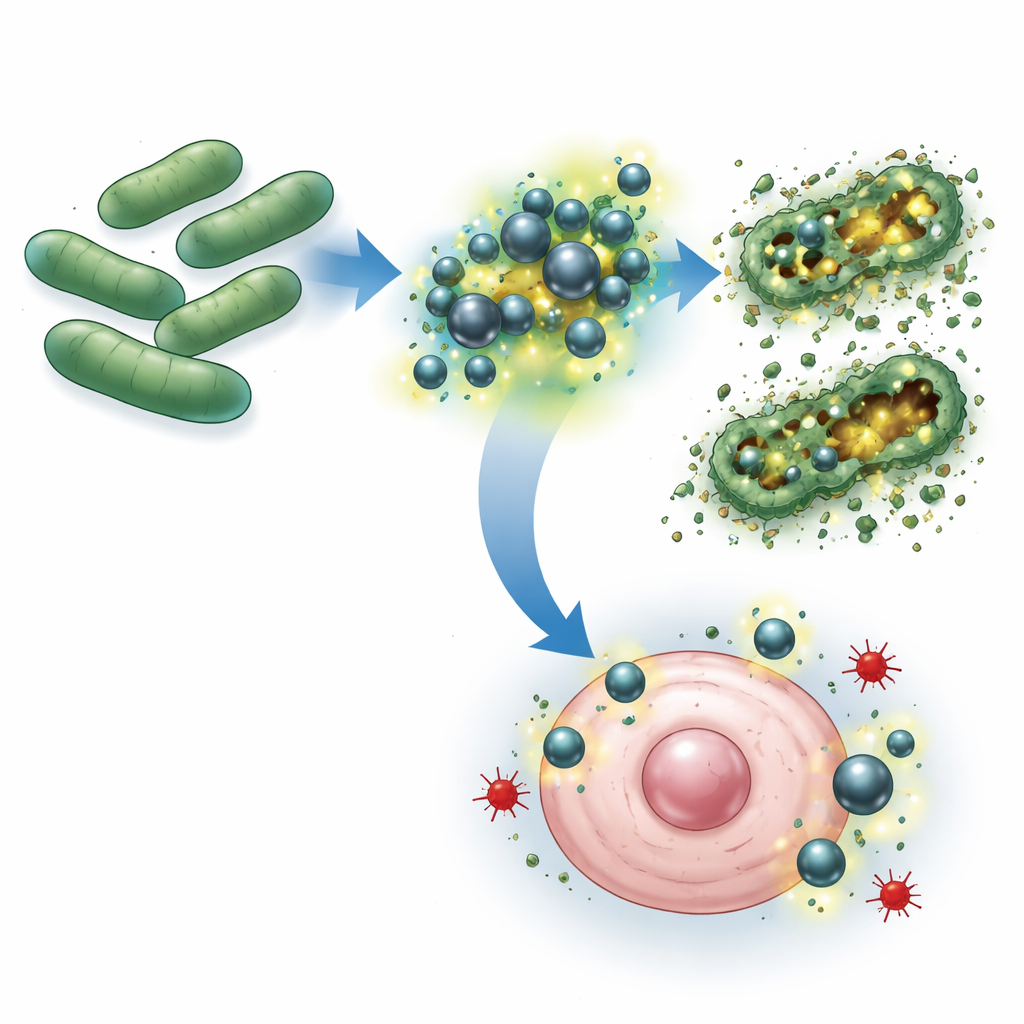
The heart of the study tested whether these green-made nanoparticles could halt the growth of disease-causing bacteria. The team challenged both Gram-positive and Gram-negative species, including common troublemakers such as Staphylococcus aureus and Escherichia coli. When the bacteria were grown in the presence of increasing amounts of nanoparticles, their growth curves flattened and, at higher doses, nearly disappeared. At a concentration of 500 micrograms per milliliter, the particles shut down 95–100% of growth for the most sensitive strains. Further experiments showed that the nanoparticles punch holes in bacterial membranes: DNA and proteins leaked out of treated cells, and electron microscope images revealed distorted, ruptured cell surfaces, confirming that the particles physically and chemically damage the microbes.
Balancing Damage and Protection
Beyond killing bacteria, the silver selenide particles also acted as antioxidants. In two standard tests that measure how well a substance neutralizes free radicals, the nanoparticles steadily quenched reactive molecules as their concentration increased, with performance in a useful range compared with vitamin C. This dual behavior—producing destructive oxygen species around bacteria while calming harmful radicals in other settings—suggests they can be tuned to damage invaders more than host tissues. To probe safety, the researchers mixed the particles with blood cells. At lower doses, the particles caused limited rupture of red blood cells, within widely accepted compatibility limits; at higher doses, damage rose sharply, highlighting the need to respect safe concentration ranges when designing medical uses.
What This Could Mean for Future Care
In simple terms, this work shows that pomegranate peel waste can help build tiny silver–selenium "grenades" that burst bacterial cells while also soaking up harmful reactive molecules. The particles are made without toxic solvents, show promising antibacterial strength, and appear reasonably gentle to blood cells at modest doses. With further testing in living organisms and in combination with existing drugs, such green-synthesized nanoparticles could one day be woven into bandages, coatings, or delivery systems that keep wounds clean and reduce inflammation, illustrating how everyday plant waste might contribute to the next generation of infection-fighting technologies.
Citation: Satpathy, S., Samal, P., Pradhan, A.K. et al. Bio-inspired synthesis of silver selenide (Ag₂Se) binary chalcogenide nanoparticles mediated by Punica granatum L. peel extract and a comprehensive evaluation of their biological activities. Sci Rep 16, 13585 (2026). https://doi.org/10.1038/s41598-026-44031-4
Keywords: antimicrobial nanoparticles, green synthesis, pomegranate peel, silver selenide, antioxidant activity