Clear Sky Science · en
Effects of supplementary lighting with different spectral compositions on plant growth, fruit development, and quality formation of facility-grown tomatoes
Brighter Tomatoes in Darker Seasons
Tomatoes love sunshine, but many greenhouses face long stretches of cloudy, dim weather—especially in places like Guizhou Province in southwest China. This study asks a practical question that matters to growers and home gardeners alike: can carefully chosen colors of LED lights help tomato plants grow better, ripen earlier, and taste superior when natural light is in short supply? By testing several mixes of colored light, the researchers show how tuning light like a recipe can boost yield and improve flavor and nutrition. 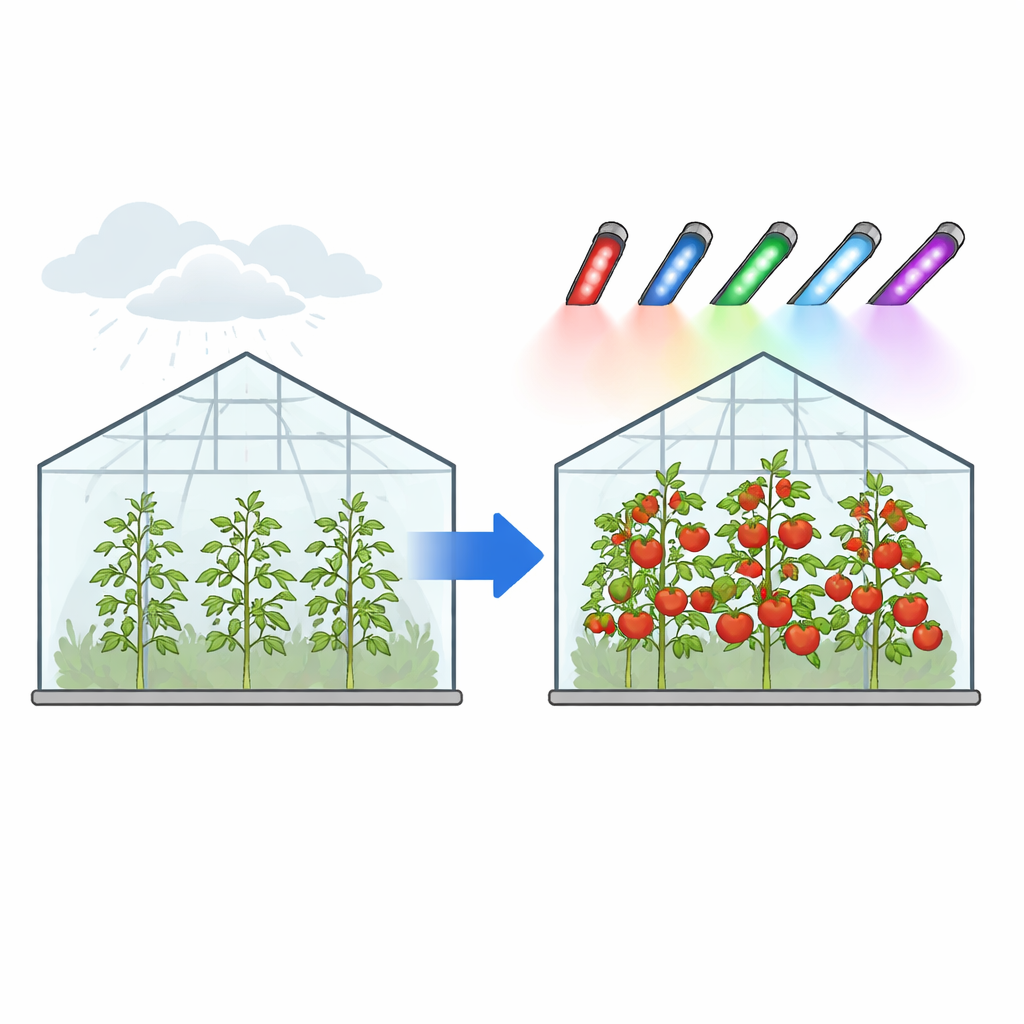
Why Extra Light Matters
Modern greenhouse farming lets growers control temperature, water, and nutrients, but light is harder to guarantee. In Guizhou, winter and spring sunshine hours are far below the national average, creating a chronic “light hunger” for sun-loving crops such as tomatoes. The team grew tomatoes in a plastic greenhouse and compared plants that received no extra light with plants given LED “daylight extensions” for six hours each day. All LED treatments shared a basic red–blue mix—colors known to drive photosynthesis—and then added one more color: extra red, blue, green, far-red, or ultraviolet A. This setup let the researchers see not only whether extra light helps, but which color combination works best for different production goals.
How the Light Recipes Were Tested
The scientists used the same tomato variety, the same pots, soil mix, fertilizer, and pruning methods across all treatments so that only the light conditions differed. LEDs were hung just above the plant tops and adjusted as the plants grew, keeping a steady distance to ensure a consistent light dose. Over several weeks they measured plant height, stem thickness, leaf size, and leaf greenness. As fruits formed and swelled, they tracked how quickly they changed color and reached full ripeness. At key stages they weighed the harvest, counted fruit by size class, and analyzed the tomatoes for compounds linked to flavor and nutrition—such as sugars, acids, vitamin C, proteins, amino acids, lycopene (the red pigment), and total phenols. 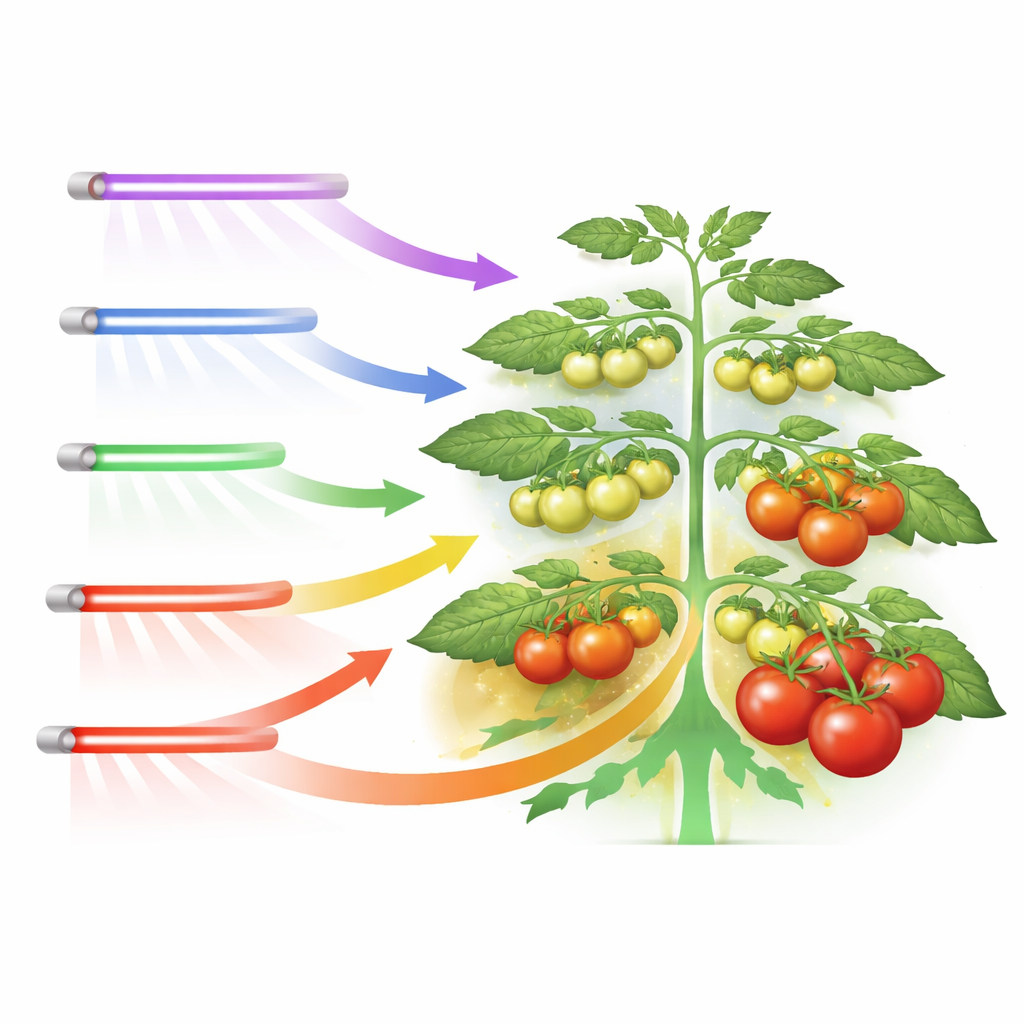
What Happened to Growth and Yield
All of the light-enriched plants outperformed those grown without extra light: they grew more vigorously, ripened earlier, and produced higher yields. But the details depended on the added color. When extra red light was layered onto the red–blue base, plants produced the greatest number of large fruits and the highest yield per plant, edging out the basic red–blue treatment. Adding green light gave the heaviest average fruits and still raised yield significantly. Extra blue light thickened stems and deepened leaf greenness, signs of a robust photosynthetic system. Far-red light and ultraviolet A both encouraged early growth spurts or structural changes, but their yield gains were more modest than those seen with additional red or green light.
How Light Colors Shaped Taste and Nutrition
The spectrum also reshaped what was inside the fruit. All colored-light treatments sped up the build-up of lycopene, making fruits redder and more strongly colored than those under natural light alone. Extra green light stood out for boosting lycopene and increasing proteins, amino acids, and phenolic compounds during the final stages of ripening, alongside a high sugar-to-acid ratio associated with richer flavor. Extra blue light favored vitamin C and soluble protein, while far-red light strengthened the balance of sugars and acids and enhanced the red and yellow tones of the skin. Ultraviolet A temporarily stretched plant height and raised soluble proteins, sugars, and organic acids late in development. In contrast, plain red–blue light without added colors sometimes suppressed certain nutrients at the end of ripening, underscoring how sensitive tomatoes are to fine differences in light quality.
What This Means for Growers
To a layperson, the takeaway is straightforward: when sunshine is scarce, the right mix of LED colors can do more than just keep tomatoes alive—it can decide how many fruits you get, how big they are, how quickly they turn red, and how sweet, tangy, and nutritious they become. Extra red light is best if the goal is maximum yield and more large fruits. Extra green light is ideal for heavier fruits with strong color and a sweet, flavorful balance. Blue, far-red, and ultraviolet A each offer their own quality tweaks. The authors suggest that greenhouse growers can treat light as a tunable ingredient, choosing specific color blends to match local weather and market demands, and call for future work to separate the roles of light color and brightness and to adapt these recipes to more tomato varieties.
Citation: Sun, D., Ma, C., Liu, X. et al. Effects of supplementary lighting with different spectral compositions on plant growth, fruit development, and quality formation of facility-grown tomatoes. Sci Rep 16, 10737 (2026). https://doi.org/10.1038/s41598-026-44021-6
Keywords: greenhouse tomatoes, LED lighting, light spectrum, fruit quality, controlled environment agriculture