Clear Sky Science · en
Integrated techno-enviroeconomic and life-cycle assessment of a solar–green hydrogen hybrid system with industrial wastewater reuse
Turning Sunlight and Dirty Water into Reliable Power
Imagine a factory that can run day and night on clean energy while also cutting its freshwater use in a drought‑prone city. This paper explores exactly that idea. The authors study a system in Karachi, Pakistan, where solar panels, hydrogen technology, and advanced wastewater treatment are combined so a large textile mill can make its own round‑the‑clock, low‑carbon electricity using its own dirty water as a resource instead of a problem.
Why Mix Energy and Water Solutions?
Many countries are racing to add solar power, but sunshine is intermittent and factories need steady electricity. At the same time, conventional power plants and heavy industry consume huge amounts of freshwater, which is increasingly scarce in semi‑arid regions. Pakistan faces both problems sharply: chronic power shortages and mounting water stress, especially in its textile sector, a major exporter and a large polluter. The study argues that tackling energy and water together, rather than in separate projects, can unlock new ways to cut emissions, lower costs, and ease pressure on local water supplies.
How the Hybrid System Works
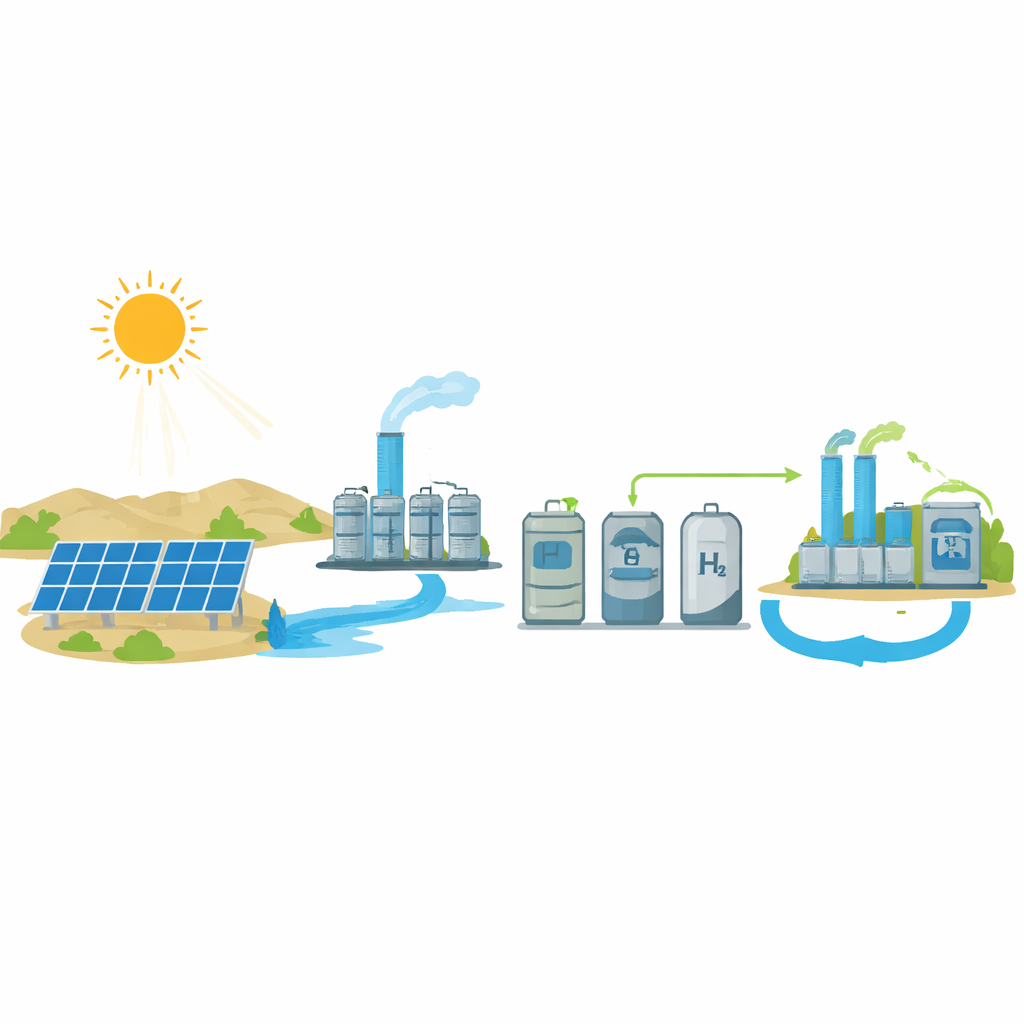
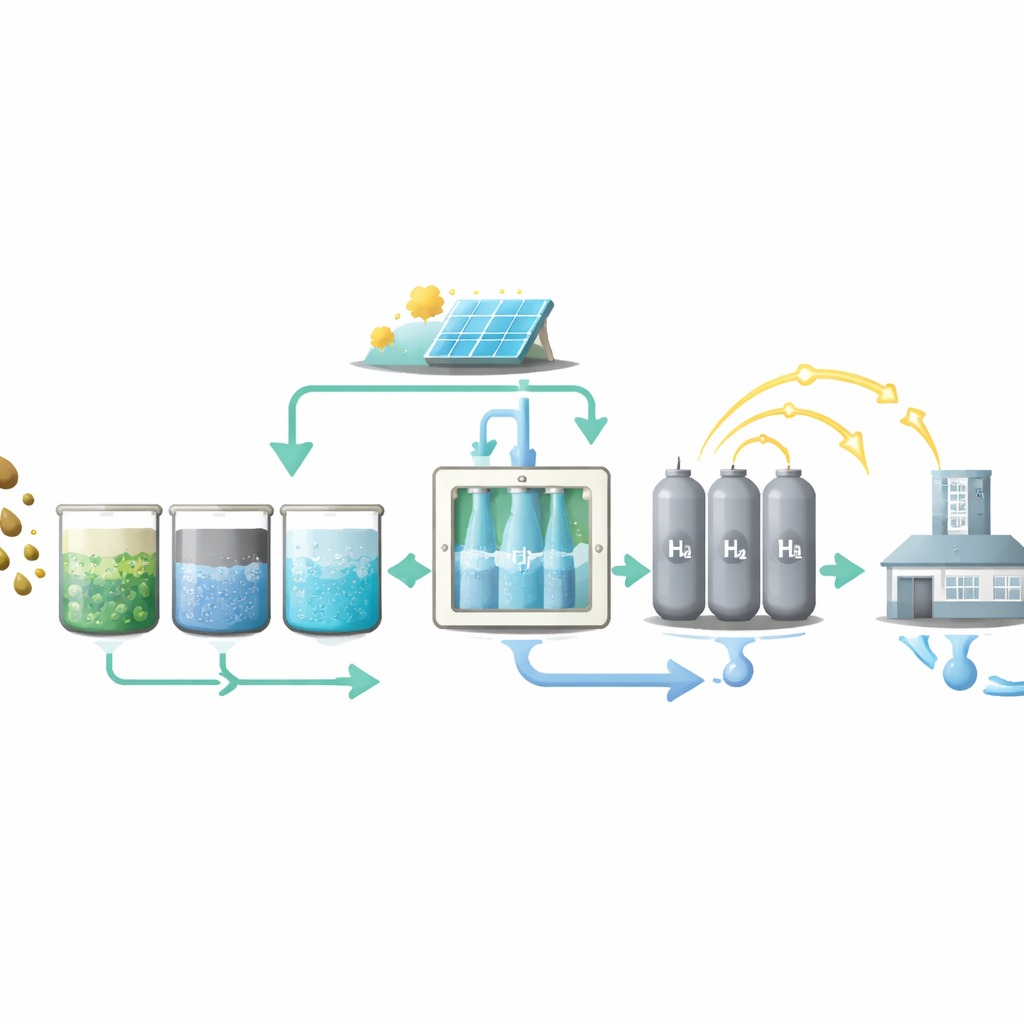
The proposed setup is called a Solar–Green Hydrogen Hybrid System and is built next to Gul Ahmed Textiles in Karachi. During the day, a 22.75‑megawatt solar farm generates electricity. Part of this power runs the factory and part feeds a 2.25‑megawatt hydrogen electrolyzer, which uses electricity to split water into hydrogen. The hydrogen is stored in tanks and later sent to a 1‑megawatt fuel cell that turns it back into electricity at night, providing firm, predictable power without burning fossil fuels. Instead of assuming an endless supply of clean freshwater, the system is designed around the factory’s own wastewater, treating only a small fraction of its daily effluent to meet the strict purity needs of the hydrogen equipment.
Giving Wastewater a Second Life
The textile plant discharges about 400,000 liters of wastewater every day. The system diverts around 4,050 liters per day into a compact treatment train made up of biological and membrane steps that progressively remove solids, salts, and contaminants until the water is clean enough for hydrogen production. The electrolyzer uses roughly 9 liters of high‑purity water for each kilogram of hydrogen produced. When the stored hydrogen is later used in the fuel cell, most of that water reappears as almost pure condensate, which is captured and sent back into the factory for non‑drinking uses such as dye preparation, cooling, or boilers. In this way, the plant both reduces the volume of wastewater it discharges and cuts its dependence on outside freshwater, creating a circular water loop tied directly to its energy system.
What the Numbers Say About Cost and Climate
To see if this idea holds up in practice, the authors combine hourly computer simulations with long‑term cost and environmental accounting over 25 years. They compare a standard solar‑hydrogen setup that uses conventional freshwater with the wastewater‑integrated version. Including the savings from avoided freshwater purchases and lower effluent handling fees, the cost of the electricity produced by the hybrid system drops from about 10 cents to 8.66 cents per kilowatt‑hour, a 13.4 percent reduction that makes it competitive with fossil‑fuel power in Pakistan. Because solar and hydrogen replace grid and diesel electricity, the system is projected to avoid more than 157,000 metric tons of carbon dioxide over its lifetime—equivalent to several thousand tons per year in a single facility. The analysis also shows a payback period of roughly a decade and a solid investment return, even after testing many uncertainty scenarios.
A Blueprint for Cleaner Factories in Dry Regions
In simple terms, this study shows that a factory can turn its own polluted water and local sunshine into dependable, low‑carbon power while using less freshwater overall. By tightly linking wastewater treatment with solar‑driven hydrogen storage, the design lowers electricity costs, slashes emissions, and eases pressure on stressed water supplies. The authors suggest that this approach can be copied and adapted in other industrial clusters across water‑scarce, sunny regions, offering a practical path toward cleaner production that treats water and energy as parts of the same circular system rather than separate problems.
Citation: Raja, I.B., Ahmad, Y., Feroze, T. et al. Integrated techno-enviroeconomic and life-cycle assessment of a solar–green hydrogen hybrid system with industrial wastewater reuse. Sci Rep 16, 13615 (2026). https://doi.org/10.1038/s41598-026-44016-3
Keywords: green hydrogen, solar energy, industrial wastewater reuse, circular economy, textile industry decarbonization