Clear Sky Science · en
Dynamic changes of monocytes-related immune activation in people with HIV switching to long-acting injectable cabotegravir plus rilpivirine
Why Injections Instead of Pills Matter
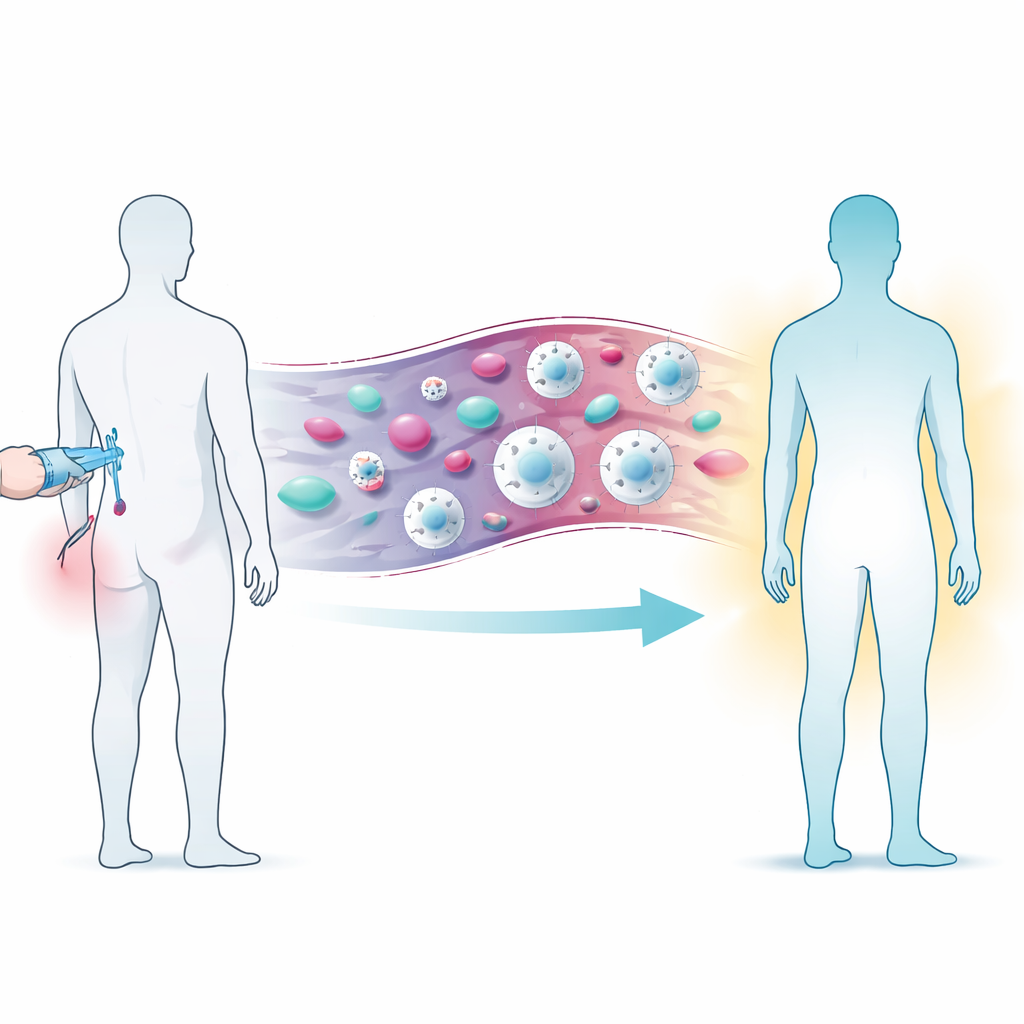
For many people living with HIV, taking daily pills can be a constant reminder of their diagnosis and a source of stress. New long-acting injections that are given only every two months promise to simplify treatment. But HIV is not just about keeping the virus quiet in the blood; it also stirs up chronic low-level inflammation that can damage the heart, brain and other organs over time. This study asks a key question: when people switch from daily pills to long-acting injections of two drugs, cabotegravir and rilpivirine, what happens to that underlying smoldering inflammation in their immune system?
The Hidden Fire of Chronic HIV
Modern HIV therapy is remarkably successful at driving the virus in the blood down to levels that standard tests cannot detect. Yet even with excellent control, many people show signs of ongoing immune “alarm.” Certain white blood cells, especially monocytes and dendritic cells, stay in a partially activated state and release molecules linked to inflammation and blood vessel damage. Two such molecules, called sCD14 and sCD163, are shed into the bloodstream when monocytes and related cells are activated. High levels of these markers have been tied to heart disease, frailty and even earlier death in people with HIV. Understanding whether new treatment approaches can calm this immune overactivity is therefore crucial.
Switching to Long-Acting Injections
The researchers followed 30 adults with HIV who already had undetectable viral levels on standard daily antiretroviral pills. All had been stable for at least a year and then switched to long-acting cabotegravir plus rilpivirine injections, given in the muscle every two months, without an oral “lead-in.” The team took blood samples just before the switch, and then again six and twelve months later. They compared these samples both over time within the same individuals and against blood from 32 similarly aged people without HIV. Using detailed cell-counting techniques, they measured three types of monocytes, several dendritic cell subsets, and the plasma levels of sCD14 and sCD163. They also measured the amount of HIV genetic material inside blood cells, which reflects the size of the viral reservoir.
Calmer Monocytes and a Partial Immune Rebound
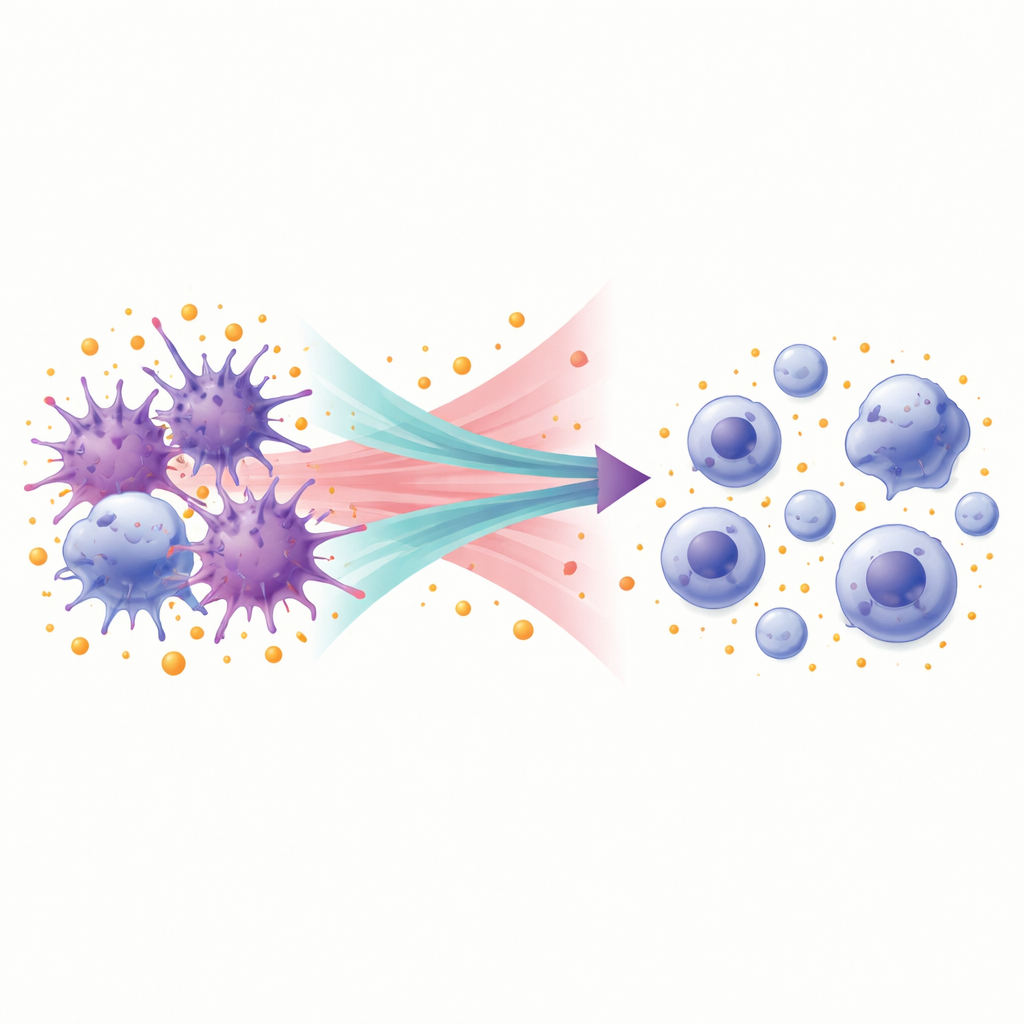
Even before the switch, participants showed a pattern of disturbed innate immunity compared with people without HIV: more activated forms of monocytes and fewer specialized dendritic cells, along with clearly higher blood levels of sCD14 and sCD163. After twelve months on the long-acting injections, the picture shifted. The more inflammatory monocyte types declined, while the more “classical” monocyte type modestly increased, suggesting a rebalancing toward a less activated state. One key dendritic cell population, known to be depleted in HIV, began to recover in number. At the same time, levels of sCD14 in the blood dropped significantly, indicating reduced monocyte activation and possibly less inflammation coming from the gut. Levels of sCD163, another activation marker, remained high, hinting that some low-level monocyte activation persists despite treatment.
Steady Viral Control Without Shrinking the Reservoir
Crucially, no participant experienced virological failure; the virus stayed suppressed in the blood throughout the year on injections. When the researchers examined HIV DNA inside white blood cells at the beginning and after twelve months, they found no meaningful change, suggesting that while the injections kept the virus in check, they did not measurably shrink the long-lived viral reservoir. Moreover, the amount of this HIV DNA did not track with levels of inflammatory markers, reinforcing the idea that residual inflammation is driven by multiple factors, not simply the number of infected cells. The authors point to the stable drug levels and good tissue penetration of the injectable regimen as likely reasons for the observed calming of monocyte activity.
What This Means for People Living with HIV
For people with HIV who are already well controlled on daily pills, switching to long-acting cabotegravir plus rilpivirine appears to do more than just maintain viral suppression. Over a year, it is associated with a measurable reduction in certain signs of immune activation and a partial restoration of key immune cell types, even though the underlying reservoir of HIV remains. In practical terms, long-acting injections may not only offer the convenience of less frequent dosing and relief from daily pill-taking, but could also modestly ease the chronic immune “background noise” that contributes to long-term health risks. Larger and longer studies will be needed, but these findings support the idea that how HIV drugs are delivered can influence not just the virus, but the overall health of the immune system.
Citation: Zingaropoli, M.A., Guardiani, M., Carraro, A. et al. Dynamic changes of monocytes-related immune activation in people with HIV switching to long-acting injectable cabotegravir plus rilpivirine. Sci Rep 16, 13580 (2026). https://doi.org/10.1038/s41598-026-44013-6
Keywords: long-acting HIV therapy, cabotegravir rilpivirine, monocyte activation, immune inflammation, injectable antiretrovirals