Clear Sky Science · en
Cockroach sensitization and its hidden links to mite and food allergens
Why a Roach Allergy Isn’t Just About Roaches
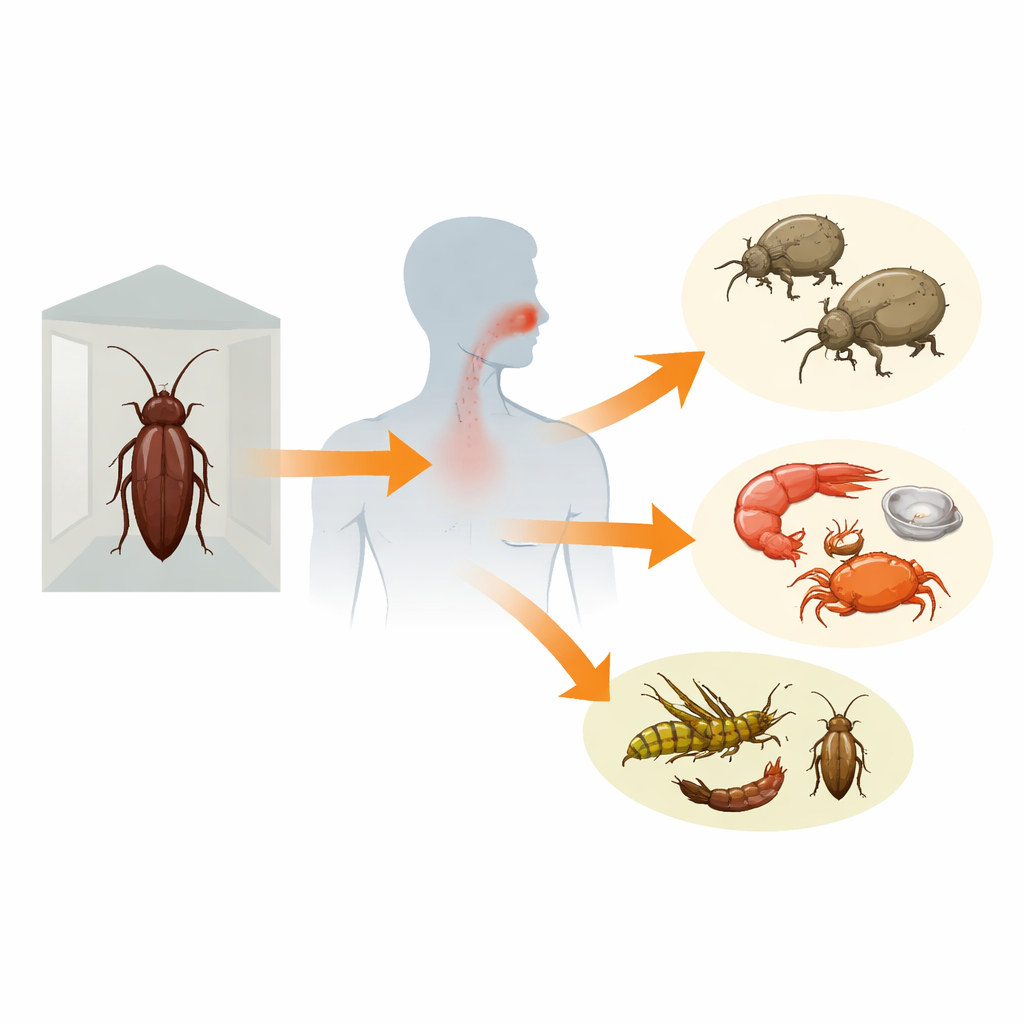
Cockroaches are often seen as an unpleasant household nuisance, but for many people they are also a powerful trigger of allergy and asthma symptoms. This study looks beneath the surface of “cockroach allergy” and shows that, in many cases, a positive test to cockroach is actually a sign of the immune system reacting to similar molecules shared with mites, insects, and even seafood. Understanding these hidden connections can help explain puzzling allergy test results and guide safer choices in diagnosis, treatment, and even new foods like edible insects.
Who Was Studied and What Was Measured
The researchers focused on 48 adults in Poland who had year-round stuffy or runny noses (perennial allergic rhinitis) and a positive skin prick test to German cockroach extract. These tests, done by placing tiny amounts of allergen on the skin, are widely used to diagnose allergies. All participants were also tested for other common triggers, including house dust mites, cat, dog, pollens, and mold. Most of them then underwent an advanced blood test called ALEX2, which can measure antibodies (IgE) against nearly 300 different allergen components at once. This allowed the team to distinguish between antibodies directed at molecules unique to cockroaches and those aimed at molecules that cockroaches share with other species.
Hidden Links Between Roaches, Mites, and Food
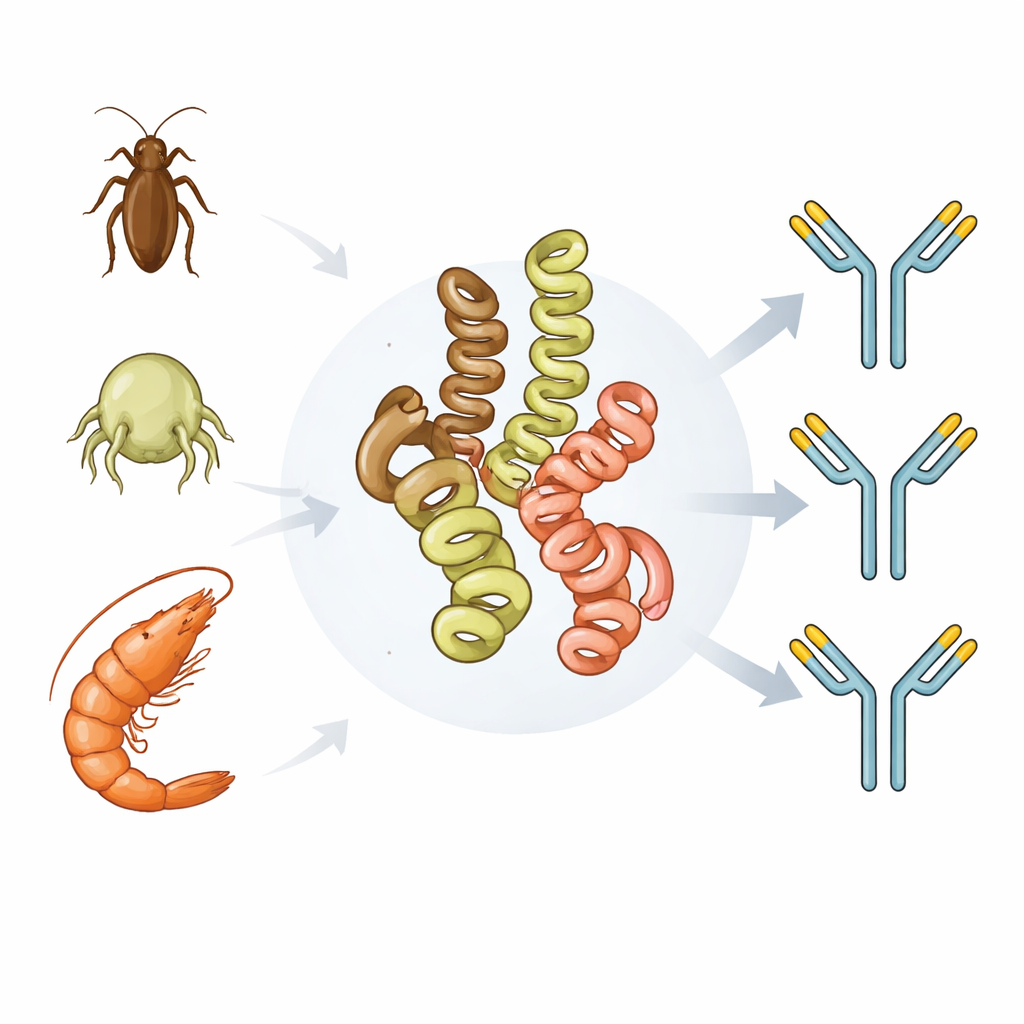
The surprising finding was that only two people with positive skin tests to cockroach actually had raised IgE against cockroach molecules that are considered truly species-specific. In contrast, many more had IgE against so-called cross-reactive molecules—proteins that appear in a wide range of invertebrates, such as house dust mites, storage mites, edible insects (cricket, locust, mealworm), seafood (especially shrimp and other shellfish), and even wasps. A key group of these shared proteins are muscle-related molecules like tropomyosins and arginine kinases, which have very similar three-dimensional shapes across different species. The study’s correlation analyses showed especially strong links between cockroach tropomyosin and tropomyosins from mites and shrimp, suggesting that the immune system may “see” them as nearly the same.
Why Some Tests Mislead Doctors and Patients
Because extracts used in routine skin and blood tests contain many different proteins at once, they cannot easily distinguish whether a person is reacting to molecules unique to a species or to components that look similar across many organisms. In this study, a large group of patients reacted to cockroach extract in skin tests but had no IgE to cockroach-specific molecules in the detailed ALEX2 panel. Others reacted strongly to mite and seafood components, yet appeared “cockroach allergic” when only simple extract tests were used. The authors suggest that sugars attached to natural cockroach proteins or other still-unidentified shared molecules may further blur the picture, leading to false-positive or misleading test results. This is particularly important because cockroach allergy has been linked to more severe asthma, and overdiagnosis can affect how aggressively patients are treated or counseled.
What This Means for Everyday Care
The findings support a more precise, component-based approach to allergy testing. By identifying which exact molecules a patient’s IgE binds to, doctors can better separate true cockroach allergy from broader sensitivity to shared proteins in mites, insects, and seafood. This matters for decisions about allergen-specific immunotherapy (allergy shots or tablets), which works best when it targets the real culprit molecules, and for emerging issues such as the safety of edible insects for people who are already sensitized to mites or shellfish. The study also highlights that local environment, housing conditions, and early-life exposures to indoor pests may shape different patterns of sensitization in different regions.
Take-Home Message for Non-Specialists
In simple terms, this research shows that when tests say someone is “allergic to cockroaches,” their immune system is often reacting not just to roaches but to a family of shared building blocks found in many small creatures, from mites in house dust to shrimp on the dinner plate. For patients, that means a single allergy label may hide a web of related sensitivities, and for doctors, it underscores the need for more detailed testing before making decisions about treatment or dietary restrictions. By mapping these hidden links, the study lays groundwork for more personalized, accurate allergy care that can better predict real-world risks and avoid unnecessary worry.
Citation: Sobczak, M., Kitlas, P., Pawliczak, R. et al. Cockroach sensitization and its hidden links to mite and food allergens. Sci Rep 16, 13064 (2026). https://doi.org/10.1038/s41598-026-44011-8
Keywords: cockroach allergy, cross-reactivity, house dust mite, shellfish allergy, perennial allergic rhinitis