Clear Sky Science · en
Psychoacoustically guided midfrequency band-limiting improves the diagnostic utility of classical acoustic measures in dysphonia
Why the Sound of a Voice Matters
When someone’s voice turns hoarse, rough, or breathy, it can signal anything from simple strain to serious disease. Clinicians listen carefully, but human judgments are imperfect and can vary from one listener to another. This study explores a simple tweak to computer-based voice analysis that makes those measurements line up better with how we actually hear hoarseness and breathiness, especially in milder cases and in everyday connected speech. The key idea is to focus on the slice of sound that our ears are most sensitive to.
How Doctors and Computers Judge a Voice
To diagnose voice problems, specialists rely on trained listening scales that rate overall hoarseness, breathiness, and roughness. Alongside this, software measures tiny irregularities in pitch and loudness and the balance between clear tone and background noise. These traditional numbers work fairly well for long, steady vowel sounds, but they often struggle when the speech is more natural and flowing or when the problem is subtle. As a result, computer scores do not always agree with expert listeners, limiting their usefulness in everyday clinics and telemedicine.
The Ear’s Sweet Spot
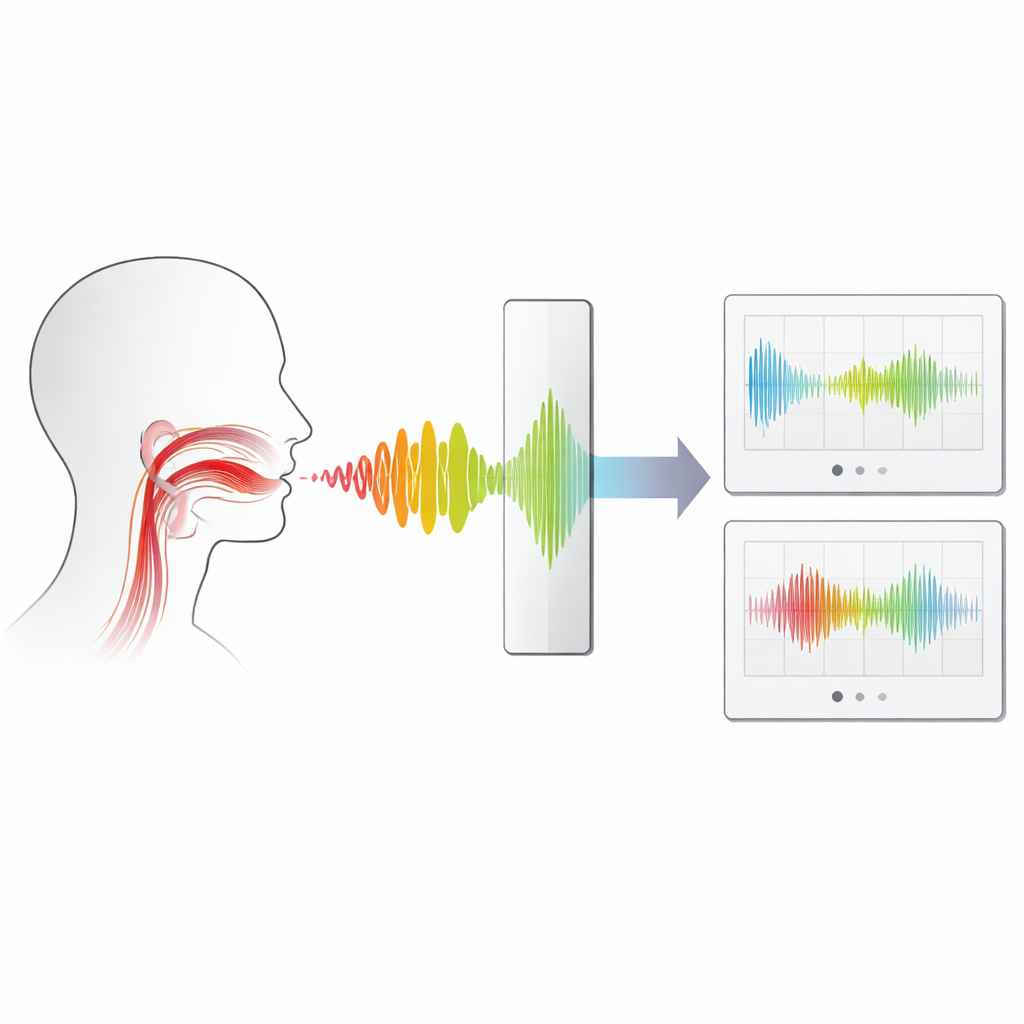
Human hearing is not equally sensitive across all pitches. Our ears are most finely tuned to a band of frequencies roughly between 2 and 4 kilohertz, where small changes in the makeup of a sound stand out clearly. Everyday voice recordings, however, are dominated by lower pitches that carry most of the energy and can mask delicate changes in this midrange. The researchers asked a straightforward question: if we deliberately strip away much of the low and very high parts of the signal and analyze only this midrange “sweet spot,” will classical voice measures do a better job of tracking what listeners actually hear?
A Simple Filter with a Big Effect
The team studied 455 recordings from Japanese speakers, including both sustained vowels and a standard reading passage, covering a wide range of voice disorders and normal voices. For each sample, they created two versions: the original full-band sound and a version passed through a band-pass filter that kept only the 2–4 kHz region. From both versions they computed well-known acoustic measures and compared them with expert ratings of overall hoarseness (grade), breathiness, and roughness. Statistical tools tested how well each measure could distinguish normal from disordered voices and how closely the numbers tracked the severity scores.
Clearer Signs of Hoarseness and Breathiness
Restricting the sound to the midfrequency band consistently strengthened the ability of several measures to separate healthy from disordered voices when the focus was on overall hoarseness and breathiness. This was true for both simple vowels and connected speech, and it was especially helpful in mild cases where changes are most difficult to detect. For example, measures based on tiny cycle-to-cycle fluctuations and on the balance of tone and noise became more sensitive once the dominant low pitches were damped down. The filter effectively “unmasked” higher harmonics and turbulent noise that carry important clues to breathiness and general voice quality.
When Filtering Helps—and When It Hurts
The same approach did not help with roughness, which tends to arise from slow, low-pitched irregularities and additional tones that live largely below 2 kHz. Because the filter removes much of this low-frequency structure, roughness-related information is weakened, and both the ability to separate normal and rough voices and the match with listener ratings either stagnated or declined. The study also found that improvements in how well a measure separates broad groups do not always go hand in hand with a stronger step-by-step match across the full severity scale, underscoring that no single number can capture all aspects of a complex voice disorder.
What This Means for Real-World Voice Care
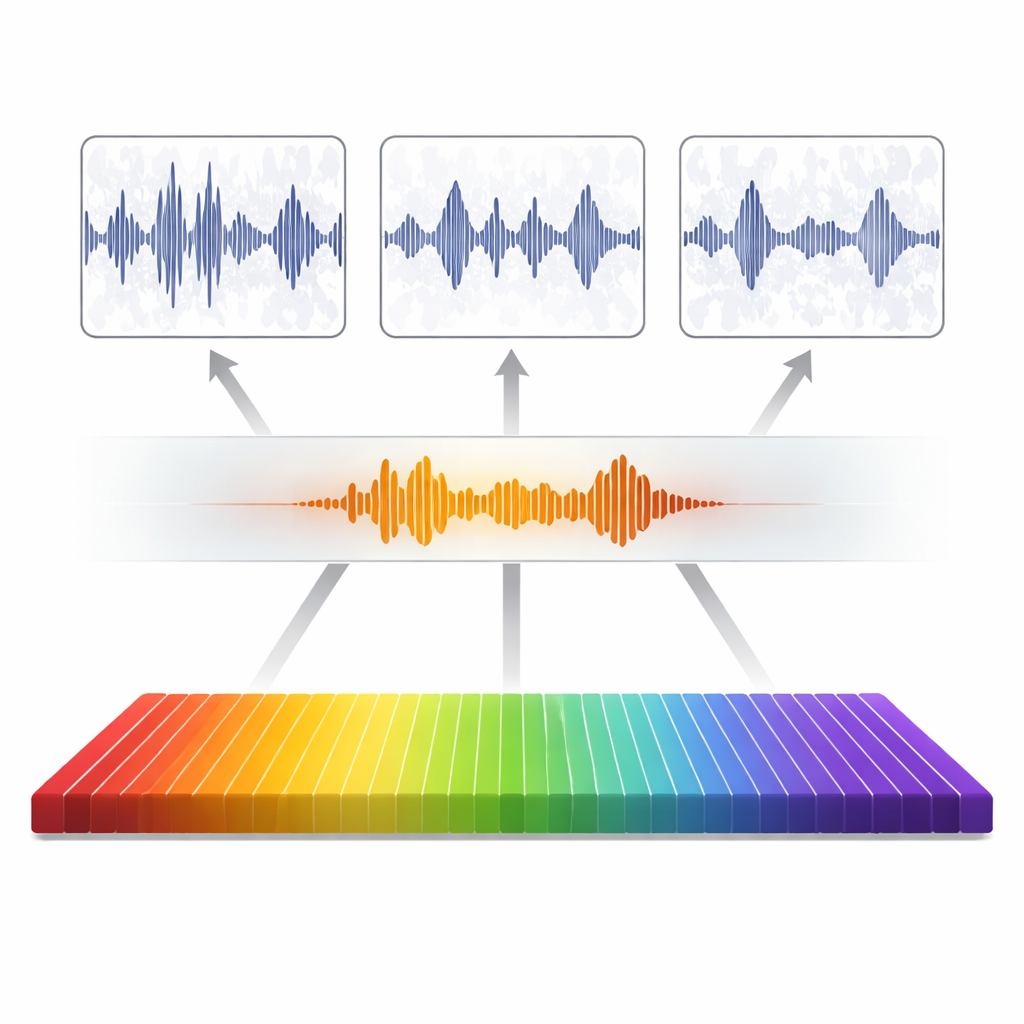
By applying psychoacoustic knowledge at the very first step—how we filter the recording—this work shows that existing, easy-to-compute voice measures can become more clinically useful without new devices or elaborate models. A simple 2–4 kHz band-limited track, used alongside the full sound, yields sharper clues for judging hoarseness and breathiness in both clinic and remote assessments, while low-frequency information remains essential for roughness. In practical terms, this filtering strategy can be built into current software as a low-cost, device-independent enhancement, supporting more reliable screening and monitoring of dysphonia wherever voices are recorded.
Citation: Hosokawa, K., Kitayama, I., Iwaki, S. et al. Psychoacoustically guided midfrequency band-limiting improves the diagnostic utility of classical acoustic measures in dysphonia. Sci Rep 16, 13554 (2026). https://doi.org/10.1038/s41598-026-44010-9
Keywords: voice disorders, dysphonia, psychoacoustics, hoarseness, acoustic voice analysis