Clear Sky Science · en
Sexual dimorphism in the programming effects of prenatal manganese multi-media biomarker on temporal cognition in school-aged children
Why this study matters for parents and teachers
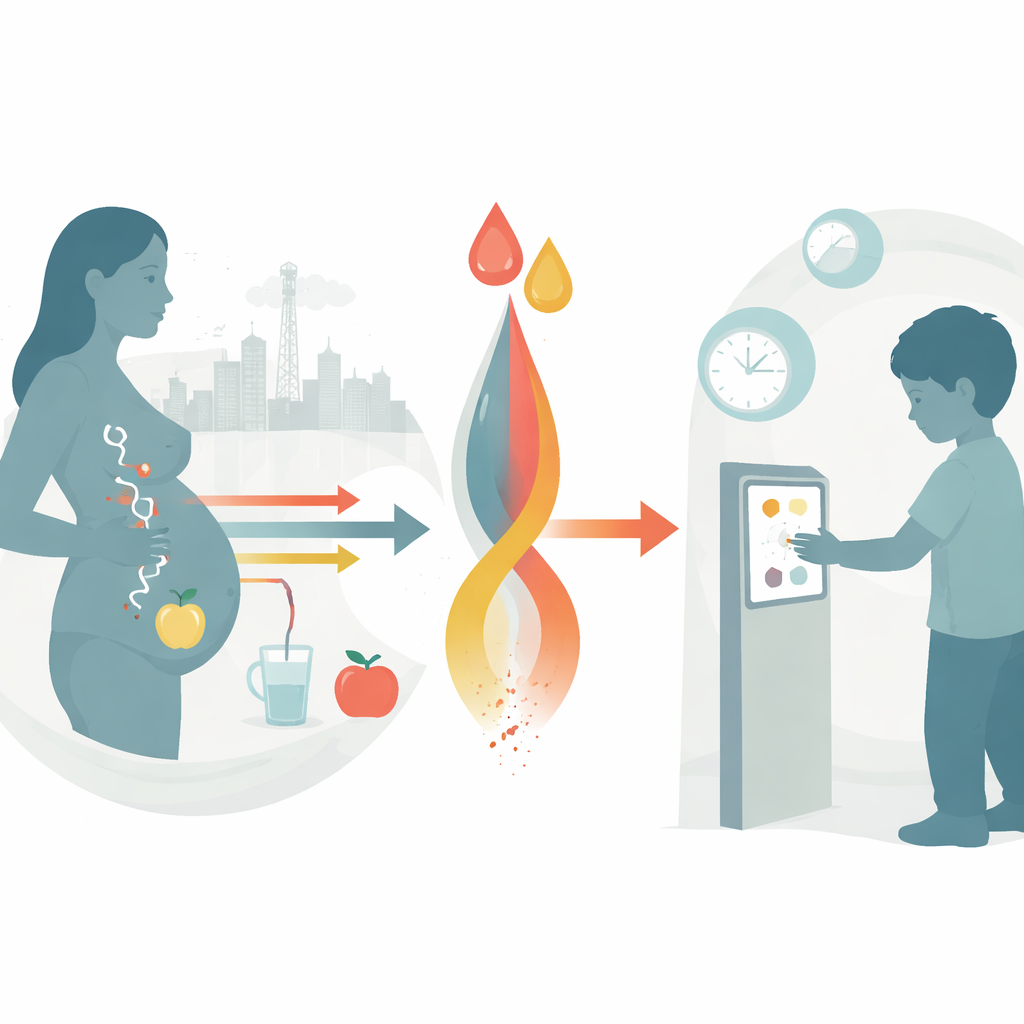
Many everyday activities—from catching a ball to finishing a test on time—depend on a child’s inner sense of time. This study asks a simple but important question: can exposure to a common metal before birth quietly reshape how children experience time years later, and does this happen differently in girls and boys? The researchers focused on manganese, a metal that is both a necessary nutrient and a potential brain toxicant, and followed hundreds of children in Mexico City from pregnancy into early school age.
A common metal with a double life
Manganese is naturally present in air, food, and water. Our bodies need small amounts of it for normal growth and brain function, but too much can harm the nervous system. During pregnancy, manganese can cross the placenta and reach the developing brain at a time when circuits for planning, attention, and timing are being laid down. Previous research had already linked higher prenatal manganese exposure to problems with movement, behavior, and thinking in children, but almost nothing was known about its impact on time perception—the mental ability to estimate and manage seconds and minutes.
Measuring exposure in a more complete way
Unlike lead, which is usually measured in blood alone, manganese has no single “gold standard” test. Levels in blood and urine each capture only part of the picture. To get a better handle on overall prenatal exposure, the team used what they call a multi-media biomarker index. They combined mothers’ manganese levels from both blood and urine, measured during the second and third trimesters of pregnancy, into a single score using a statistical approach designed for mixtures. This allowed them to estimate each child’s cumulative prenatal manganese exposure rather than relying on a single snapshot from one body fluid.
Testing children’s inner clock
When the children were 6 to 7 years old, 563 of them took part in a reward-based timing game. Sitting at a panel with levers and lights, each child had to hold down a specific lever for about the right amount of time—between 10 and 14 seconds—to earn a small coin that could later be traded for a toy. Letting go too early or too late meant no reward, but they could try again right away. From this simple setup, the researchers extracted many measures: how many lever holds were in the correct timing range, how steady or variable the holds were, and how accurately children could repeat the target interval over many trials.
What the results revealed about boys and girls
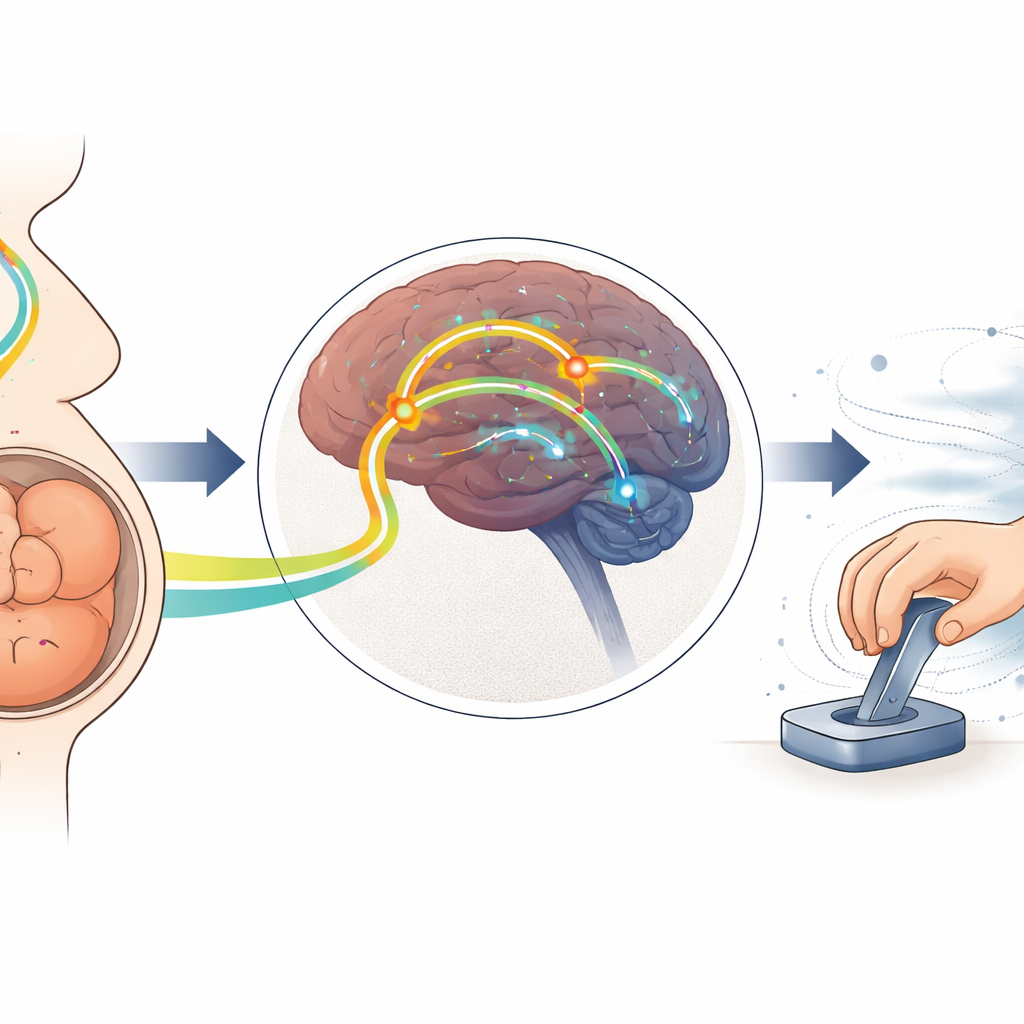
Across the full group, higher prenatal manganese exposure was linked to poorer performance on several timing measures. Children with higher exposure had fewer correctly timed lever holds and more variability in how long they held the lever down, indicating a less reliable internal clock. When the researchers separated the data by sex, a striking pattern emerged. Girls showed more consistent and stronger links between higher prenatal manganese and worse timing performance: they made fewer total lever presses, had fewer well-timed holds, and their timing was more irregular. Boys showed a weaker relationship, with significant effects emerging mainly for one measure of accuracy. These findings suggest that girls may be more vulnerable than boys to manganese-related disruptions in the brain systems that support timing.
Clues to how early exposure shapes the brain
The study cannot directly show what happens inside the brain, but it fits with what is known about manganese biology and brain development. Time perception depends on a network that includes the prefrontal cortex, basal ganglia, hippocampus, and cerebellum—regions that are sensitive to oxidative stress and to changes in dopamine, a key signaling chemical. Manganese can accumulate in these areas and alter their function. The authors suggest that even before puberty, subtle sex differences in brain maturation, hormone signaling, and how metals are transported and cleared from the body may make girls’ timing circuits more susceptible to prenatal manganese. By combining multiple biomarkers into one exposure index, the study also shows how more refined measurement can uncover patterns that might be missed by simpler approaches.
What this means for children’s futures
The authors conclude that prenatal manganese exposure can program lasting changes in a child’s ability to perceive and estimate time, a skill that underpins attention, planning, schoolwork, and everyday decision-making. The effects are not the same for boys and girls, with girls in this study showing greater apparent vulnerability. For a lay reader, the takeaway is that even low-level exposures to common environmental metals during pregnancy may quietly shape how a child’s mind handles time years later. Recognizing these early influences can guide public health efforts to reduce harmful exposures, refine prenatal care recommendations, and design school supports that take into account invisible differences in how children experience time.
Citation: Lane, J.M., Liu, S.H., Cory-Slechta, D.A. et al. Sexual dimorphism in the programming effects of prenatal manganese multi-media biomarker on temporal cognition in school-aged children. Sci Rep 16, 13219 (2026). https://doi.org/10.1038/s41598-026-44007-4
Keywords: prenatal manganese, time perception in children, sex differences, environmental neurotoxicology, child brain development