Clear Sky Science · en
Genetic basis of immunity in Indian cattle as revealed by comparative analysis of Bos genome
Why hardy Indian cattle matter
Across India’s villages and towns, humped native cattle not only pull plows and carts but also provide milk and a lifeline for millions of households. Farmers have long noticed that these indigenous animals stay healthier in heat, poor feed, and disease-prone environments than many imported dairy breeds. This study asks a straightforward but powerful question: what is it in their DNA that makes them so resilient, and can that knowledge help breed cattle that are both productive and naturally disease-resistant?
Two types of cattle, one genetic yardstick
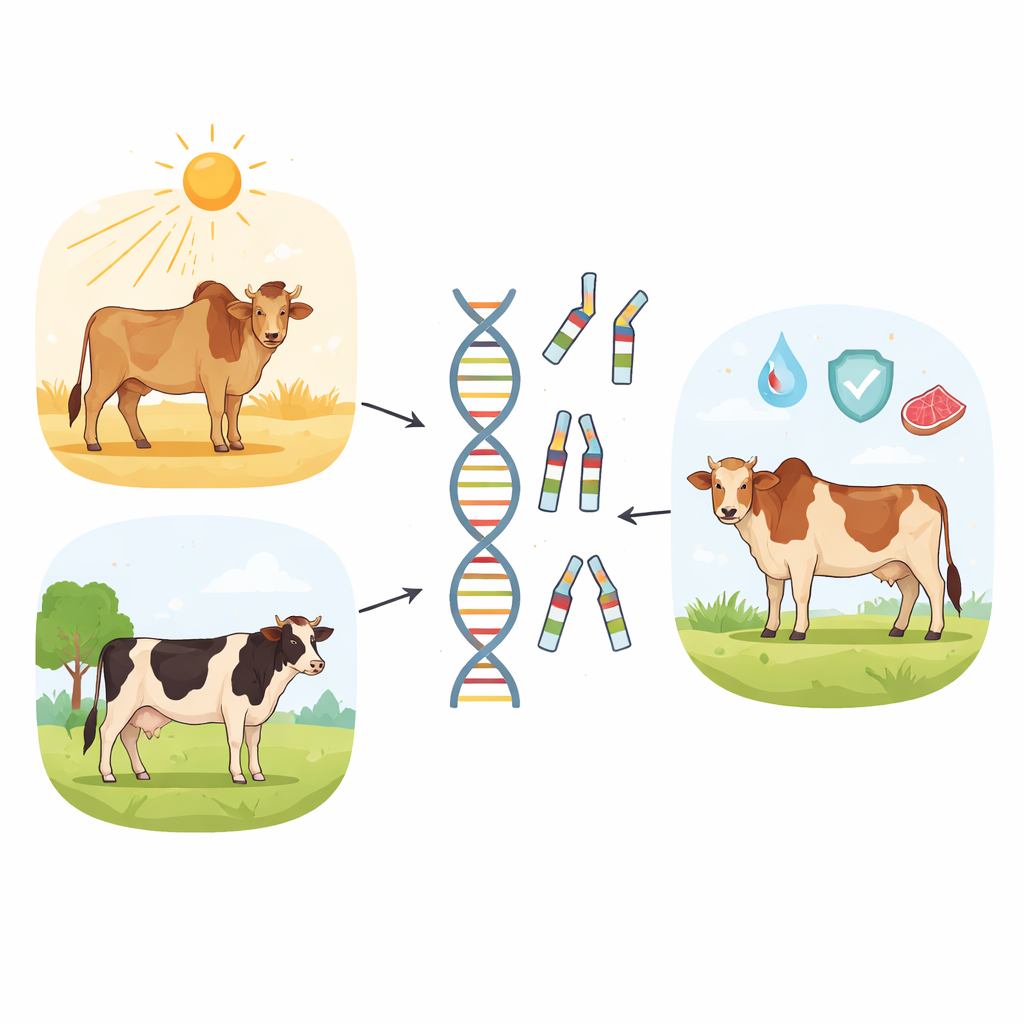
The researchers focused on two major Indian breeds, Nelore and Gir, which belong to the tropical Bos indicus group, and compared them to the widely used Bos taurus Hereford reference genome. Using high-throughput DNA sequencing data from 34 animals, they aligned billions of short DNA fragments to the Hereford genome and catalogued three types of genetic changes: single-letter swaps in the DNA code, small insertions, and small deletions. They then asked where these changes fall—inside genes, in regulatory regions that control when genes turn on and off, or in stretches of DNA tied to traits such as milk yield, fertility, and disease resistance.
Finding immune clues in the cattle genome
To home in on disease resistance, the team assembled a comprehensive list of immune-related genes from a curated database and from keyword searches. They found that Nelore carried more DNA changes overall, and especially more within immune genes, than Gir did. Some changes were particularly dramatic: “frameshift” insertions or deletions that can scramble a protein, and “stop-gain” mutations that can cut a protein short. Such high-impact variants appeared in key immune genes, including TLR3, which helps sense viral genetic material, and CD33-like and CD46 genes that modulate immune cell activity. Many other immune genes—including those involved in inflammation and pathogen sensing—carried combinations of insertions, deletions, and single-letter variants in their control and coding regions, suggesting layers of subtle tuning rather than a single switch.
Linking DNA changes to milk, health, and more
Genetic changes matter most when they affect traits farmers care about. The scientists therefore overlaid their variant map with known “quantitative trait loci” (QTLs)—regions of the genome statistically linked to traits such as milk production, fertility, body size, meat quality, and disease resistance. Many immune genes carrying strong variants fell within these QTLs, hinting that the same DNA stretch can influence both health and productivity. For example, variants in CD46 were located in regions tied to health, reproduction, and carcass traits, while other genes with disruptive changes were linked to milk yield or meat quality. Analyses of long stretches of identical DNA (runs of homozygosity) and selective sweeps—genomic footprints of past natural or human-driven selection—highlighted a handful of standout genes, such as ANKRD11, MAGI2, FOXP2, TCF12, ATP5PO in Nelore and MEFV and ORIF1 in Gir, that appear to have been strongly favored and are associated with milk and health-related traits.
Immune pathways under the spotlight
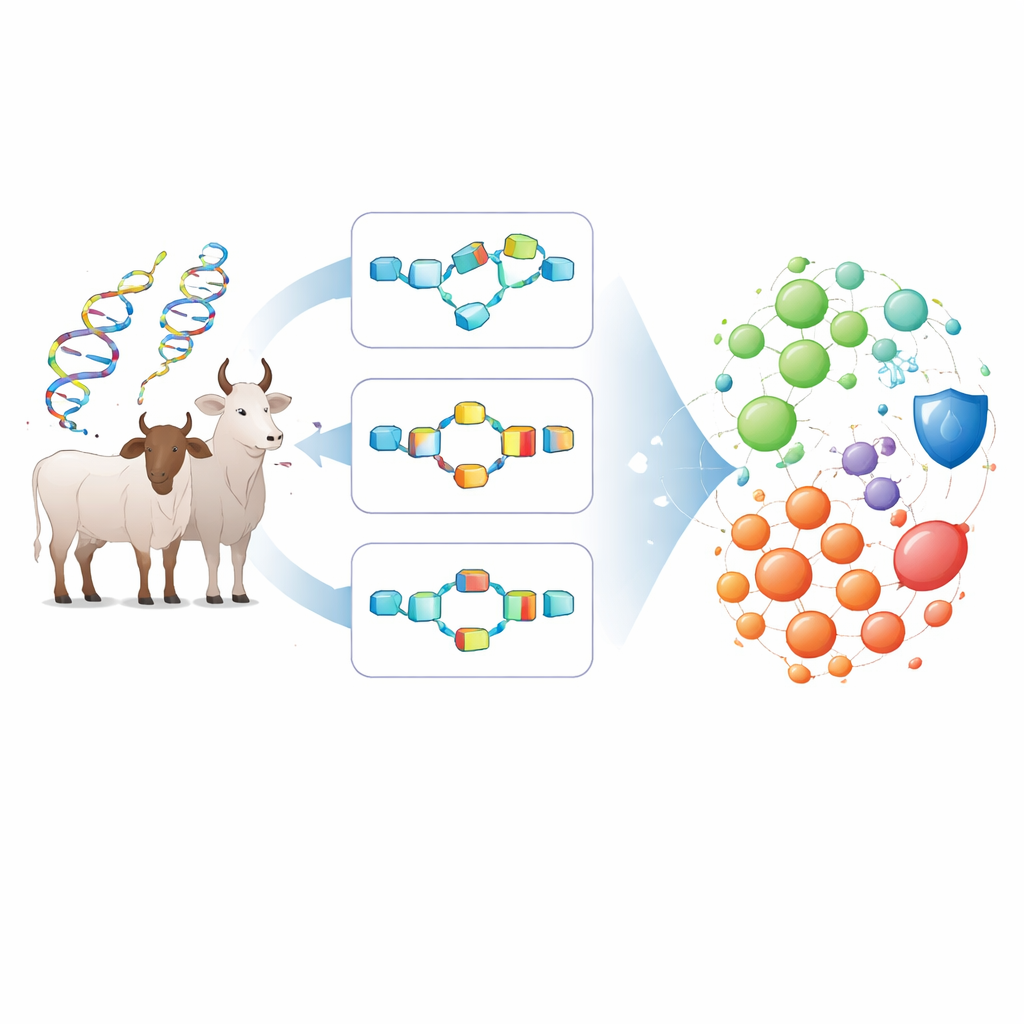
Rather than acting in isolation, many of the affected genes cluster in well-known immune signaling routes. The study found that genes with multiple types of variants were enriched in pathways that control how immune cells detect danger and launch responses, including NF-kappaB signaling, T-cell receptor signaling, MAPK signaling, and related cascades. These pathways shape how strongly cattle respond to infections, how they regulate inflammation, and even how they respond to vaccines. The fact that so many variant-bearing genes feed into these circuits suggests that the remarkable hardiness of indicine cattle is not due to a single “super gene,” but to a coordinated re-tuning of the immune system at many points along its wiring.
What this means for future herds
For non-specialists, the take-home message is simple: the DNA of Indian cattle carries a rich record of adaptation to tough environments, and many of the key differences sit in genes that govern immune defenses as well as milk and production traits. By pinpointing high-priority genes and genomic regions—such as TLR3, CD46, ANKRD11, MAGI2, FOXP2, TCF12, ATP5PO, MEFV, and ORIF1—this study offers a roadmap for future work to test how these variations affect real-world disease resistance and productivity. With careful validation and responsible breeding, these insights could help design crossbreeding programs that do not trade away resilience for yield, but instead build herds that are both healthier and more productive under the challenging conditions where they are most needed.
Citation: Thambiraja, M., Iyengar, S.K., Satishkumar, B. et al. Genetic basis of immunity in Indian cattle as revealed by comparative analysis of Bos genome. Sci Rep 16, 11005 (2026). https://doi.org/10.1038/s41598-026-44002-9
Keywords: indigenous cattle immunity, bovine genomics, disease-resistant livestock, dairy breeding, genetic variation