Clear Sky Science · en
Multi-ancestry genome-wide association study in all of Us for primary open-angle glaucoma
Why this eye disease study matters
Primary open-angle glaucoma is a silent thief of sight and the leading cause of irreversible blindness worldwide. Yet we still do not fully understand why some people, and some populations, are more likely to develop it. This study uses one of the largest and most ethnically diverse U.S. health databases to search human DNA for clues. By comparing the genomes of people with and without glaucoma across multiple ancestries, the researchers uncover new genetic warning signs that could eventually lead to earlier diagnosis and fairer, more effective care for everyone.
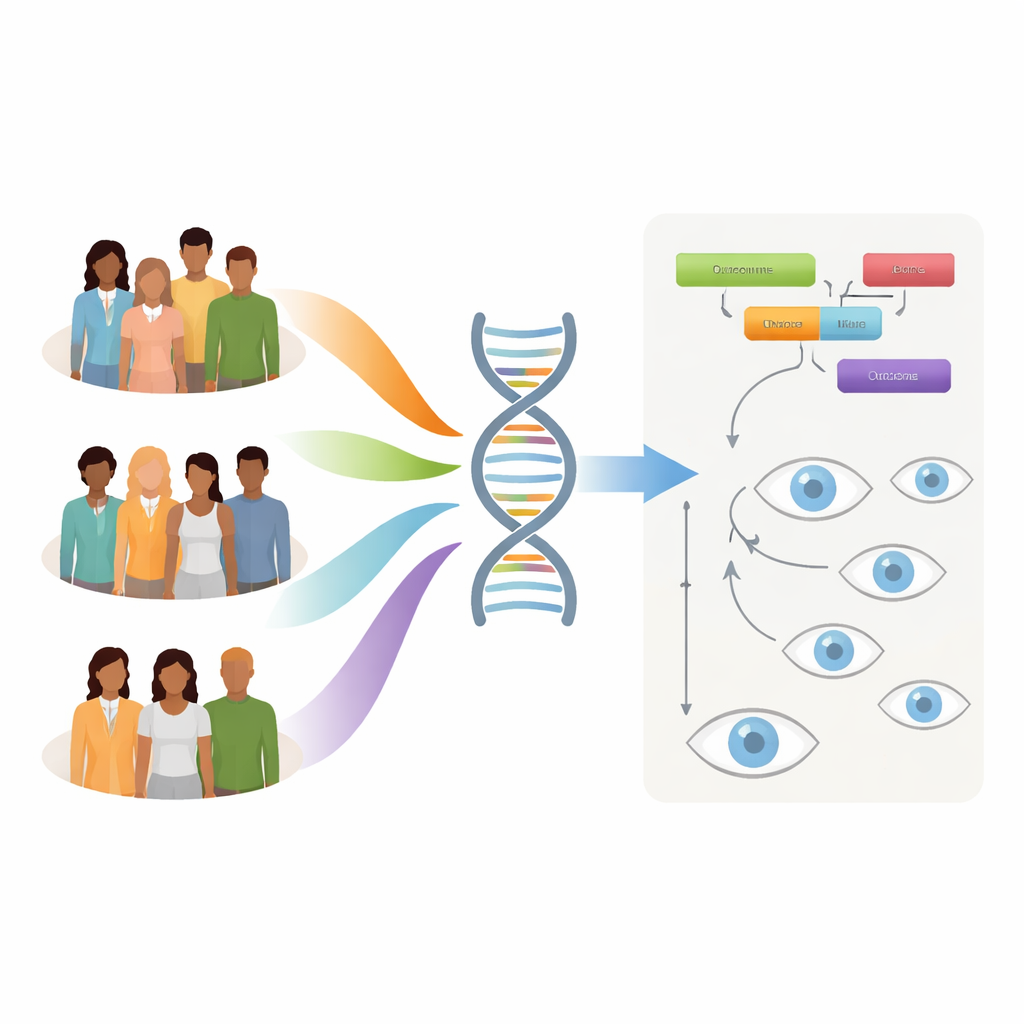
Looking across many backgrounds
The team drew on data from the All of Us Research Program, a nationwide effort that purposely recruits participants from communities that have often been left out of medical research. They analyzed genetic and electronic health record data from 374,254 adults, including 4,305 with primary open-angle glaucoma and nearly 370,000 without the disease. Rather than lumping everyone together, they grouped participants by genetically inferred ancestry: European, African, and Admixed American/Latino. This allowed them to ask which genetic risk factors are shared across populations, and which appear to be unique to particular groups.
Finding new risk markers in the DNA
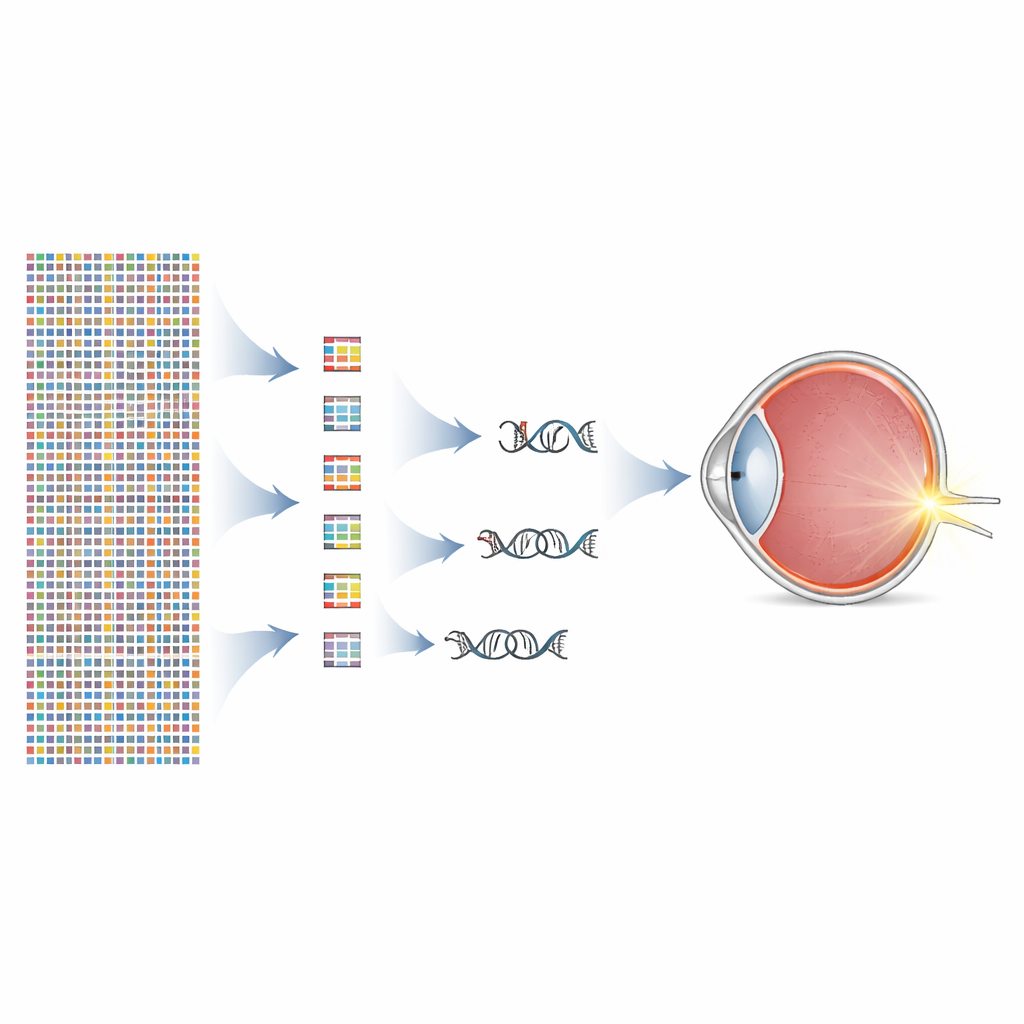
Using a technique called a genome-wide association study, the researchers scanned millions of positions across the genome to see where tiny DNA differences were more common in people with glaucoma than in those without it. In individuals of European ancestry, they confirmed a well-known risk region near a gene called TMCO1, which helps regulate fluid pressure inside the eye. They also discovered new risk regions near genes involved in eye development, nerve health, and blood pressure control. These include TUT4, RYK, MOXD1, and UBAP2, each hinting that glaucoma may be tied not only to eye pressure but also to broader processes such as how the retina ages, how neurons respond to stress, and how blood vessels function.
Different genes in different populations
When the team looked specifically at participants of African ancestry, they found several genetic risk regions that had not appeared in earlier glaucoma studies dominated by Europeans. Some of these genes are active in the brain and retina or have been linked to eye conditions such as cataracts and age-related macular degeneration. Others are poorly understood, offering fresh starting points for research. In the Admixed American/Latino group, where past genetic studies of glaucoma have been especially scarce, the researchers identified additional risk regions, including ones near genes tied to blood traits, smoking behavior, body weight, and other health factors that may influence eye pressure or optic nerve vulnerability. Many of these signals sit close to—but are not the same as—known glaucoma regions in other populations, suggesting ancestry-specific twists on shared biological themes.
Putting the pieces together
To see the bigger picture, the scientists combined results from all three ancestry groups in a cross-ancestry meta-analysis. This boosted their power to detect subtle effects and revealed 56 genetic variants associated with glaucoma, including several not seen when looking at any single group alone. Some of these lie in genes linked to metabolism, kidney disease, thyroid function, or ion channels that control how cells handle charged particles. Together, the findings reinforce the idea that glaucoma risk is shaped by a web of influences that connect the eye to the rest of the body. At the same time, the study highlights practical challenges: sample sizes were smaller for non-European groups, and some newly discovered signals could not yet be confirmed in independent datasets, meaning they remain promising but unproven leads.
What this means for patients and the future
For people living with or at risk for glaucoma, the main takeaway is that genetics matter—and that those genetics do not look exactly the same in every population. By uncovering new risk regions in European, African, and Latino groups, this work shows that studying diverse communities is essential for building accurate genetic risk tools and for ensuring that future precision-medicine approaches benefit everyone, not just those of European descent. The authors emphasize that these results are an early map rather than a final answer: the newly flagged DNA regions still need to be validated and studied in detail. But the map already points toward more tailored screening, a better grasp of why certain groups face higher risk, and, ultimately, new strategies to protect sight before vision is lost.
Citation: Tavakoli, K., Huang, B.B., Mirmira, T. et al. Multi-ancestry genome-wide association study in all of Us for primary open-angle glaucoma. Sci Rep 16, 13788 (2026). https://doi.org/10.1038/s41598-026-43993-9
Keywords: glaucoma genetics, primary open-angle glaucoma, multi-ancestry studies, precision medicine, eye disease risk