Clear Sky Science · en
Experimental performance, exergy, and economic analysis of an oval tubular solar still integrated with nano-enhanced phase change material
Turning Sunlight into Safe Drinking Water
Billions of people live in dry coastal regions where seawater is plentiful but drinkable water is scarce. Large desalination plants can be expensive and energy-hungry, putting them out of reach for many communities. This study explores a small, low-cost device that uses only sunlight to turn salty water into fresh water more efficiently and cheaply than common designs used today.
A New Shape for Solar Water Makers
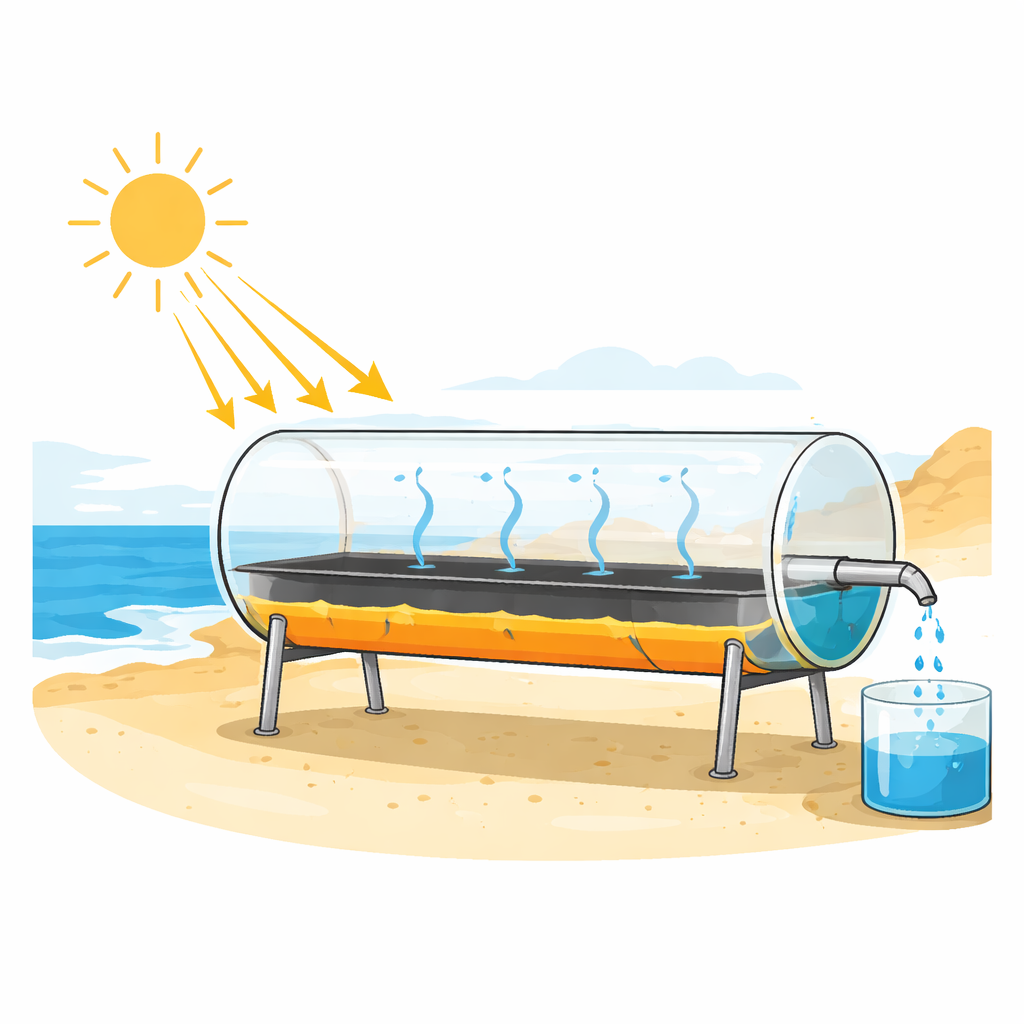
Traditional solar stills are usually simple boxes with a glass lid where salty water is evaporated by the sun and then condensed as fresh water. The authors designed a different shape: an oval transparent tube lying horizontally. Inside the tube sits a shallow black metal tray holding saltwater. Sunlight can enter from all directions, warming the water so it evaporates and then condenses on the cool inner surface of the oval tube. Droplets run down and are collected as drinkable water. This oval tubular solar still (OTSS) offers a larger condensation surface than flat-roofed designs, which helps increase output.
Storing Daytime Heat for Nighttime Use
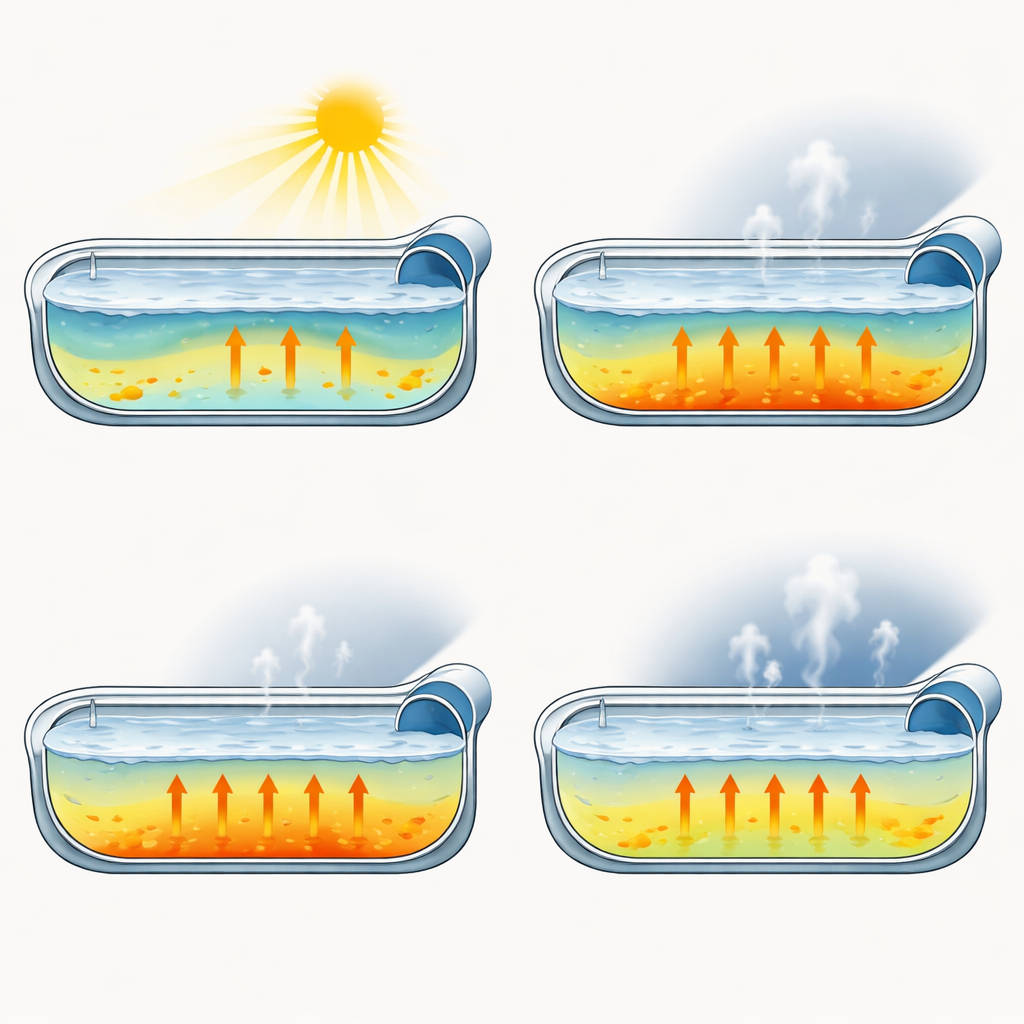
One major weakness of solar stills is that they stop producing much fresh water once the sun sets. To tackle this, the researchers added a hidden “thermal battery” below the saltwater tray. They used paraffin wax, a common material that melts when heated and solidifies when cooled while storing and releasing large amounts of heat. The wax is placed in a lower metal compartment directly beneath the water. During sunny hours it melts and stores heat; after sunset it slowly solidifies, releasing that stored heat back into the water. Experiments in Cairo with shallow water (especially at 0.5 cm depth) showed that the wax kept the basin water hotter into the evening, raising both daytime and nighttime freshwater production by about 28 percent compared with the same tube without wax.
Boosting Heat Flow with Tiny Additives
Although paraffin wax can store a lot of heat, it does not conduct heat very well. To move heat in and out of the wax more quickly, the team mixed in extremely small particles of aluminum oxide, creating what they call nano‑enhanced paraffin wax. These nanoparticles are thousands of times smaller than a grain of sand but significantly raise the wax’s ability to carry heat. The researchers tested several particle concentrations and found that a modest amount (0.3 percent by weight) worked best. With this mixture, the wax warmed up and cooled down faster, sending more heat into the water during late afternoon and evening hours. As a result, the still produced up to 7.26 liters of fresh water per square meter of basin area per day—about 42 percent more than the same device without any wax, and 11 percent more than with plain wax alone.
Measuring Efficiency and Cost
Beyond counting liters of water, the study examined how effectively the OTSS turned incoming sunlight into useful evaporation and how much that water would cost over the lifetime of the device. The oval tube without wax converted about 43 percent of the solar energy it received into evaporation; adding wax raised this to nearly 61 percent, and the nano‑enhanced wax pushed it to over 68 percent. A more detailed quality-based measure of the energy, called exergy efficiency, also improved steadily with each enhancement. The authors then estimated material and operating costs for a ten‑year lifespan in Egyptian conditions. Even though the advanced wax and nanoparticles add some upfront expense, the higher output lowered the cost of each liter of water from about 2.1 cents to 1.63 cents in US dollars, making the improved system both more productive and more economical.
What This Means for Thirsty Regions
In simple terms, the researchers show that carefully combining a new oval tube design with smart heat‑storage materials can squeeze much more fresh water from the same amount of sunlight. The device remains relatively simple—just a clear tube, a shallow metal tray, and a layer of special wax with tiny particles mixed in—yet it produces more water, works longer into the night, and lowers the price per liter. For remote, sunny communities that lack access to large power‑hungry plants, such solar stills could offer a practical, low‑maintenance way to secure clean drinking water using nothing more than seawater and sunshine.
Citation: Aly, W.I.A., Tolba, M.A. & Abdelmagied, M. Experimental performance, exergy, and economic analysis of an oval tubular solar still integrated with nano-enhanced phase change material. Sci Rep 16, 11365 (2026). https://doi.org/10.1038/s41598-026-43990-y
Keywords: solar desalination, solar still, phase change material, nanoparticles, clean water