Clear Sky Science · en
Deep learning-based physiological risk stratification in night-shift hospital workers
Why Night Shifts Matter for Your Health
Hospitals never sleep, but the people who keep them running pay a biological price. This study looks under the hood of the bodies of more than two thousand hospital workers to ask a simple question: how does working nights quietly reshape their health risks, even when their routine checkups look normal? Using modern artificial intelligence, the researchers map out hidden patterns in blood pressure, cholesterol, and other lab tests to find which night workers are on a path toward metabolic and heart problems—before disease fully shows up.
Looking Beyond Averages to Hidden Patterns
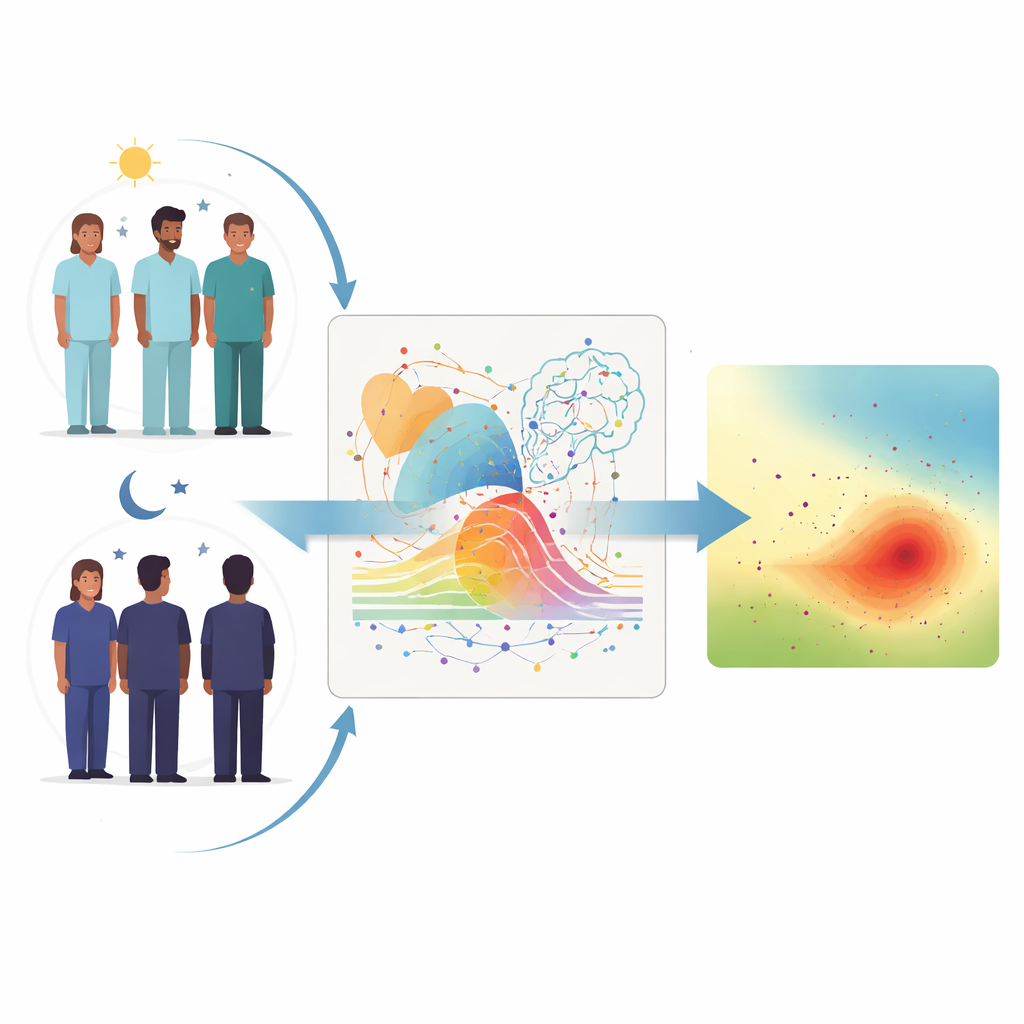
Most past studies have compared average test results for night workers versus day workers. Here, the team went further. They collected routine health data—such as body mass index, waist size, blood pressure, blood sugar, liver enzymes, and several kinds of cholesterol—from 2,250 hospital employees in South Korea, about half of whom worked night shifts. Instead of asking only whether one group’s numbers were higher or lower, they asked how all these measures fit together as a system inside each person. This matters because two workers can share similar lab values on paper yet have very different underlying resilience to stress from irregular hours and disrupted sleep.
Turning Lab Results into a Health Map
To uncover those hidden structures, the researchers used a mathematical tool that compresses many measurements into a kind of “physiological map.” Each worker becomes a single dot on this map, positioned according to their overall metabolic profile. One major direction on the map reflects overall metabolic load: dots farther along this axis tend to belong to people with higher body weight, higher blood pressure, and higher triglycerides, a type of blood fat. Another direction reflects how well the body keeps cholesterol in balance, especially the push–pull between “bad” and “good” cholesterol. On this map, night-shift workers, despite being about ten years younger on average, tended to sit in regions linked to heavier metabolic strain.
Identifying Risk Hotspots and Workload Effects
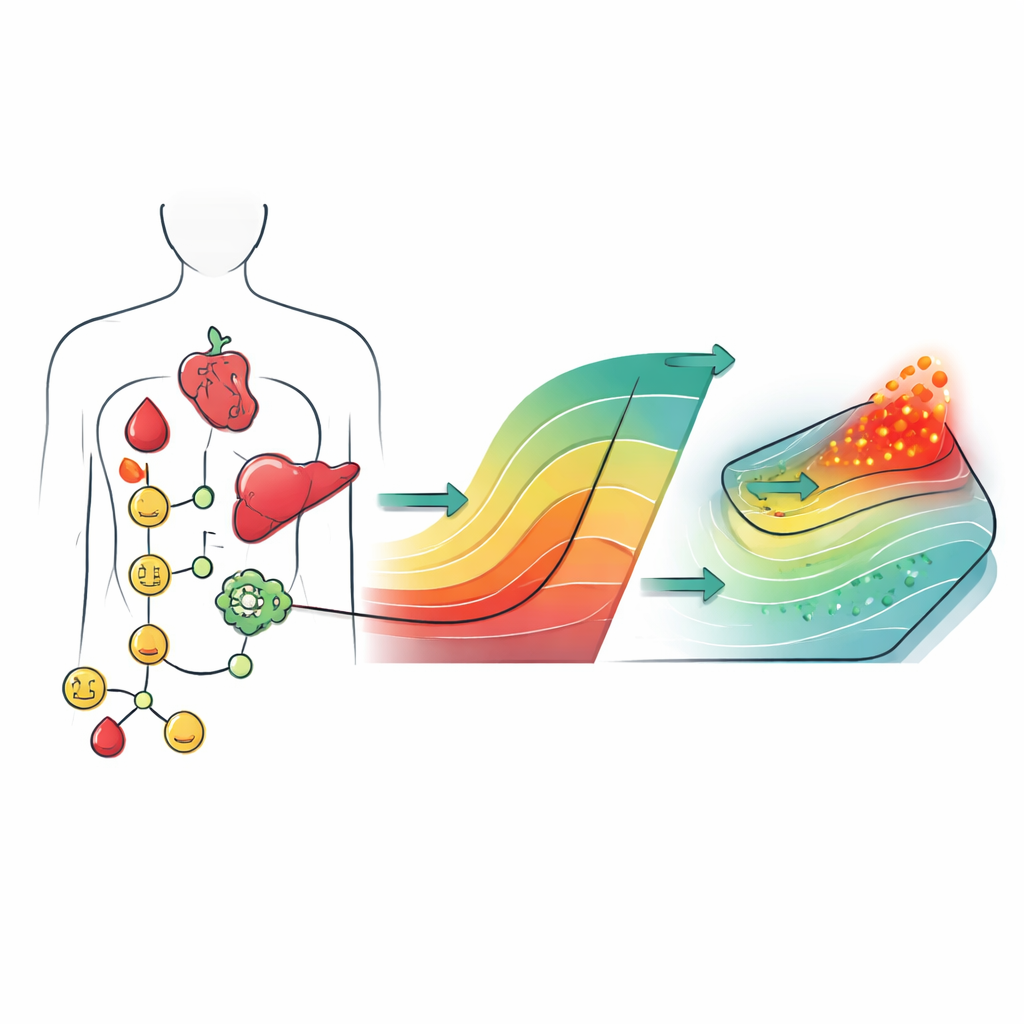
Building on this map, the team trained a deep learning model to estimate each person’s metabolic risk, using both medical measurements and details about their jobs, such as years on night shift and weekly working hours. When they colored the map by predicted risk, a clear hot zone appeared where elevated weight, blood pressure, and triglycerides piled up together. Within night workers, these high-risk regions overlapped with patterns of longer stretches of consecutive night shifts and greater total working hours. The analysis also revealed a sharp rise in predicted risk when triglyceride levels crossed roughly a “borderline high” threshold, suggesting a tipping point where the body’s ability to cope starts to falter.
Different Bodies, Different Vulnerabilities
The study did not stop at marking a general danger zone. By combining the physiological map with another clustering technique, the researchers found distinct subgroups of workers. One cluster, concentrated in areas of heavy metabolic load and weaker cholesterol balance, contained night workers with especially high predicted risk, despite their relatively young age. Another cluster showed more stable cholesterol handling and lower risk, even among people exposed to similar night schedules. This means that a worker’s vulnerability is shaped not only by how many nights they work, but also by their built-in capacity to keep fats and sugars in check when their body clock is repeatedly disturbed.
What This Means for Night Workers and Hospitals
In plain terms, the study shows that night work does not harm everyone in the same way, and that traditional averages can hide the people who most need help. By using AI to draw a personalized risk landscape, hospitals can move from one-size-fits-all rules to targeted protection. Simple markers such as triglyceride levels, blood pressure, and patterns of working hours can help flag workers whose bodies are drifting into a physiologically dangerous zone, even before they develop clear disease. The authors argue that this kind of data-driven, individualized monitoring could guide healthier shift schedules and earlier interventions, making 24-hour care safer not just for patients, but for the staff who keep the lights on at night.
Citation: Lee, I., Hong, S., Lee, J. et al. Deep learning-based physiological risk stratification in night-shift hospital workers. Sci Rep 16, 13686 (2026). https://doi.org/10.1038/s41598-026-43982-y
Keywords: night-shift work, metabolic health, circadian disruption, hospital workers, physiological risk