Clear Sky Science · en
Restriction of HSV-1 replication by Pistacia vera L. extracts reveals a promising strategy for regulating virus-mediated chemokine response in monocytic cells
Why a common virus and a snack food matter
Herpes simplex virus type 1 (HSV-1) is best known for causing cold sores, but this lifelong virus can occasionally invade the brain or eyes, leading to dangerous inflammation. At the same time, many people look to plant-based remedies that might help the body fight infections with fewer side effects than standard drugs. This study explores an intriguing question: could natural compounds from pistachios help rein in HSV-1 while also calming the overactive immune signals that damage our own tissues?
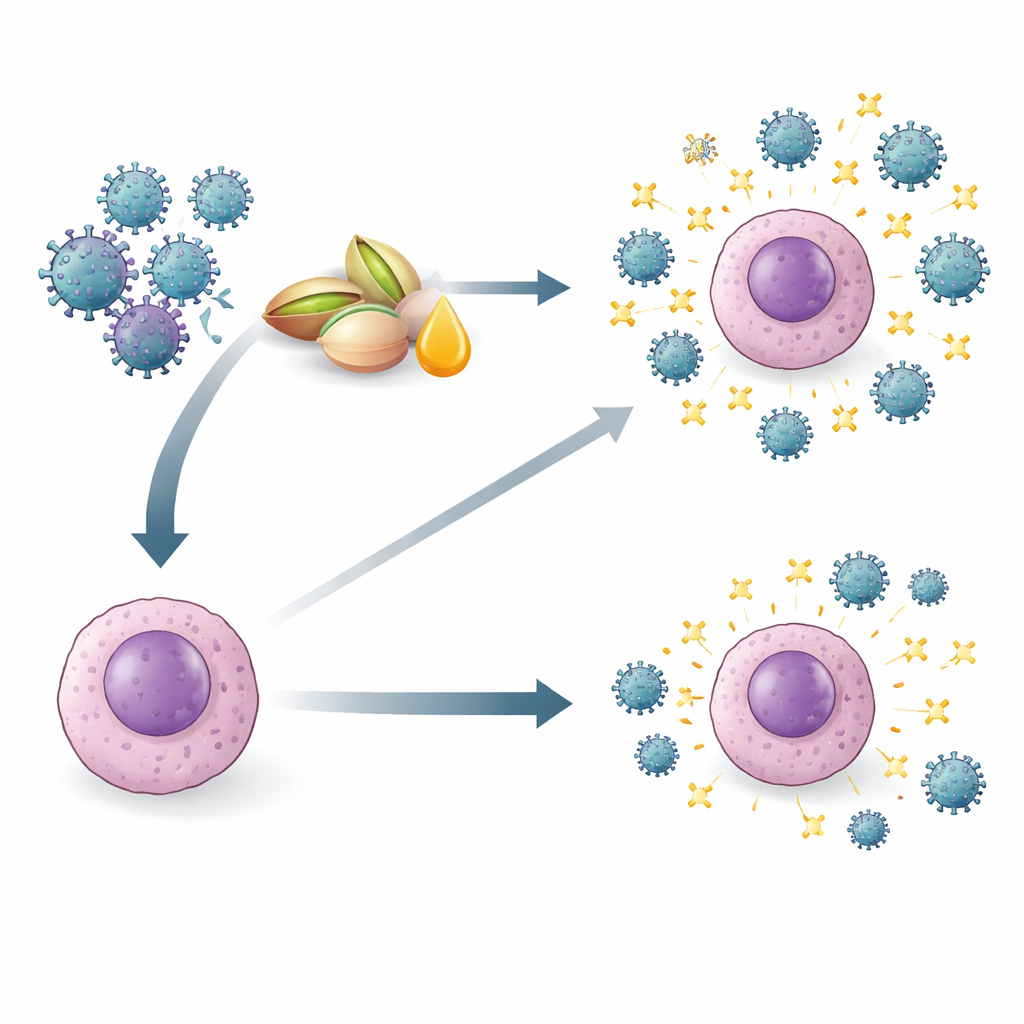
How the virus stirs up the body’s alarm system
When HSV-1 infects the body, it does not simply sneak into cells and quietly copy itself. In immune cells called monocytes, the virus sparks a storm of chemical signals known as chemokines. These small proteins act like flares, summoning other immune cells to the scene. While this response can help control infection, too many signals in the wrong place—especially in sensitive tissues like the brain, eyes, or nerves—can fuel swelling and injury. In this work, the researchers focused on how HSV-1 activates a group of chemokines that are strongly tied to inflammation and on a master switch inside cells called NF-κB, which turns many of these alarm signals on.
What pistachio extracts do to the virus
The team used human monocytic THP-1 cells, a standard laboratory model of circulating immune cells, and infected them with HSV-1. Before infection, they exposed both the cells and the virus to extracts made from natural and roasted pistachio kernels, carefully choosing doses that were not toxic. They then measured how well the virus could replicate by counting infectious particles, tracking viral DNA, and monitoring key viral genes and proteins. Across these tests, pistachio extracts sharply reduced viral replication. Fewer viral genes were switched on, less viral DNA was made, and a major viral protein fell to much lower levels. In other words, the pistachio components interfered with HSV-1’s ability to complete its normal replication program.
Dialing down runaway immune signals
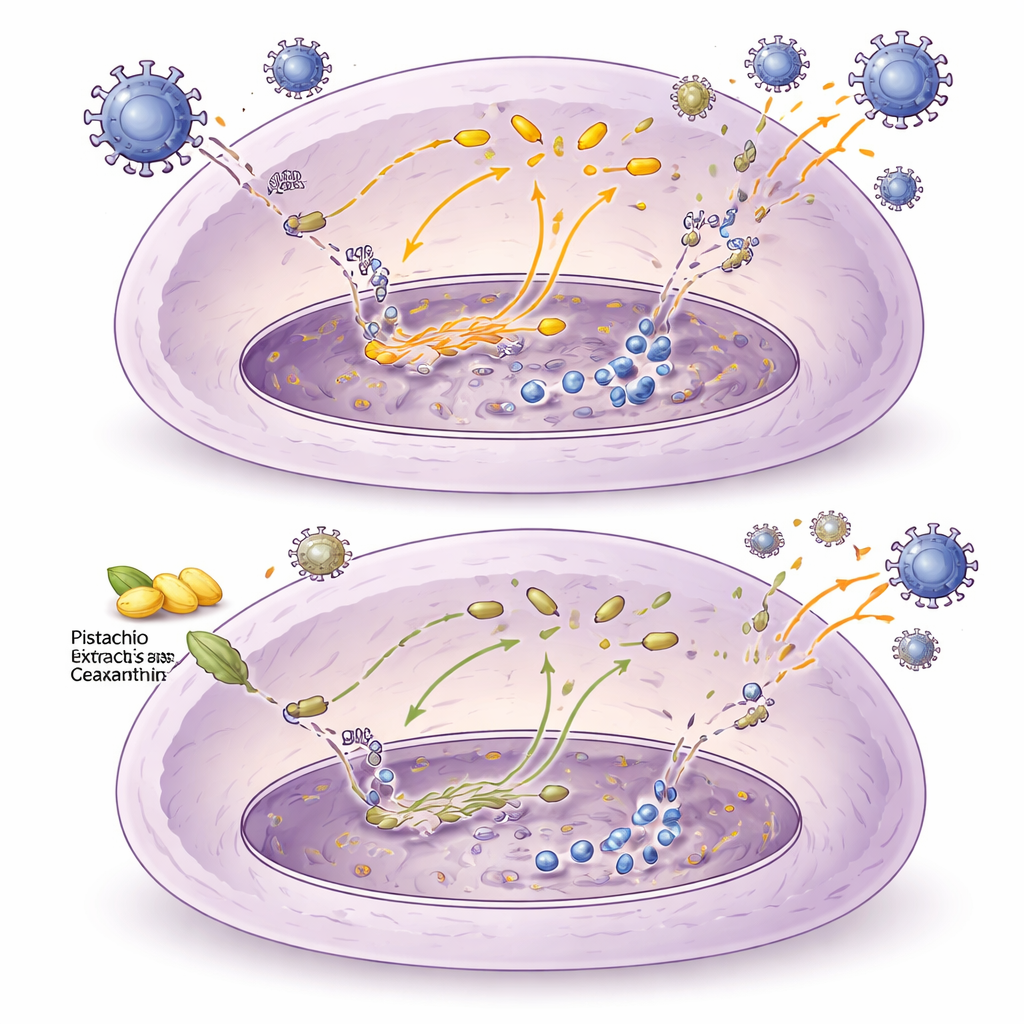
The researchers next asked how these extracts affected the chemokine storm triggered by HSV-1. Using broad gene profiling and follow-up tests, they found that infection alone strongly boosted dozens of chemokines and related receptors in monocytes. Several—such as CXCL10, CXCL11, CCL2, CCL4, CCL13 and the receptor CMKLR1—were particularly elevated. Pretreating with pistachio extracts noticeably blunted this rise, both at the gene level and in the actual protein amounts made by the cells. At the same time, the extracts reduced activation of NF-κB, the intracellular switch that normally promotes these inflammatory signals. A purified pistachio compound, the carotenoid zeaxanthin, produced a similar pattern: fewer viral genes, reduced chemokines, and weaker NF-κB activation, suggesting that it is one of the active antiviral ingredients.
Evidence that replication and signaling are linked
To disentangle cause and effect, the scientists blocked HSV-1 DNA replication with a standard antiviral compound and saw that chemokine levels dropped, along with NF-κB activation. This indicated that the full-blown chemokine response depends in part on active viral replication, not just on virus entry. They also used specially engineered monocytes in which NF-κB cannot be properly activated. In these cells, chemokine production was much lower, but paradoxically the virus grew better, producing higher levels of viral genes and more infectious particles. This result highlights a delicate balance: the same chemokines that help protect the host can also be harnessed by the virus to shape an environment that favors its long-term survival and spread.
Spillover effects on other vulnerable cells
The study went a step further by examining how treated monocytes influence neighboring cells that HSV-1 readily infects, such as nerve-like and epithelial cells. The researchers collected the liquid surrounding infected monocytes and transferred it onto these permissive cells. When the original monocytes had been treated with pistachio extracts or zeaxanthin, the new target cells produced far fewer virus particles than when the monocytes were untreated. This suggests that by curbing viral replication and dampening inflammatory signals in monocytes, pistachio-derived compounds indirectly make the overall environment less favorable for the virus to amplify in other tissues.
What this could mean for future care
In accessible terms, the work shows that natural substances from pistachios—including zeaxanthin—can both slow HSV-1’s ability to copy itself in key immune cells and soften the intense chemical alarm those cells raise. Because many of the most serious HSV-1 complications are driven by a mix of viral attack and inflammation, an approach that tackles both at once is especially appealing. While these findings come from cell-based experiments and are not yet ready to guide treatment in people, they point to pistachio-derived molecules as promising building blocks for future therapies aimed at managing herpes infections and their inflammatory consequences, particularly in delicate organs such as the brain and eyes.
Citation: Pennisi, R., Costa, M., Tamburello, M.P. et al. Restriction of HSV-1 replication by Pistacia vera L. extracts reveals a promising strategy for regulating virus-mediated chemokine response in monocytic cells. Sci Rep 16, 10800 (2026). https://doi.org/10.1038/s41598-026-43975-x
Keywords: herpes simplex virus, pistachio extracts, zeaxanthin, immune inflammation, natural antivirals