Clear Sky Science · en
Innovative PBAT/PU/MMT@ZnO-NPs bionanocomposite films based on modified montmorillonite for active food packaging
A New Kind of Food Wrap for a Cleaner World
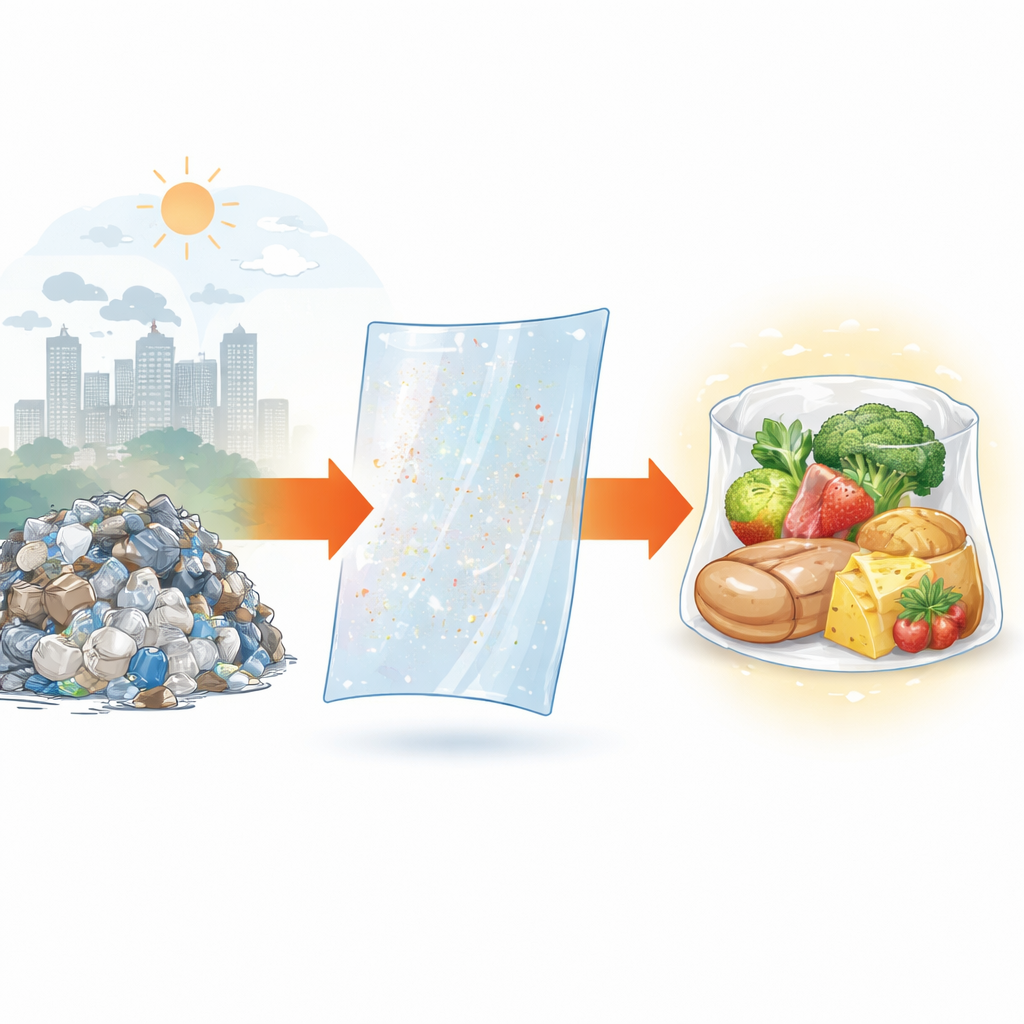
Plastic trash is piling up in landfills and oceans, yet we still rely on plastic to keep food fresh and safe. This study explores a new type of biodegradable food packaging film designed to break down more easily while also helping protect food from spoiling and from harmful microbes. By blending plant‑friendly plastics with tiny mineral and metal particles, the researchers aim to create smart wraps that both cut pollution and extend shelf life.
Why We Need Smarter Food Packaging
Conventional plastic packaging is cheap and effective, but it lingers in the environment for decades. Biodegradable plastics such as PBAT and polyurethane can break down into harmless substances like water and carbon dioxide, making them attractive alternatives. However, on their own they can let in too much oxygen and water vapor, and they do not always stand up well to heat or mechanical stress. This means food can spoil more quickly or the packaging can fail during transport. The challenge is to keep the convenience of plastic while reducing its environmental footprint.
Building Films from Tiny Building Blocks
To tackle this, the team created thin films by combining two biodegradable plastics (PBAT and polyurethane) with an ultra‑thin clay called montmorillonite and very small zinc oxide particles. The clay exists as stacked sheets only billionths of a meter thick, while the zinc oxide particles are nanoparticles, also on the nanometer scale. The researchers mixed these ingredients in a solvent and cast them into films containing three levels of zinc oxide—2.5%, 5%, and 10% by weight—while keeping the clay content constant. They then examined how these additions affected the structure and performance of the films.
Peering Inside the Material
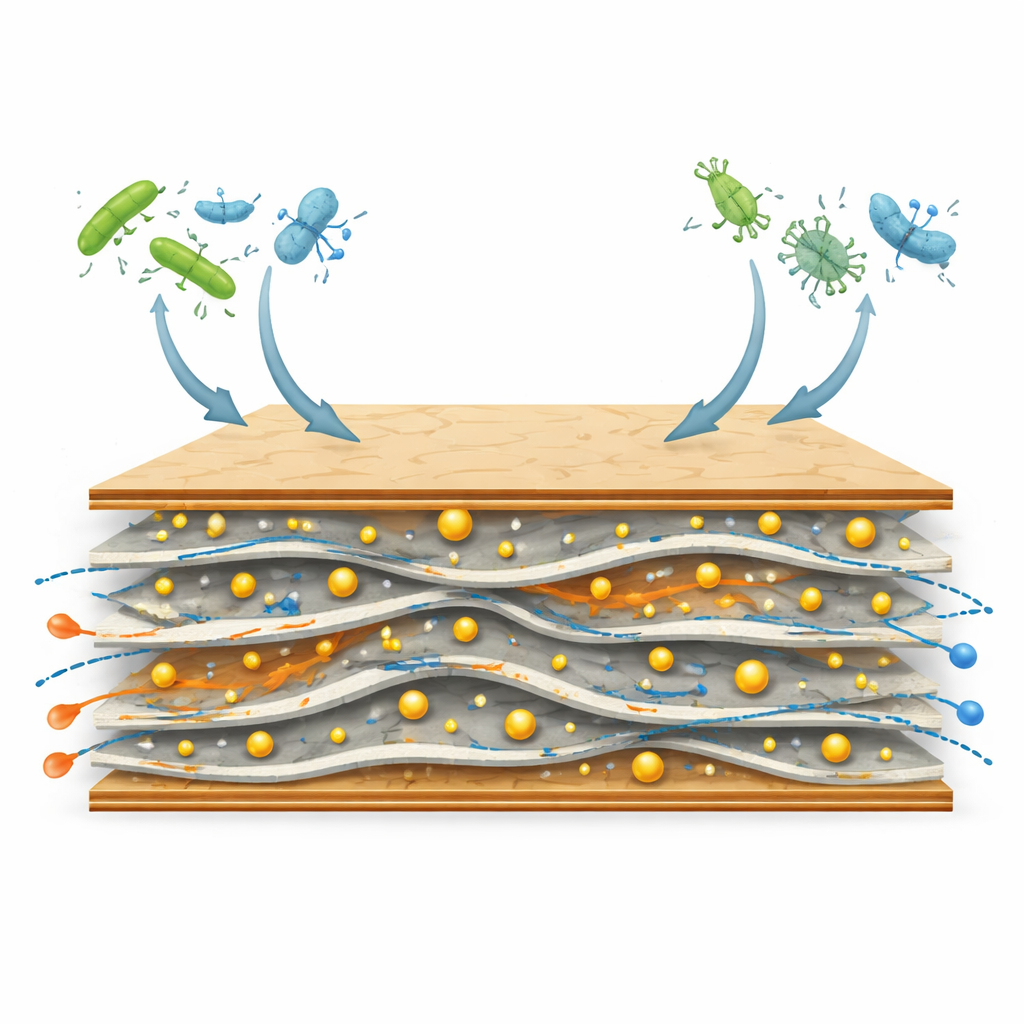
Using tools such as X‑ray diffraction, electron microscopy, infrared spectroscopy, and thermal analysis, the scientists showed that the clay layers and zinc oxide nanoparticles were well distributed within the plastic blend. The clay sheets partly peeled apart and mixed into the plastic, and the zinc particles nestled between or around them, forming a fine, layered network. This nanostructure improved the film’s resistance to heat, shifting the main breakdown step to higher temperatures. The mechanical tests revealed that a low amount of zinc oxide (2.5%) made the films more flexible while still fairly strong, whereas higher amounts made them stiffer but also more brittle, highlighting the need for a careful balance.
Keeping Moisture Out and Germs at Bay
The films also showed promising barrier and antimicrobial behavior. As more zinc oxide was added, the films became better at blocking water vapor, which can help slow down staling and texture changes in foods. Oxygen moved more easily through films with higher zinc levels, which might be useful for products that benefit from some gas exchange but could be a drawback for foods that need very tight oxygen control. Most strikingly, the zinc‑loaded films strongly inhibited common food‑related bacteria and molds. Larger clear zones around film samples in microbial tests showed that higher zinc levels led to stronger antibacterial and antifungal effects, thanks to the nanoparticles damaging the cell walls of microbes that contacted the film.
What This Could Mean for Everyday Foods
Taken together, these results suggest that carefully tuned mixtures of biodegradable plastics, clay, and zinc oxide nanoparticles can produce films that are tougher, more heat‑resistant, better at managing moisture, and able to fight harmful microbes. For consumers, this could translate into packaging that helps keep cheese, fresh produce, or ready‑to‑eat foods safer and fresher for longer while also breaking down more readily after disposal. Although more work is needed to tailor gas‑barrier levels to specific foods and to scale up production, this study points toward active, eco‑friendly packaging that protects both our meals and the environment.
Citation: El-Nagar, I., Youssef, A.M., Khattab, T.A. et al. Innovative PBAT/PU/MMT@ZnO-NPs bionanocomposite films based on modified montmorillonite for active food packaging. Sci Rep 16, 11610 (2026). https://doi.org/10.1038/s41598-026-43972-0
Keywords: biodegradable packaging, food preservation, nanocomposite films, zinc oxide nanoparticles, antimicrobial materials