Clear Sky Science · en
Tetflupyrolimet shows selectivity for plant dihydroorotate dehydrogenase over Aspergillus orthologs
Why this matters for people and crops
Doctors and farmers both fight dangerous fungi, but they often use similar types of chemicals to do it. That overlap has raised alarms that heavy use of antifungal sprays in fields could make life-saving medicines fail in hospitals. This study asks a very practical question: will a new weed-killing herbicide, tetflupyrolimet, accidentally train environmental molds to outsmart a promising antifungal drug for people called olorofim? The answer, based on several lines of evidence, is reassuring: tetflupyrolimet strongly targets plants but barely touches the fungal enzymes that olorofim is designed to hit.

Shared targets in fields and clinics
Human fungal infections are a growing problem, especially for people with weakened immune systems, and treatment options are limited. At the same time, fungi destroy crops worldwide, so agriculture also relies on antifungal chemicals. In the past, one major class of fungicides used on plants—azole compounds—has been linked to medical resistance in Aspergillus fumigatus, a mold that commonly causes severe lung infections. Because both farm fungicides and hospital drugs can attack the same fungal machinery, resistant strains can evolve in compost heaps and farm waste, then later infect people. Olorofim represents a new type of antifungal that blocks an enzyme called dihydroorotate dehydrogenase (DHODH), which fungi need to make DNA building blocks. Tetflupyrolimet, a new herbicide, also targets DHODH, but in weeds. That shared target raised the fear that spraying tetflupyrolimet on fields could push Aspergillus to evolve resistance that would also weaken olorofim.
Testing whether the herbicide slows fungal growth
The researchers first asked a straightforward question: does tetflupyrolimet stop Aspergillus from growing at all? They measured the minimum inhibitory concentration (MIC), the lowest amount of a compound that halts visible growth, for several Aspergillus species. Olorofim, as expected for a clinical candidate, blocked growth at extremely low, nanomolar levels. In contrast, tetflupyrolimet did not inhibit growth even at concentrations thousands of times higher, limited only by how much of the compound could be dissolved. This pattern held across different Aspergillus isolates, suggesting that in realistic environments the herbicide does not behave as an antifungal.
Zooming in on the enzyme target
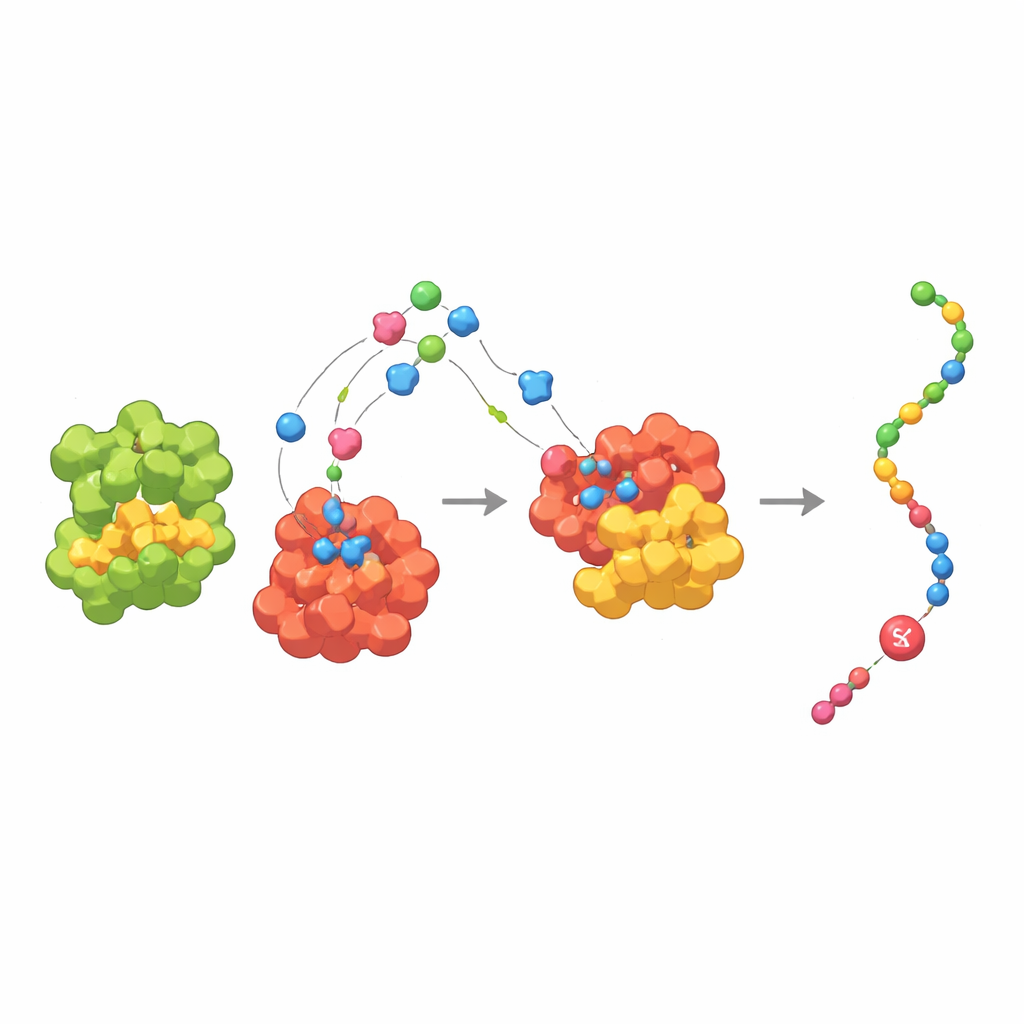
To see what happens at the molecular level, the team purified the DHODH enzyme from Aspergillus fumigatus and from rice plants and tested how each responded to olorofim and tetflupyrolimet. Olorofim potently shut down the fungal enzyme at very low concentrations, exactly as intended for a drug. Tetflupyrolimet, however, barely affected the Aspergillus enzyme even at the highest doses tested. The opposite was true for plant DHODH: tetflupyrolimet inhibited it in the nanomolar range, while olorofim did very little. These side-by-side enzyme tests showed that the two chemicals are highly selective in opposite directions, binding tightly to their preferred targets and weakly, if at all, to the others.
Using yeast as a living test bed
The researchers then turned to baker's yeast engineered to depend on different versions of the DHODH enzyme. They deleted yeast's own DHODH gene and replaced it with genes from either plants or various Aspergillus species. In this setup, each yeast strain survives only if the introduced DHODH works. When exposed to tetflupyrolimet, yeast carrying plant DHODH became highly sensitive: their growth dropped sharply at low herbicide doses. Yeast carrying Aspergillus DHODH, or yeast with their native enzyme restored, continued to grow even at the highest herbicide concentrations. These living-cell experiments confirmed what the purified enzyme tests suggested: inside a cell, tetflupyrolimet acts strongly on plant DHODH but essentially ignores Aspergillus DHODH.
What this means for resistance risk
Putting all the evidence together, the study concludes that tetflupyrolimet is very unlikely to drive resistance to olorofim in Aspergillus. For resistance to evolve, the herbicide would need to strongly block the fungal DHODH, creating strong pressure for mutants that escape inhibition. Instead, tetflupyrolimet leaves Aspergillus growth and DHODH activity largely untouched at realistic concentrations, offering little incentive for the fungus to change this enzyme. Although the authors note that long-term exposure studies could still be explored, the current data suggest that this weed killer and the new antifungal drug occupy different biological niches. In practical terms, farmers may be able to use tetflupyrolimet to protect crops without undermining a future weapon against serious human fungal infections.
Citation: Kim, SI., Turlapati, V., Agashe, B. et al. Tetflupyrolimet shows selectivity for plant dihydroorotate dehydrogenase over Aspergillus orthologs. Sci Rep 16, 13794 (2026). https://doi.org/10.1038/s41598-026-43966-y
Keywords: antifungal resistance, Aspergillus fumigatus, herbicide selectivity, dihydroorotate dehydrogenase, olorofim