Clear Sky Science · en
Controlling fungal growth and quality deterioration in germ-remaining rice using silkworm pupa chitosan
Why this rice story matters to your kitchen
Rice that still carries most of its tiny embryo, or germ, is richer in vitamins, healthy fats, and protein than regular white rice. But this extra nutrition comes with a downside: it spoils quickly, grows mold easily, and loses its pleasant texture during storage. This study explores a natural coating made from silkworm pupae that can shield these nutrient‑dense grains from mold and staling, potentially making them safer, tastier, and longer‑lasting on store shelves and in your pantry.
A richer grain with a shorter life
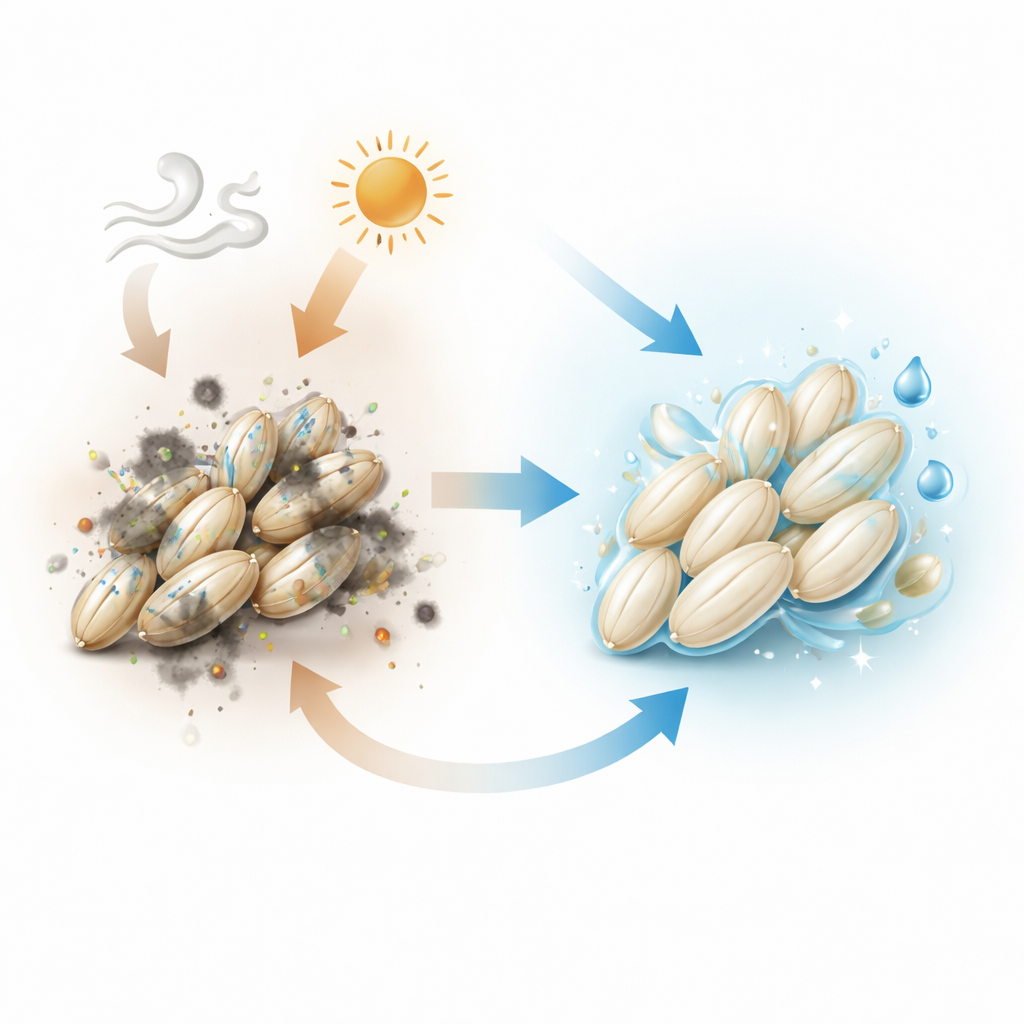
Germ‑remaining rice is produced by gently polishing brown rice so that most of the germ stays attached. That germ is where many of the grain’s proteins, oils, vitamins, and beneficial fats are found, making this rice more nutritious than fully milled white rice. However, once its protective outer layers are removed, the living germ is left exposed to air, moisture, and microbes. It breathes more intensely, its enzymes stay very active, and it becomes an inviting target for molds such as Aspergillus flavus and Aspergillus niger, which can produce harmful toxins. These traits severely limit the grain’s shelf life at room temperature and make it harder to market widely despite its health appeal.
Silkworm shells turned into a natural shield
The researchers focused on chitosan, a natural substance already used to preserve fruits and meats. Instead of extracting it from shrimp and crab shells, as is usually done, they produced chitosan from silkworm pupae using an ultrasonic, enzyme‑assisted process that gives it a very high purity and charge. They first tested how well this silkworm chitosan could neutralize harmful oxygen‑based molecules in the lab. At an 8 mg/mL concentration, it showed strong antioxidant power and consistently outperformed commercial chitosan. They then mixed the chitosan into growth media for molds and found that it sharply slowed the spread of both Aspergillus species, needing lower doses than regular chitosan to stop fungal growth.
Putting the coating to work on real rice
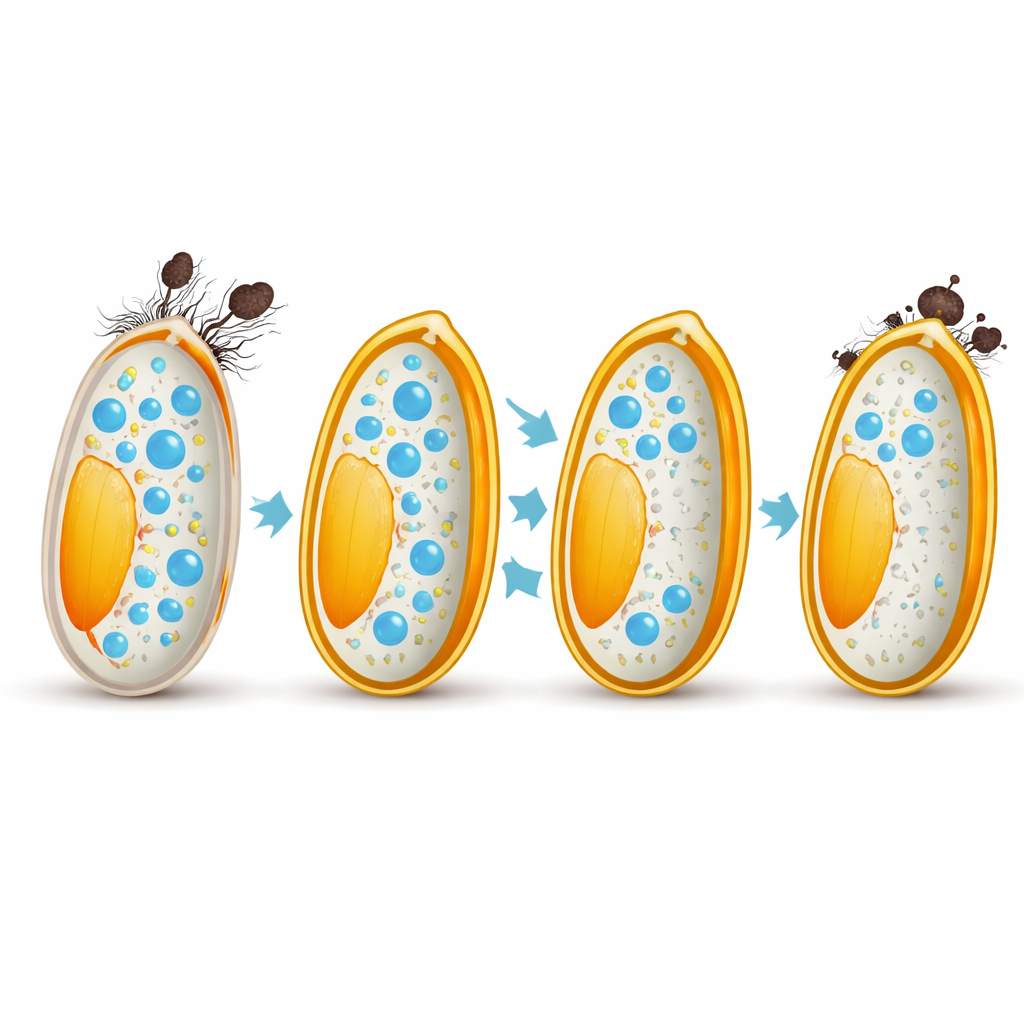
Next, the team sprayed germ‑remaining rice with a fine mist of the optimized silkworm chitosan solution and stored the grains at room‑like conditions for over a month. Compared with untreated rice, the coated grains developed far fewer visible mold patches and had markedly lower infection rates over time. Low‑field magnetic resonance tests revealed what was happening inside the grain: in untreated rice, bound water gradually shifted into looser, free water that promotes spoilage and texture loss. With the chitosan coating, more water stayed tightly associated with the rice’s starch and proteins, and some free water even shifted back into this safer, bound state. At the same time, key fat‑breaking and fat‑oxidizing enzymes were held in check, so the buildup of free fatty acids and of malondialdehyde—a marker of rancidity—was slowed below commonly accepted quality limits.
Holding on to starch, protein, and bite
The coating also changed how the grain’s starch and protein behaved during storage. In uncoated rice, starch chains broke down into smaller units and protein gradually degraded, processes linked with hardening and loss of eating quality. Coated grains, by contrast, kept higher levels of important enzymes and proteins while showing a more controlled rise in starch breakdown products. When the stored rice was finally cooked and tested, the differences were clear: coated rice was less hard, springier, and more pleasantly sticky and chewy than untreated rice. These texture traits, which consumers associate with fresh, well‑cooked rice, were preserved for much longer when the silkworm‑derived chitosan was present.
What this means for everyday food
In plain terms, the study shows that a thin, invisible film made from silkworm pupae can act as a multitasking bodyguard for germ‑rich rice. It slows mold growth, reduces the chemical changes that cause rancid flavors and off‑odors, stabilizes water inside each grain, and helps the cooked rice stay soft and enjoyable longer. Because chitosan is a natural, edible material already used in foods, this approach could offer a safer and more sustainable alternative to harsh preservatives or energy‑intensive cold storage. If adopted at scale, it may allow more people to enjoy the nutritional benefits of germ‑remaining rice without sacrificing convenience or safety.
Citation: Yi, K., Yang, B., Wu, Y. et al. Controlling fungal growth and quality deterioration in germ-remaining rice using silkworm pupa chitosan. Sci Rep 16, 13981 (2026). https://doi.org/10.1038/s41598-026-43953-3
Keywords: germ-enriched rice, natural food preservative, silkworm chitosan, mold control, rice texture