Clear Sky Science · en
Methane emissions from rice paddies are regulated by carbon availability and soil pH along a mean annual temperature gradient
Why rice fields matter for the climate
Rice is a staple food for billions of people, and much of it is grown in flooded fields. These waterlogged paddies are also important sources of methane, a powerful greenhouse gas that warms the planet far more strongly than carbon dioxide over the short term. As the climate warms and demand for rice grows, scientists want to know why some paddies release much more methane than others, and how changes in temperature and soil conditions might shift these emissions in the future.
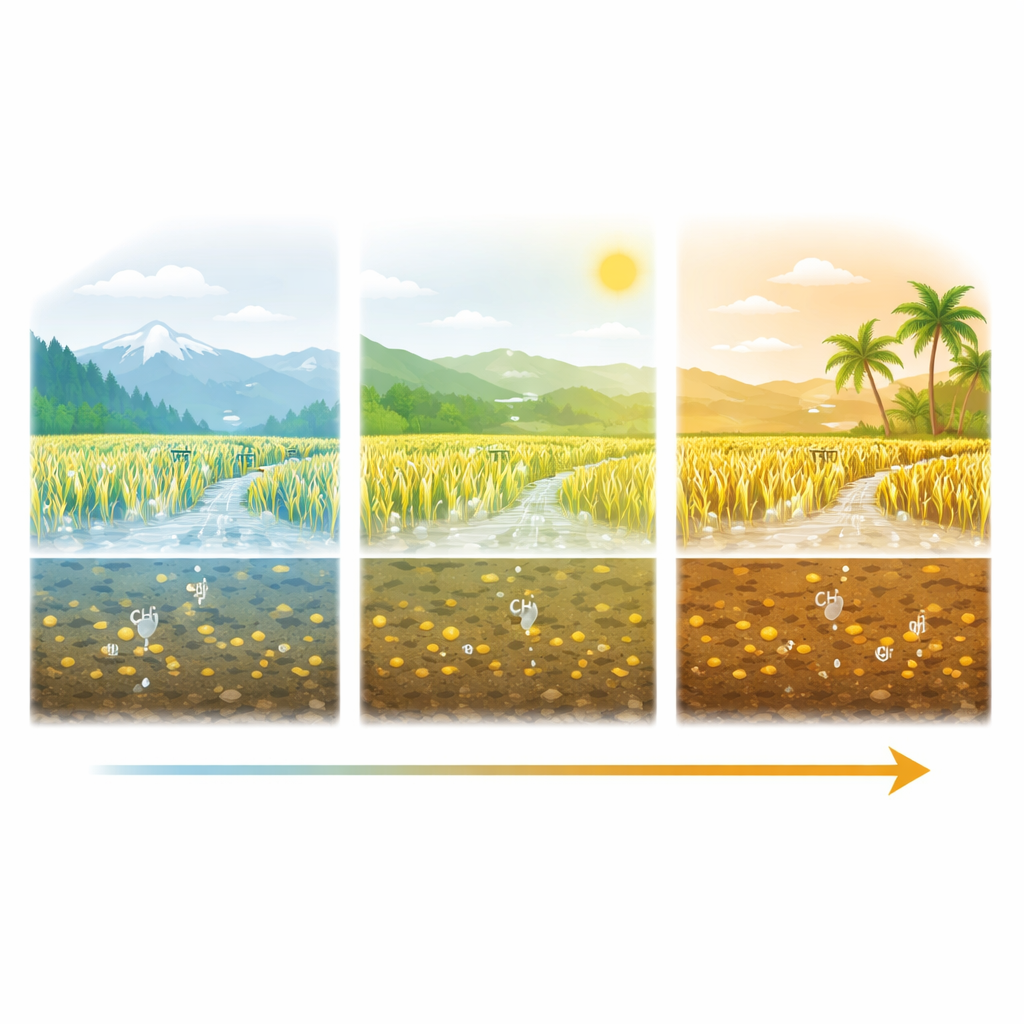
Following rice soils from cool north to hot south
The researchers collected soils from 30 rice paddies across China, stretching from cool temperate regions in the north to tropical areas in the south. Instead of measuring gases directly in the field, they brought these soils into the lab, rewetted them, and incubated them under the same warm conditions. This allowed them to strip away day‑to‑day weather differences and focus on how the soils themselves behave. Over six weeks they repeatedly measured how much methane each soil produced, while also analyzing basic properties such as acidity, total carbon and nitrogen, and how that carbon is partitioned into more stable or more easily used forms.
Fast food for microbes versus locked‑up carbon
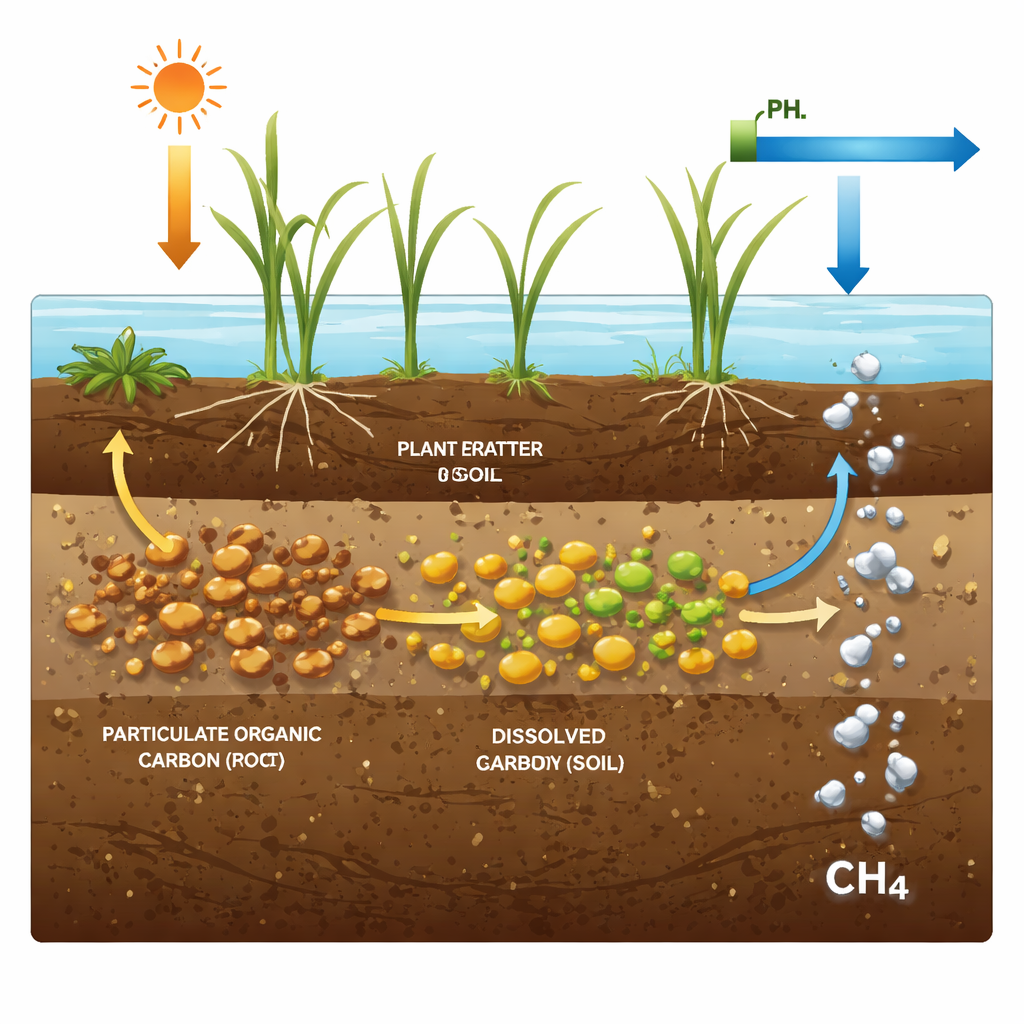
Not all soil carbon is equal in the eyes of microbes that make methane. The team distinguished between a “labile” pool—carbon that dissolves in water, exists in small particles, or is contained inside living microbes—and a more stable pool that is tightly bound to minerals. They found that the quickly available carbon fractions generally increased from north to south, while the stable, mineral‑bound carbon showed the opposite pattern. In other words, southern, warmer paddies tend to store more carbon in forms that microbes can readily tap, whereas northern, cooler paddies hold a larger share in locked‑up, long‑lasting forms.
How much methane and when it is released
The methane results mirrored these carbon patterns. Soils from tropical and subtropical paddies produced much more methane than soils from temperate regions—on average more than ten times as much over the incubation period, and in extreme cases over a hundred times more. Peak emission rates and the timing of these peaks also varied widely among sites. The highest‑emitting soils reached strong bursts of methane a few days to two weeks after flooding, while low‑emitting soils showed only small, slow rises. The study showed that the size of the dissolved carbon pool was the main factor behind how much methane accumulated, while a slower‑degrading particulate pool helped determine when the peak occurred by steadily feeding microbes over time.
The hidden roles of soil acidity and temperature
Climate and soil chemistry turned out to influence methane mostly by shaping these carbon pools and the microbes that use them. Using statistical models, the authors found that warmer long‑term temperatures tend to build up more dissolved carbon and available nitrogen in soils, which in turn fuel methane‑producing microbes. Soil acidity pulled in the other direction: more acidic soils favored higher dissolved carbon and microbial biomass, while more alkaline soils tended to suppress these components. Together, these indirect effects of temperature and soil pH explained nearly two‑thirds of the differences in methane output among the sites, even though all soils were incubated at the same laboratory temperature.
What this means for rice and the climate
For non‑specialists, the key message is that it is not just how much carbon a rice field contains that matters for climate, but how “accessible” that carbon is to microbes, and how soil conditions steer microbial life. Warmer climates and certain soil chemistries push more carbon into fast‑food form for microbes, boosting methane release from flooded paddies. This deeper understanding can help improve models that estimate future methane emissions and guide farming practices—such as water management, residue handling, and fertilizer use—that aim to grow rice while keeping its climate footprint in check.
Citation: Yusong, D., Jiawei, C., Huabin, L. et al. Methane emissions from rice paddies are regulated by carbon availability and soil pH along a mean annual temperature gradient. Sci Rep 16, 14129 (2026). https://doi.org/10.1038/s41598-026-43940-8
Keywords: rice paddies, methane, soil carbon, climate change, greenhouse gases