Clear Sky Science · en
Potential subtype-specific alterations in gut microbiota and branched-chain amino acid metabolism in hydrogen- and methane-predominant small intestinal bacterial overgrowth
Why the microbes in your small intestine matter
Many people struggle with bloating, abdominal pain, diarrhea, or constipation without a clear diagnosis. One underappreciated culprit is small intestinal bacterial overgrowth, or SIBO, in which microbes build up where they shouldn’t: in the normally low‑bacteria environment of the small intestine. This study explores whether different “gas patterns” produced by these microbes—mainly hydrogen or methane—go hand in hand with distinct types of microbes and chemical by‑products in the gut. Understanding these patterns could eventually lead to more tailored tests, diets, and treatments for people with chronic digestive complaints.
Different kinds of gas, different kinds of overgrowth
Doctors often diagnose SIBO using a breath test. After a sweet solution is swallowed, gut microbes ferment it and release gases that are carried to the lungs and exhaled. Here, researchers examined over 500 adults who had a standardized hydrogen–methane breath test. Based on which gas rose, participants were grouped as normal, hydrogen‑dominant SIBO, methane‑dominant SIBO, or a mixed pattern. 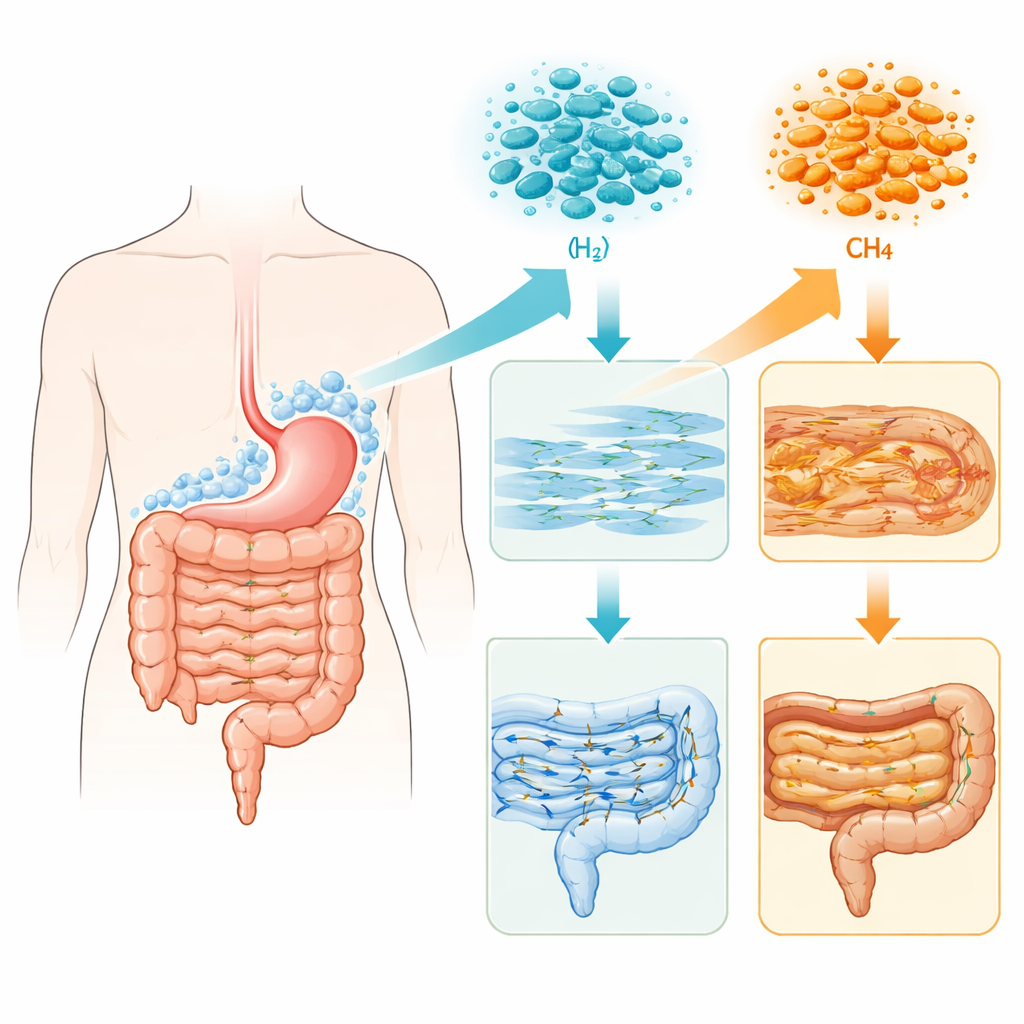
What breath tests reveal about the body
The team found that people with hydrogen‑dominant SIBO tended to have slightly higher levels of the blood protein albumin, whereas those with methane‑dominant SIBO had higher fasting blood sugar. After taking into account smoking and other factors, albumin remained independently tied to hydrogen‑dominant SIBO, and blood sugar remained tied to the methane‑dominant form. Smoking appeared to reduce the odds of hydrogen‑dominant SIBO, though the reasons are not fully clear. When the researchers looked closely at the breath test curves, methane measurements—not hydrogen—were the ones that clearly separated the gas‑based subtypes. Total gas output (hydrogen plus methane together) rose modestly with age, but did not track with body mass index, suggesting that getting older, rather than being heavier, is more closely linked to higher overall gas production in these tests.
The hidden communities living in the gut
To understand what was happening inside the intestines, a smaller group of 29 participants provided stool samples for in‑depth analysis of microbes and their chemical products. The researchers focused on people with a single dominant gas type to avoid muddying the picture. Using DNA sequencing, they found that overall microbial richness was similar across groups, but community structure shifted, especially in hydrogen‑dominant SIBO. Certain bacterial families that normally help maintain balance were more common in people without SIBO. In contrast, methane‑dominant SIBO showed an over‑representation of Bacteroidaceae, while hydrogen‑dominant SIBO was marked by families such as Alcaligenaceae and Acidaminococcaceae. These patterns suggest that each gas subtype reflects a distinct ecological niche in the small intestine, rather than a single uniform disorder. 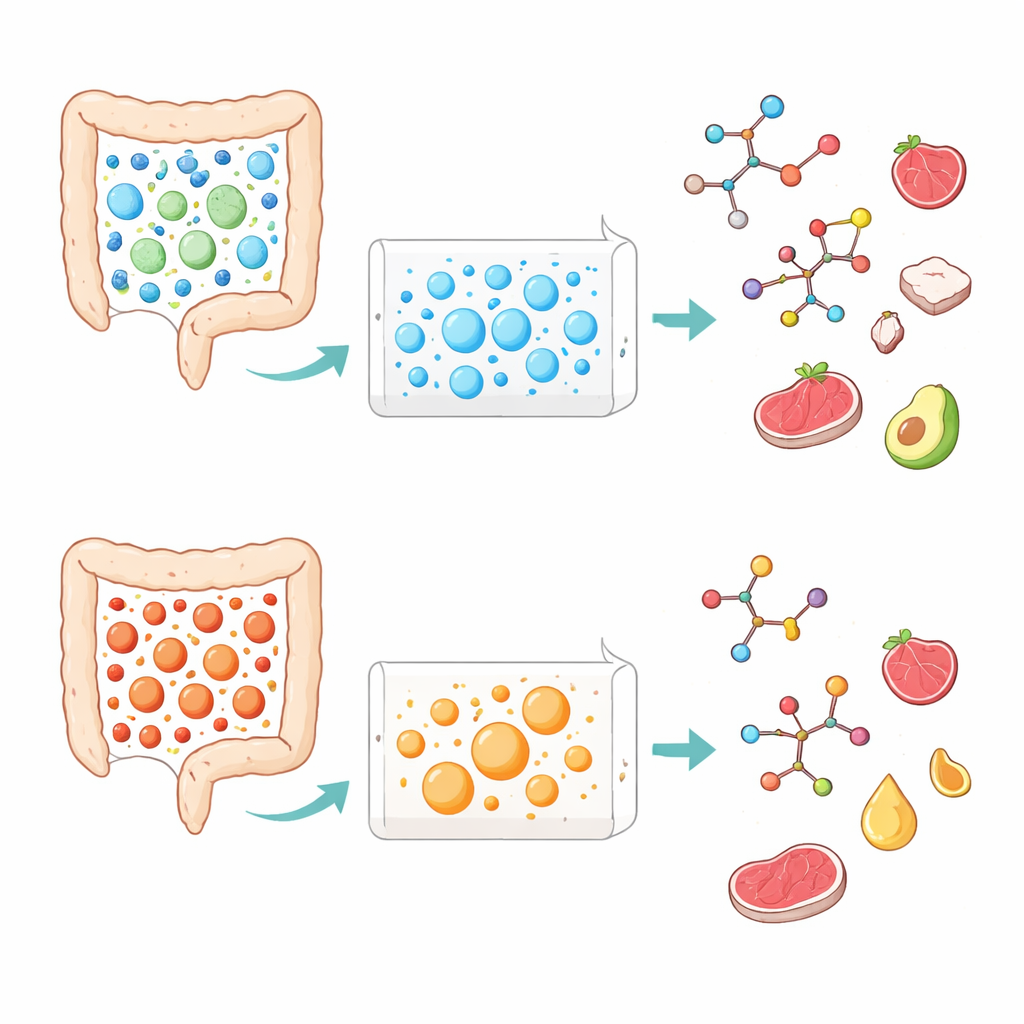
Chemical footprints of overgrowth
The stool samples were also examined for hundreds of small molecules produced when microbes and human cells process food and nutrients. While the overall chemical landscapes overlapped, key differences emerged. Several fatty acids and other compounds were more abundant in SIBO patients than in people without SIBO. When the team mapped these molecules onto known biochemical routes, pathways related to branched‑chain amino acids—nutrients such as valine, leucine, and isoleucine—as well as lipid handling and mineral absorption came to the forefront. Correlations between specific bacteria and specific molecules hinted that some families may drive, or adapt to, these metabolic shifts. Although the sample size was small and the authors emphasize that these findings are exploratory, the data point toward gas‑specific changes in how gut microbes process proteins and fats.
What this means for people with gut troubles
Overall, the study suggests that not all SIBO is created equal. Hydrogen‑ and methane‑dominant forms differ not only in symptoms like diarrhea versus constipation, but also in blood markers, breath‑test patterns, gut microbe communities, and the chemical environment they create. Methane, in particular, seems to be a stronger signal than hydrogen for telling subtypes apart, and age modestly influences total gas production. Early clues that branched‑chain amino acid and lipid metabolism are altered raise the possibility that dietary tweaks or targeted therapies could eventually be matched to a person’s gas pattern and microbial profile. Larger, longer‑term studies will be needed before this can guide everyday care, but this work moves us closer to a more personalized understanding of chronic digestive complaints rooted in the small intestine.
Citation: Wang, Z., Tan, W., Zhang, P. et al. Potential subtype-specific alterations in gut microbiota and branched-chain amino acid metabolism in hydrogen- and methane-predominant small intestinal bacterial overgrowth. Sci Rep 16, 14185 (2026). https://doi.org/10.1038/s41598-026-43935-5
Keywords: small intestinal bacterial overgrowth, gut microbiome, hydrogen methane breath test, branched-chain amino acids, intestinal gas and digestion