Clear Sky Science · en
Lithium enrichment from mine waters using CO2 hydrate-based desalination
Turning Wastewater into a Battery Metal Source
As the world races to build more electric cars and store renewable energy, demand for lithium—the key ingredient in most rechargeable batteries—is soaring. At the same time, mines around the globe generate vast volumes of salty wastewater that are costly to manage and can harm nearby rivers and lakes. This study explores a way to tackle both problems at once: using a gas-driven freezing-like process to clean mine water while concentrating its tiny traces of lithium into a form that’s much easier to recover.
A New Way to Clean and Concentrate
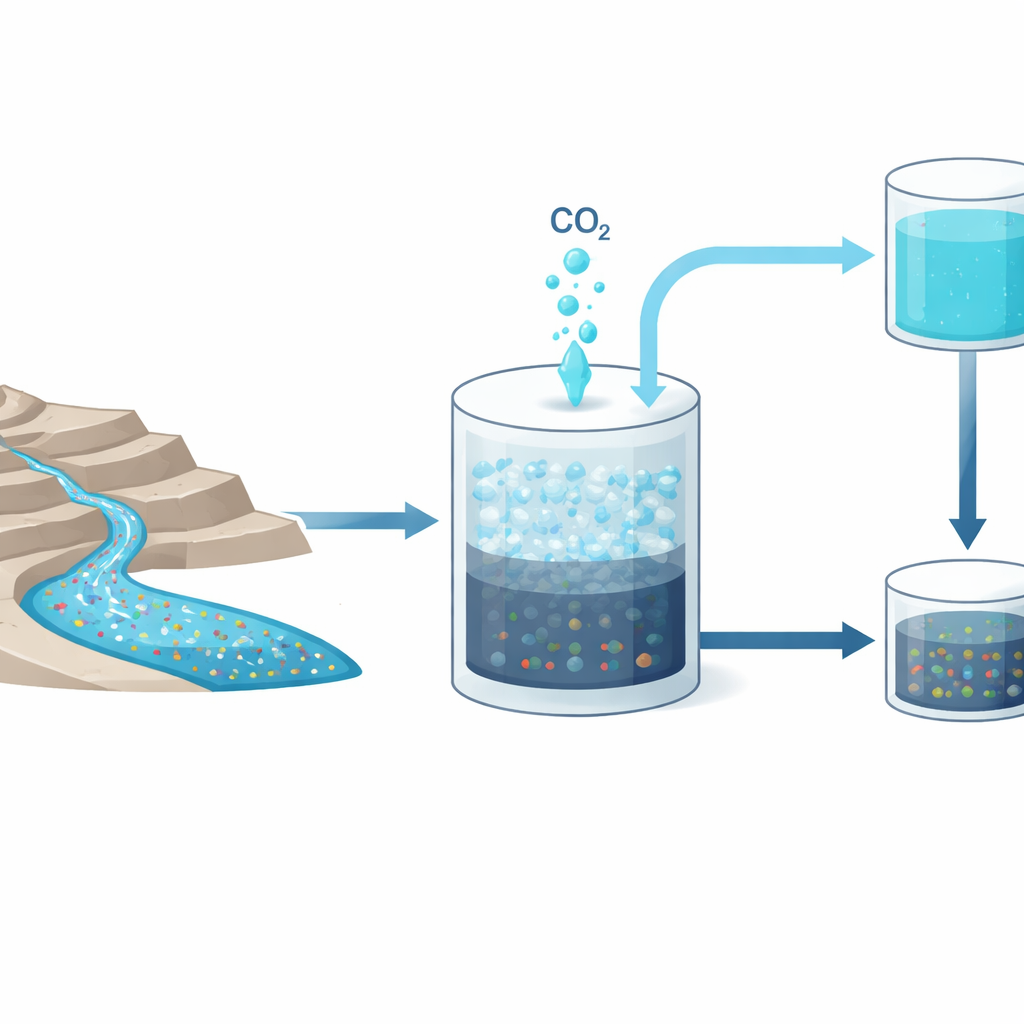
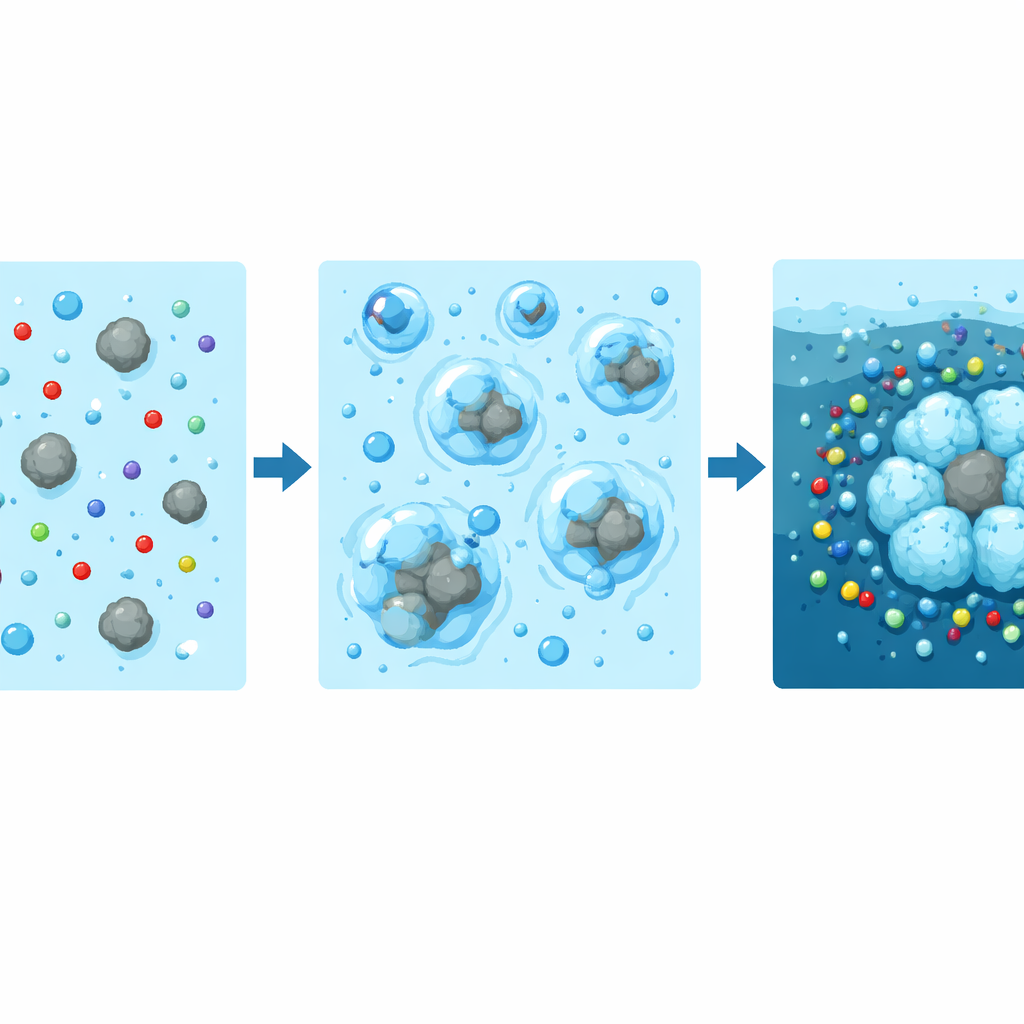
Instead of relying on conventional filters and membranes, the researchers turned to an unusual phenomenon: gas hydrates. These are ice-like crystals that form when gas molecules, in this case carbon dioxide, become trapped inside cages made of water molecules under cool, high-pressure conditions. When hydrates form out of salty water, the growing crystals are mostly made of pure water and tend to leave dissolved salts and metals behind in the remaining liquid. By forming and then melting these crystals, it is possible to produce cleaner water and a leftover brine that is richer in valuable elements such as lithium. The team designed a pressurized, stirred reactor to test this approach on real mine water from a Canadian site.
Hidden Helpers Already in the Water
One of the main obstacles to using hydrates for treatment is that they often form slowly, which makes the process inefficient. Typically, engineers add special chemicals or particles to speed things up—but these additives then have to be removed later. In this work, the authors discovered that the mine water itself supplied the needed boost. It naturally contained tiny mineral particles, mainly silicate and aluminosilicate grains such as cristobalite and albite, at only about 15 milligrams per liter. Careful microscopic and chemical analyses showed that these particles carry a modest negative surface charge and remain well dispersed. In experiments where some of these particles were filtered out, hydrate crystals took much longer to appear. When all the native particles were left in place, hydrates formed within minutes, revealing that the minerals act as built-in “seeds” that help the crystals start and grow without any added promoter chemicals.
Tuning Motion and Time for Better Performance
The team then explored how stirring speed and reaction time affected both water cleanup and lithium concentration. Faster stirring broke the carbon dioxide into finer bubbles and mixed them more thoroughly into the water. Raising the speed from 200 to 600 revolutions per minute cut the waiting period for hydrate formation from about eight minutes to nearly zero and increased the fraction of water captured in hydrates from 29% to 53%. At the same time, lithium in the leftover brine became about 1.6 times more concentrated than in the original mine water. Extending the reaction time from 30 to 60 minutes further improved water recovery and lithium enrichment. Beyond an hour, however, the gains disappeared: crystals became stiff and harder to separate from the brine, and the benefits of longer operation were offset by practical handling problems.
Stacking Stages for Stronger Enrichment
To see how far the method could go, the researchers linked several treatment stages in sequence. Each stage took the hydrate-derived water or the concentrated brine from the previous step and subjected it to the same hydrate-forming conditions again. After three stages, the lithium concentration in the brine rose from about 180 milligrams per liter in the starting mine water to roughly 500 milligrams per liter—high enough to be suitable for standard chemical recovery methods used in industry. At the same time, the ice-like hydrate stream became progressively cleaner, with the overall salt content in the treated water dropping by about 80% compared with the original feed. This suggests that, with further optimization, the process could both supply water for reuse in mining operations and create a lithium-rich stream for extraction.
Why This Matters for Mines and Batteries
In plain terms, this work shows that mine water—often viewed only as a waste problem—can double as a low-grade lithium resource if treated smartly. By using carbon dioxide to form and melt ice-like crystals, the process concentrates lithium and cleans the water without relying on costly, clog-prone membranes or extra chemical additives. The naturally present mineral dust in the water does much of the kinetic “heavy lifting,” acting as tiny scaffolds that help the crystals form quickly. Although challenges remain for scaling up and minimizing energy use, the study points toward a future in which mine sites could recover a valuable battery metal and recycle water at the same time, contributing to more sustainable resource and water management.
Citation: Khajvand, M., Kolliopoulos, G. Lithium enrichment from mine waters using CO2 hydrate-based desalination. Sci Rep 16, 13871 (2026). https://doi.org/10.1038/s41598-026-43925-7
Keywords: lithium recovery, mine water, gas hydrates, desalination, battery materials