Clear Sky Science · en
Synthesis and characterization of edible films using high methoxyl pectin extracted from orange peel
From Fruit Waste to Useful Wraps
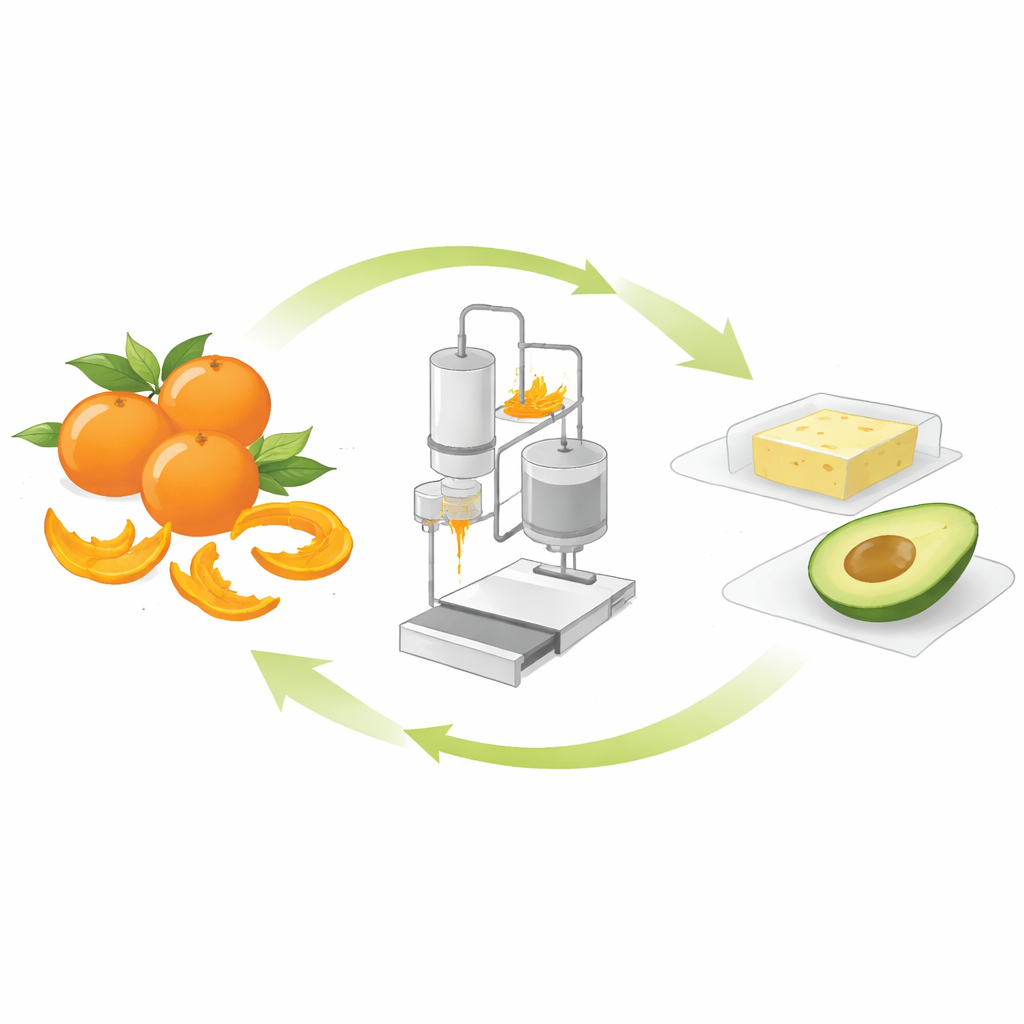
Every glass of orange juice leaves behind a pile of discarded peels. Instead of treating these peels as trash, this study explores how they can be turned into thin, edible films that could one day replace some plastic food packaging. By comparing two simple acids—one mineral, one organic—the researchers show how to pull out a natural gelling substance from orange peel and shape it into clear, flexible sheets that protect food while breaking down safely in the environment.
Why Orange Peels Matter
Orange juice production generates mountains of peel, especially in citrus‑rich countries like Egypt. These peels are rich in valuable natural compounds, including pectin, a plant fiber widely used to gel jams and stabilize foods. At the same time, society is grappling with plastic waste from food packaging, which lingers for decades and can release harmful chemicals. Turning orange peel into biodegradable films tackles both issues at once: it adds value to an underused by‑product and offers a cleaner alternative to petroleum‑based plastics.
Pulling Pectin Out of Peels
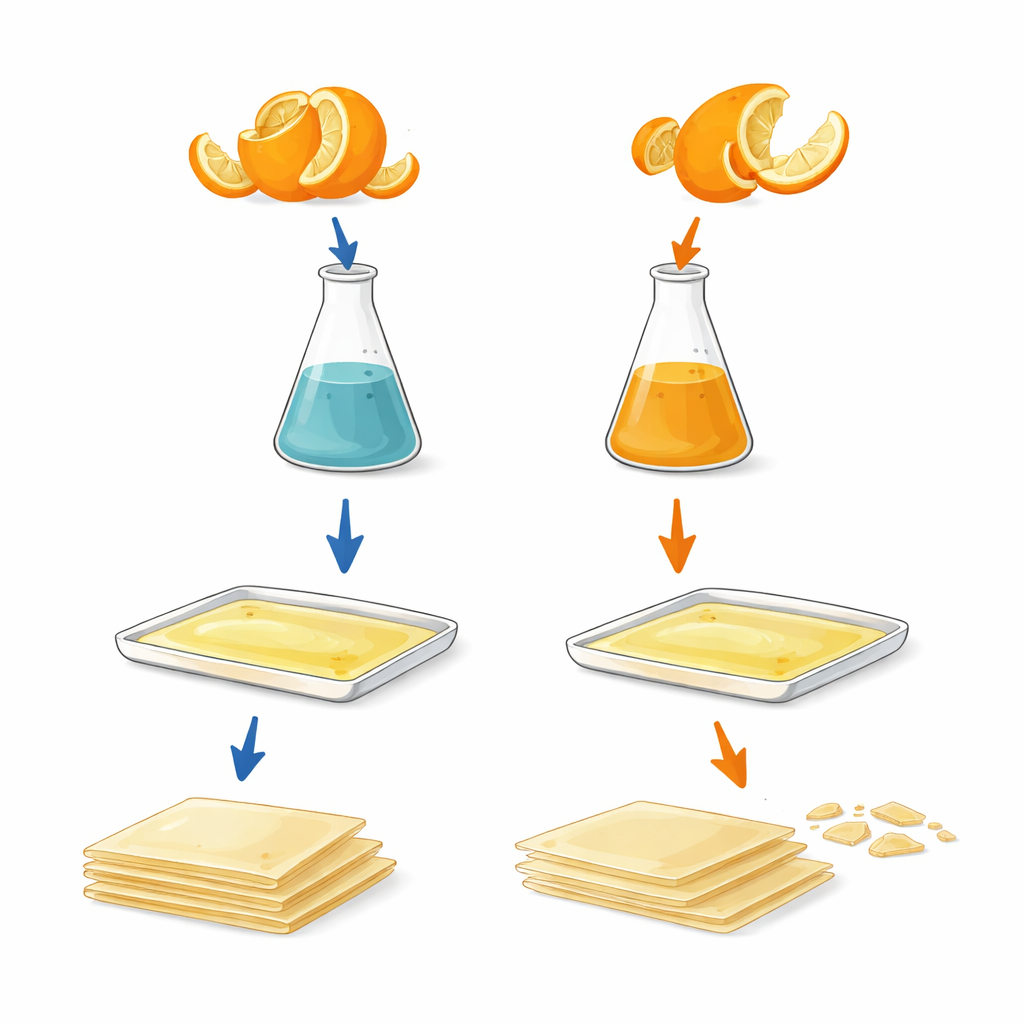
The team started by drying and grinding fresh orange peels, then extracting pectin using hot, mildly acidic water. They compared two extraction liquids: hydrochloric acid, a strong mineral acid commonly used in industry, and citric acid, the weak organic acid that gives citrus fruits their sour taste. Both methods produced high‑methoxyl pectin, the kind that forms strong gels and smooth films. Hydrochloric acid gave a slightly higher pectin yield and somewhat drier powder with less mineral ash, while citric acid carried over more mineral content. Importantly, key quality indicators—such as the pectin’s ability to gel and its overall purity—remained within commercial standards for both approaches.
Shaping Edible Films and Testing Their Strength
Next, the researchers dissolved the extracted pectin in water with a bit of acetic acid, added glycerol as a softening agent, and cast the solution into thin sheets that dried into flexible films. They compared these homemade films with ones made from commercial pectin, measuring thickness, resistance to stretching, flexibility, and how easily water vapor passed through. As pectin concentration increased, all films became thicker and allowed more water vapor to move through. Films made from citric‑acid pectin generally showed the highest tensile strength—meaning they were tougher to pull apart—while some films made with hydrochloric‑acid pectin stretched the least before breaking. Commercial‑pectin films remained the most transparent and had the lowest water‑vapor permeability, but the orange‑peel films were still suitable for packaging tasks where a moderate moisture barrier is acceptable.
Looking at Color, Decay, and Antioxidant Power
The appearance and behavior of the films over time are crucial for real‑world use. Films differed in lightness and color, with those based on commercial pectin remaining the palest and most neutral in tone, while extracted‑pectin films tended to be more yellowish or slightly reddish, likely due to natural plant compounds and heat‑induced reactions during extraction. In soil burial tests over 30 days, all films degraded, but commercial‑pectin films broke down fastest at low pectin concentration. Films from citric‑acid pectin showed better antioxidant activity than the others, helping neutralize free radicals—an added benefit for slowing down oxidation in packaged foods. Microscopic and structural analyses confirmed that the different extraction routes subtly changed film smoothness, internal structure, and how the molecules packed together.
A Greener Path to Food Packaging
Although hydrochloric acid delivered a slightly higher pectin yield from orange peels, citric acid proved the better overall choice. It is milder, food‑grade, and more environmentally friendly, yet it still produced pectin that meets industrial quality standards and forms strong, biodegradable films. This means juice factories could, in principle, use a relatively simple, low‑impact process to convert their peel waste into valuable packaging materials. For everyday consumers, the takeaway is that something as ordinary as an orange peel can be turned into protective, earth‑friendly wraps, pointing toward a future where food packaging is not only safer for our meals but also kinder to the planet.
Citation: Abdellatif, H.R.S., Helmy, M.M. & Younis, H.G.R. Synthesis and characterization of edible films using high methoxyl pectin extracted from orange peel. Sci Rep 16, 11364 (2026). https://doi.org/10.1038/s41598-026-43924-8
Keywords: orange peel pectin, edible films, biodegradable packaging, citric acid extraction, food waste valorization