Clear Sky Science · en
Effects of climate and air pollution on rates of hospitalization for affective mood disorders in southern Brazil
Why Weather and Air Matter for Our Moods
Most of us have felt our mood lift on a sunny day or sink during a gray, polluted week. This study from southern Brazil asks a deeper question: can everyday changes in weather and air quality actually influence how many people end up in the hospital for serious mood problems such as depression or bipolar disorder? By analyzing ten years of data from the city of Porto Alegre, the researchers explored how sunlight, temperature, and air pollution track with hospital admissions for affective mood disorders.
Watching a City’s Mental Health Over a Decade
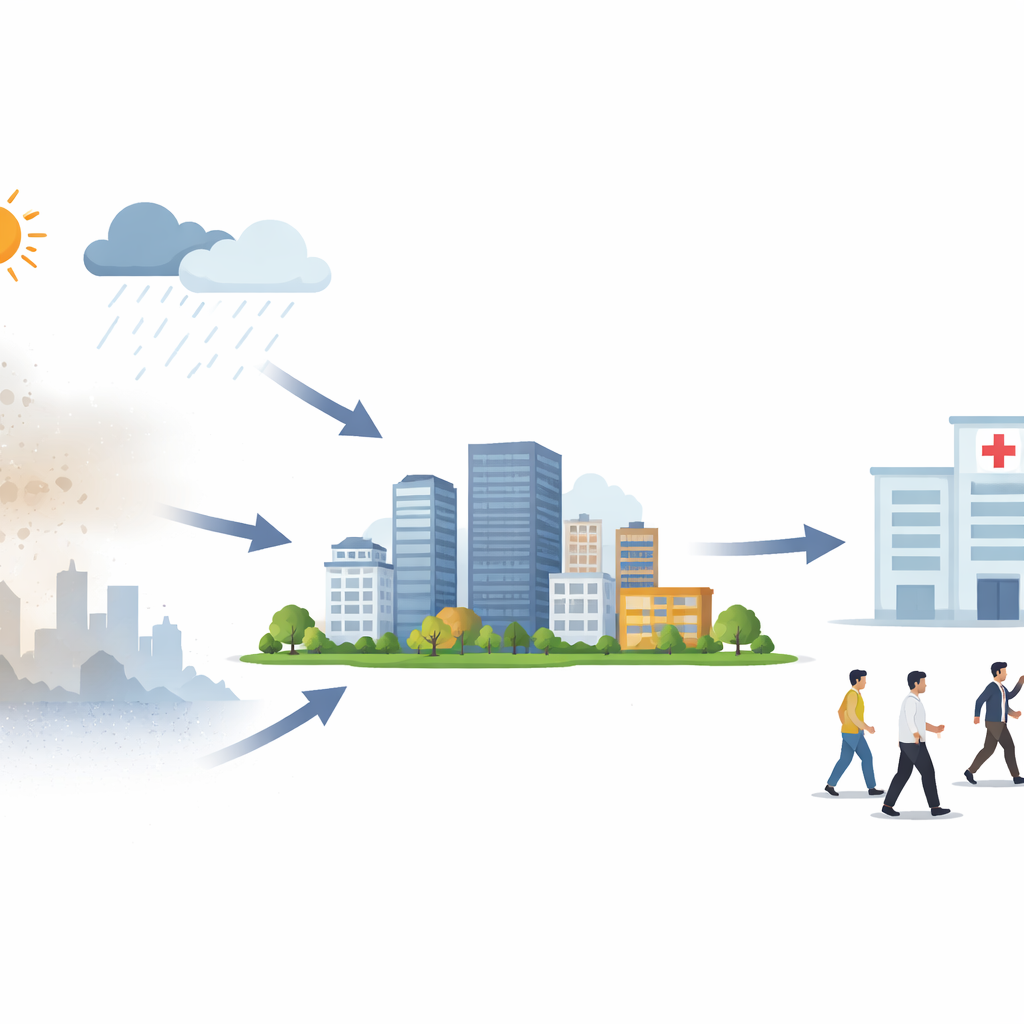
The team focused on Porto Alegre, a large, humid subtropical city with four distinct seasons and notable air pollution from traffic and industry. They gathered monthly records of hospitalizations for mood disorders between 2013 and 2023 from Brazil’s public health system. These included admissions for depressive episodes, manic episodes, and bipolar disorder. In total, there were 16,584 such hospitalizations, with 2019 showing the highest numbers. Alongside this, they assembled monthly climate and air data from international monitoring programs and Brazil’s weather service, including sunlight hours, temperature, visibility, rainfall, vegetation cover, and several pollutants such as fine particles, methane, and ozone.
Finding the Most Important Environmental Clues
Because many of these climate and pollution measures are interconnected, the researchers turned to modern data tools to sort out what matters most. They tested several machine learning methods and found that a technique called Random Forest performed best at predicting monthly hospitalization rates from the environmental variables. This analysis ranked total hours of sunlight, the amount of methane in the air, near-surface temperature, and total ozone as the strongest predictors of mood-related hospitalizations. Visibility, a simple measure of how clearly one can see across the landscape, also showed up as a relevant factor.
How Good Weather and Dirty Air Pull in Opposite Directions
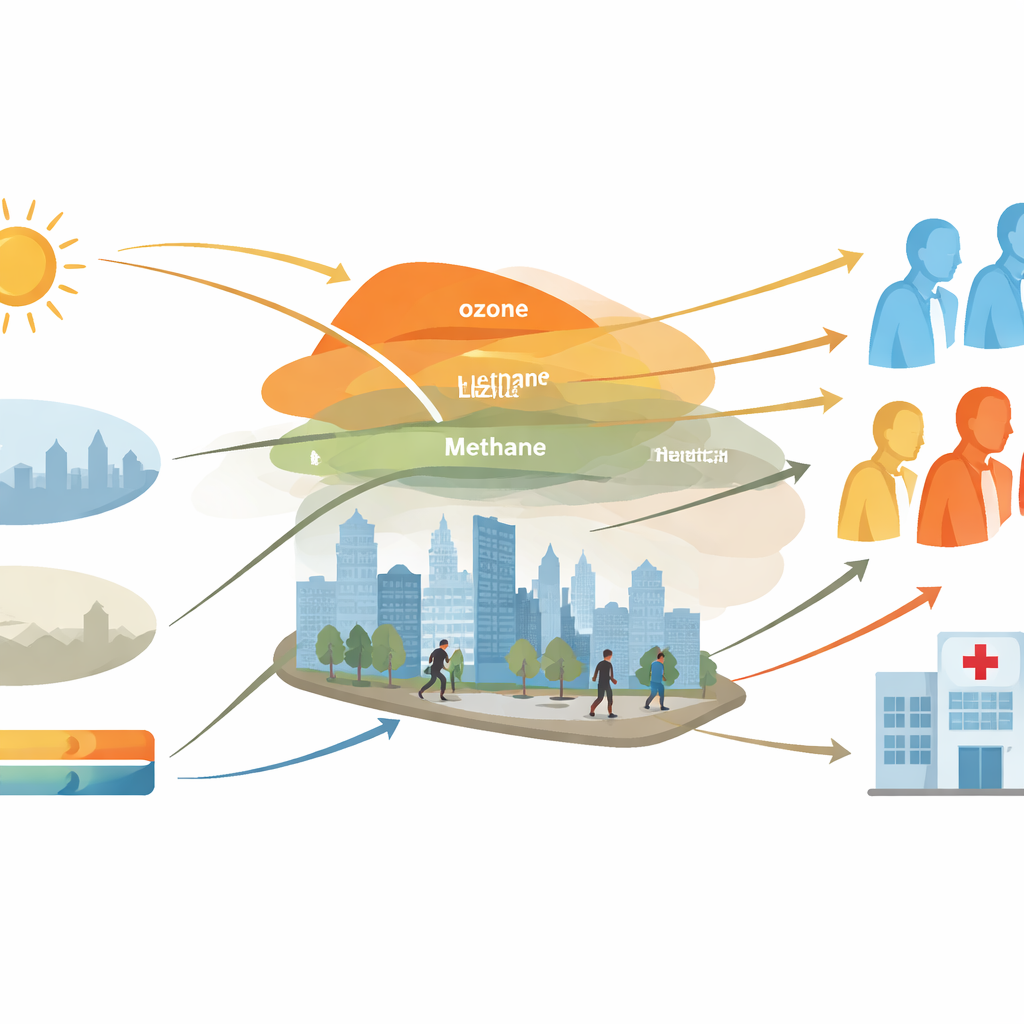
To better understand how these factors interact, the team used statistical models that can capture both direct and indirect pathways. They found that what we generally think of as “good weather” — more sunlight, clearer air (higher visibility), and mild temperatures between about 15 °C and 25 °C — was linked to lower rates of hospitalization for mood disorders. In other words, brighter, clearer, and comfortably warm conditions were associated with fewer people needing hospital care for severe mood episodes. At the same time, higher levels of certain pollutants told a different story. When methane, fine particles (PM2.5), and ozone rose above specific thresholds, hospitalizations tended to increase, especially once ozone reached higher values. Some of these pollutants did not act directly; instead, they appeared to worsen mood outcomes by altering weather-like conditions such as sunlight and visibility.
Possible Pathways From Sky to Mind
These patterns fit with a growing body of research on how the environment reaches into the brain. Sunlight may support mental health through vitamin D production, regulation of hormones such as serotonin and melatonin, and other stress-related systems in the body. Pollution, on the other hand, can trigger inflammation and oxidative stress in the brain, disturb stress hormones, and subtly damage brain structures over long periods. Porto Alegre’s mix of heavy vehicle traffic, industrial sources, and changing climate makes it a useful example of how modern cities may expose residents to both helpful and harmful atmospheric conditions at once.
What This Means for Everyday Life and Policy
For a layperson, the take-home message is simple but powerful: the quality of the air we breathe and the kind of weather we live in are not just background scenery — they are part of the risk landscape for serious mood disorders. In Porto Alegre, more sunlight and clear, mild days were linked with fewer psychiatric hospitalizations, while higher levels of key pollutants aligned with more. The study cannot prove cause and effect, and it could not account for every personal or social factor. Still, by combining long-term health records with detailed climate and pollution data, it provides strong evidence that cleaning the air and preparing for climate change could also help protect mental health, especially in low- and middle-income cities where resources are limited and exposure to environmental stressors is high.
Citation: Araújo, L.D., Azevedo, V.A., Ferreira, J.V.S. et al. Effects of climate and air pollution on rates of hospitalization for affective mood disorders in southern Brazil. Sci Rep 16, 14084 (2026). https://doi.org/10.1038/s41598-026-43916-8
Keywords: air pollution and mental health, climate change and mood, hospitalizations for depression, urban environmental health, Porto Alegre Brazil