Clear Sky Science · en
Standardizing oral microbiome sampling for qPCR: methodological and exploratory insights into nutritional status
Why Spit Can Tell Us About Health
Our mouths are home to bustling communities of bacteria that help digest food, shape our immune system, and may even reflect our overall health. As interest grows in using these invisible residents as health clues, scientists face a simple but surprisingly tricky question: what is the best way to collect them? This study tested different ways of sampling the mouth in teenagers to find a method that is simple, comfortable, and, most importantly, reliable enough to support future health and nutrition research.
Different Ways to Sample the Mouth
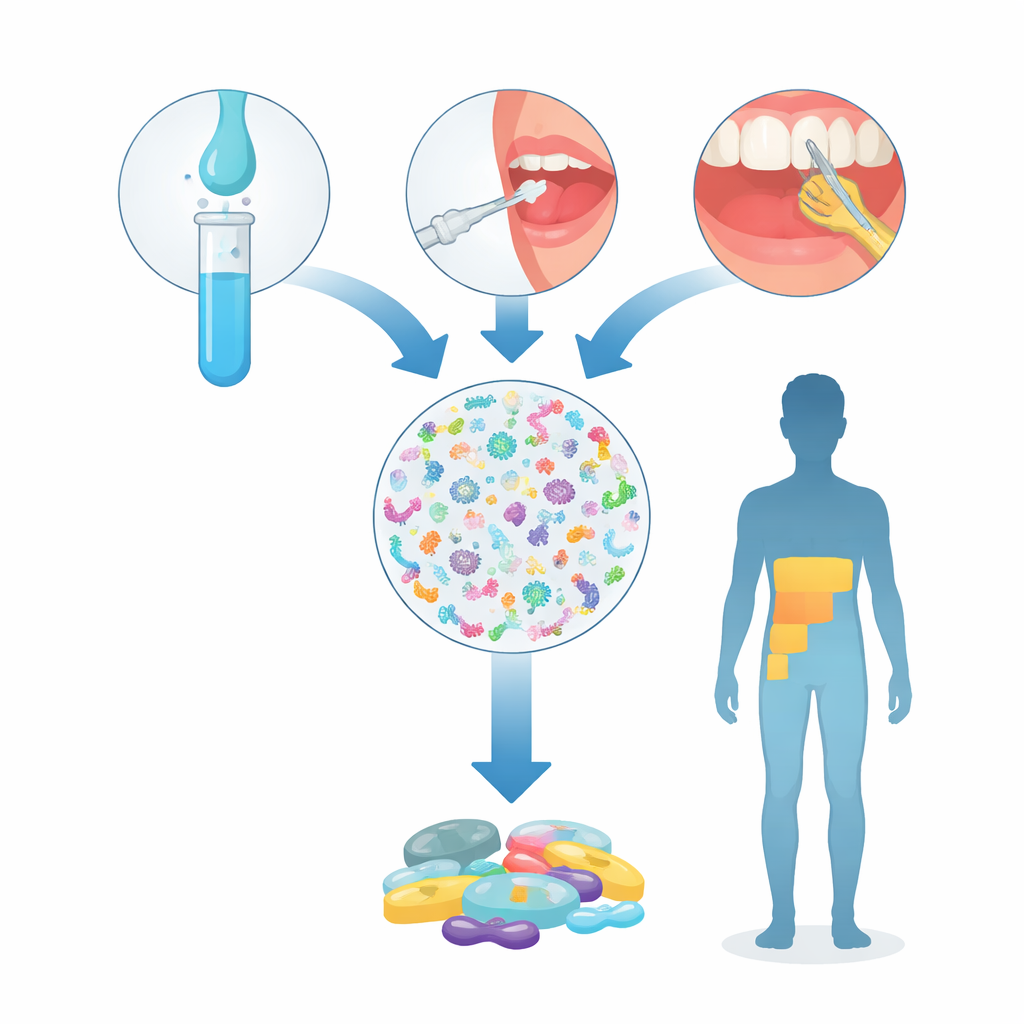
The research team focused on three common ways to collect bacteria from the mouth: unstimulated saliva (plain drool), cheek swabs, and dental biofilm (the thin film on teeth, similar to plaque). Each method taps into slightly different corners of the mouth, which can influence which bacteria are picked up and in what amounts. The goal was to see which method gave the most consistent counts of total bacteria and of two major groups often linked to nutrition and metabolism. By comparing samples taken from the same 32 adolescents, the researchers could directly measure how much the results changed from one sampling method to another.
Saliva Stands Out as the Steadiest Signal
When the researchers measured how many bacterial genetic copies were present in each sample, unstimulated saliva clearly performed best. It produced higher and more stable bacterial counts than cheek swabs or biofilm. The cheek swab, in particular, showed weaker agreement with the other methods, suggesting that it captures a narrower and more variable slice of the mouth’s microbial life. Saliva, by contrast, seems to act like a pooled snapshot of many mouth surfaces at once, which helps smooth out random fluctuations and technical noise. The team also found that saliva and biofilm samples showed moderate agreement, suggesting that they share part of the same bacterial signal, even if saliva is easier to collect and standardize.
Linking Mouth Bacteria and Body Weight
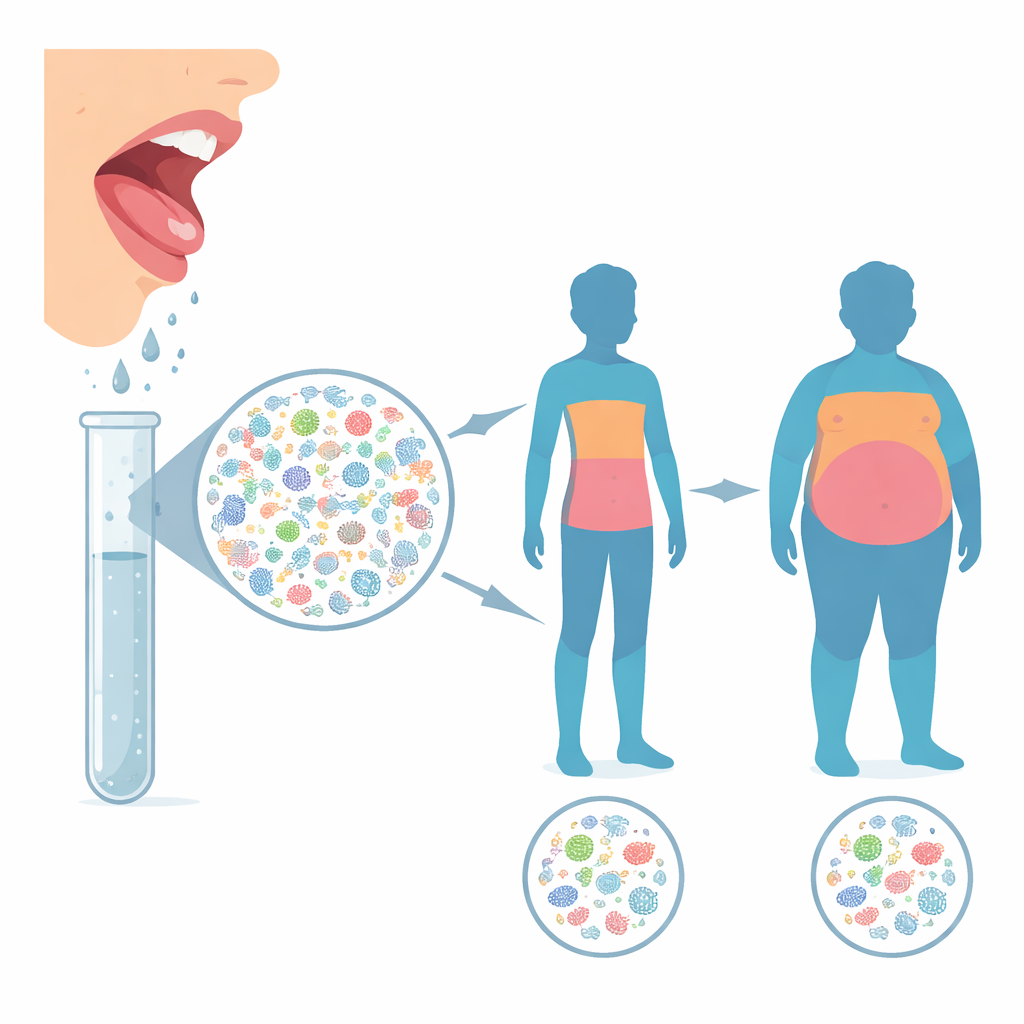
After identifying saliva as the most dependable option, the scientists used it to explore a second question: do the bacteria in teenagers’ mouths relate to their nutritional status? They compared saliva from adolescents with normal weight to those who were overweight or obese, looking at total bacteria and the two major bacterial groups. While the heavier group tended to have slightly more bacterial genetic material overall, these differences were not strong enough to be considered statistically significant in this relatively small sample. Still, when the team examined how bacterial levels related to body measures such as body mass index, fat mass, and lean mass, interesting patterns emerged. In some cases, the same bacterial group showed opposite relationships with body fat when comparing normal-weight and heavier teens, hinting that the balance of mouth bacteria may shift alongside changes in body composition.
Why Method Matters for Future Health Studies
Even though this study did not prove clear-cut bacterial differences between weight groups, it showed that saliva sampling can reliably capture mouth bacteria in a way that is simple, non-invasive, and affordable. That reliability is essential if future studies are to detect subtle links between the oral microbiome and conditions such as obesity, diabetes, or other metabolic problems. The work also highlights that mouth bacteria are not evenly spread; where and how you sample can change the story the data tell. By recommending unstimulated saliva as a standard approach, the authors provide a practical foundation for larger, longer-term projects that aim to turn oral bacteria into everyday indicators of nutritional and metabolic health.
Take-Home Message for Everyday Health
For a layperson, the main conclusion is straightforward: a simple tube of drool can offer a steady and informative window into the microscopic life of the mouth, and possibly into the body’s nutritional state. This study shows that unstimulated saliva is the most consistent and user-friendly choice among common oral sampling methods, making it well suited for large studies and future point-of-care tests. While more research with bigger and more diverse groups is needed, especially to confirm how mouth bacteria track with weight and body composition, this work brings us one step closer to using an easy spit sample as part of routine checks on metabolic and overall health.
Citation: Mendes, K., Gomes, A.T.P.C., Resende, C.M.M. et al. Standardizing oral microbiome sampling for qPCR: methodological and exploratory insights into nutritional status. Sci Rep 16, 13501 (2026). https://doi.org/10.1038/s41598-026-43909-7
Keywords: oral microbiome, saliva sampling, teen obesity, microbiome testing, qPCR