Clear Sky Science · en
Population-attributable burden of modifiable risk factors for depression and anxiety among reproductive-age women in Nepal
Why this research matters to everyday life
Mood problems like feeling very low, constantly worried, or unable to enjoy daily life are not just “in the head.” They are closely tied to the conditions people live in. This study looks at women in Nepal during their main childbearing and working years and asks a simple but powerful question: How much depression and anxiety might be avoided if certain harmful situations—such as violence at home or not having enough food—were removed? The answers offer a roadmap for where efforts and resources could make the biggest difference.
Looking at women’s lives across Nepal
The researchers used data from Nepal’s 2022 Demographic and Health Survey, a large national study that visits thousands of households across all provinces. For the first time, this survey included a special set of questions on mental health, allowing the team to measure symptoms of major depression and generalized anxiety using standard screening tools. They focused on 7,410 women aged 15 to 49, most of whom lived in urban areas, and gathered information not only on their mood and worries, but also on their education, work, household conditions, and experiences of abuse.
Everyday hardships with heavy emotional costs
The study examined a range of difficulties that could, in principle, be reduced by policies and programs: low income, limited schooling, trouble with daily tasks because of disability or illness, going short of food, and gender-related issues such as menstrual exclusion, lack of say in household decisions, and different forms of violence from a partner. Depression affected about one in twenty women, while anxiety affected about one in five. Among these many possible influences, five stood out as especially important: emotional abuse from a partner, physical violence, sexual abuse, functional difficulty (such as serious problems walking, seeing, or thinking), and food insecurity. 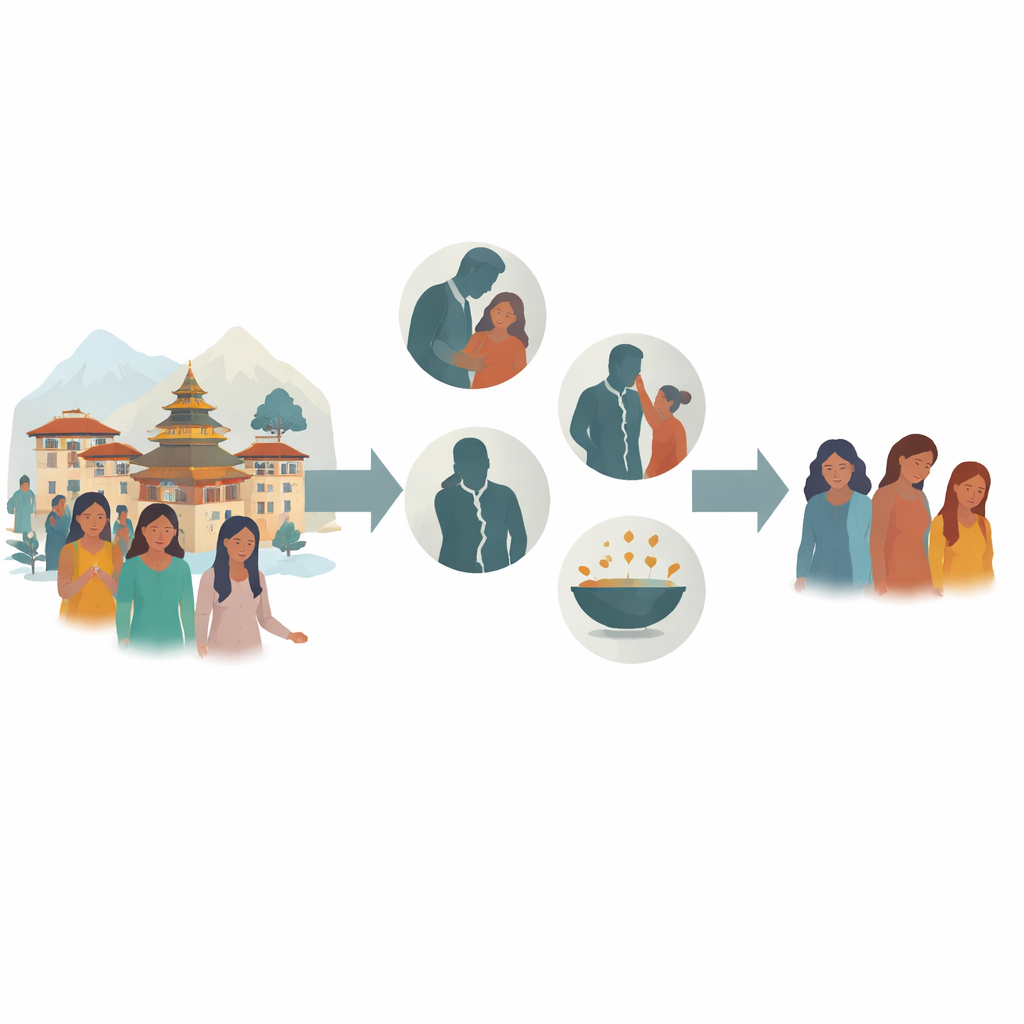
How big a share of illness can be linked to these harms
To move beyond simply listing risk factors, the researchers used a technique called the population attributable fraction. In plain terms, this estimates the share of depression or anxiety that might never occur if a particular harmful exposure could be completely prevented, assuming the link is truly cause-and-effect. Emotional abuse alone was linked to nearly one in five cases of depression and about one in ten cases of anxiety. Physical violence, sexual abuse, difficulties in everyday functioning, and not having reliable access to food each added further risk. Taken together, these five factors were associated with about 53% of depression cases and 36% of anxiety cases among reproductive-age women in Nepal—suggesting that a large portion of the mental health burden is tied to social and household adversity rather than individual weakness.
Ripple effects across families and generations
The study emphasizes that these hardships rarely occur alone. A woman facing violence may also struggle with limited mobility, caring for children, and getting enough to eat. Such overlapping pressures can make it much harder to cope and to seek help. The authors also highlight that violence against women harms not only the immediate victim: children who witness or experience violence are more likely to face mental health and behavior problems and to repeat patterns of violence later in life. In this way, unaddressed abuse can fuel cycles of distress, poor health, and poverty across generations. 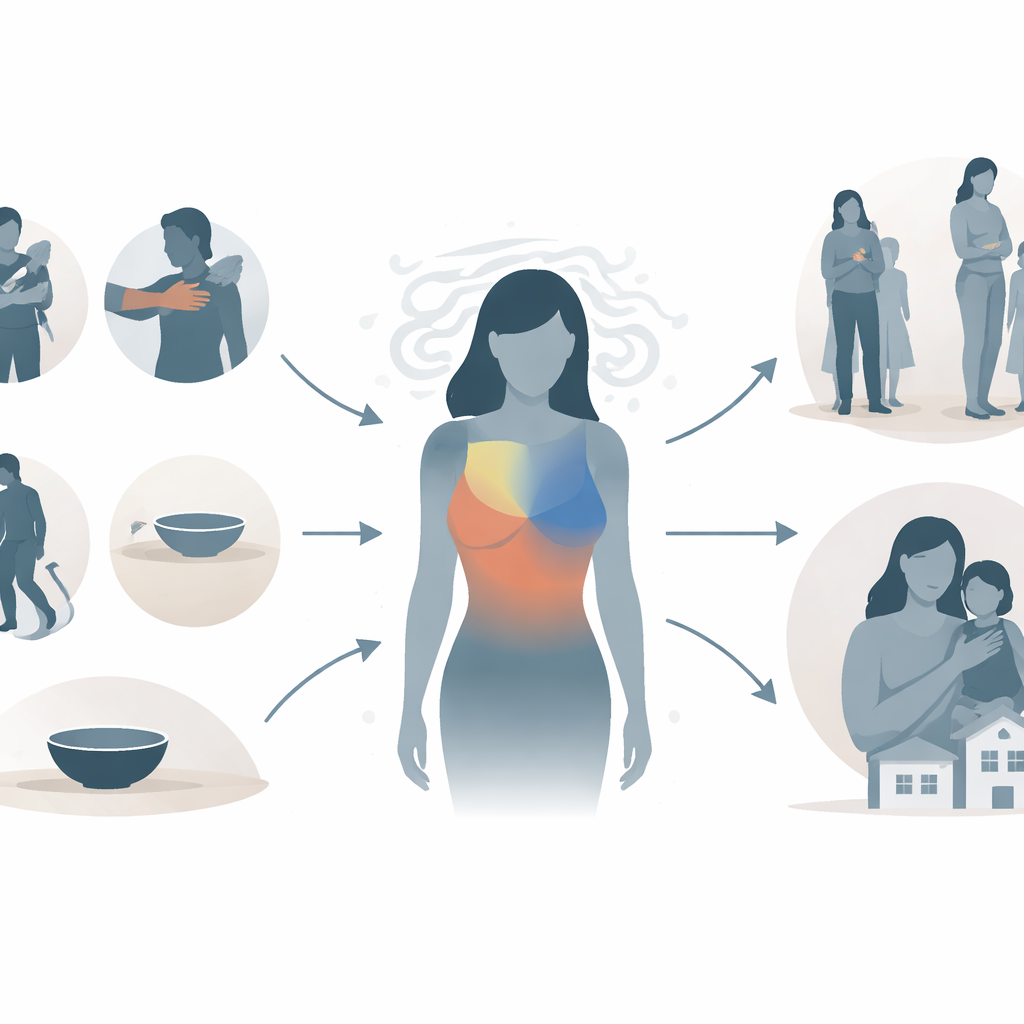
Turning evidence into action
For readers, the core message is straightforward: a large share of depression and anxiety among women in Nepal appears tied to preventable social harms—especially emotional, physical, and sexual abuse, along with hunger and serious functional difficulties. While this study cannot prove cause and effect on its own, it clearly points to where change could matter most. Efforts that reduce violence in the home, secure regular access to food, support women living with disability or long-term health problems, and involve men and communities in reshaping harmful norms could significantly lighten the mental health burden. In other words, protecting women’s safety, dignity, and basic needs is not just a human rights issue; it is one of the most powerful ways to safeguard mental wellbeing for women, their children, and society as a whole.
Citation: Giri, S., Ross, N., Kornhaber, R. et al. Population-attributable burden of modifiable risk factors for depression and anxiety among reproductive-age women in Nepal. Sci Rep 16, 13806 (2026). https://doi.org/10.1038/s41598-026-43908-8
Keywords: women's mental health, violence against women, food insecurity, depression and anxiety, Nepal public health