Clear Sky Science · en
Metabolomics study of the effects of zinc sulfate in minimal hepatic encephalopathy
Why this brain–liver link matters to you
People with long-term liver disease can develop subtle problems with memory, concentration, and sleep that often go unnoticed in clinic visits but can disrupt daily life. This early state, called minimal hepatic encephalopathy, affects driving, work performance, and quality of life, and can progress to more serious confusion. Doctors have long known that many of these patients are low in zinc, and that zinc pills can help their thinking, but they have not been sure why. This study uses a chemistry "fingerprint" of the brain to uncover how zinc reshapes brain chemistry in an animal model of this condition.
Hidden brain fog from a sick liver
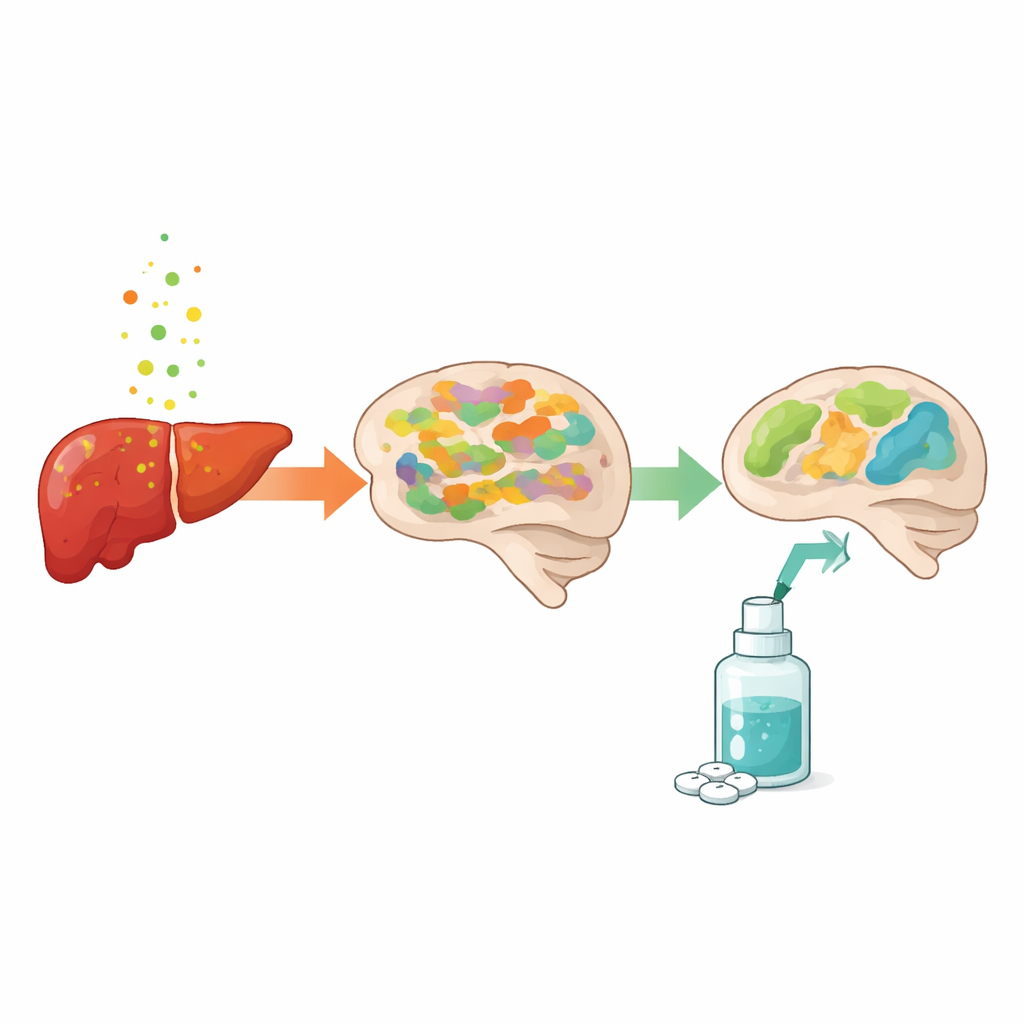
When the liver is damaged, it struggles to remove waste products from the blood, including ammonia produced during normal digestion and protein breakdown. Extra ammonia and other byproducts can reach the brain and quietly interfere with nerve function, leading to slowed thinking, poor attention, and sleep troubles even before obvious confusion appears. Many people with cirrhosis also lack enough zinc, a metal that helps dozens of enzymes work properly. Earlier small studies suggested that zinc supplements could sharpen thinking in these patients, but the exact changes inside the brain remained a black box. The authors set out to open that box using rats with a carefully created model of minimal hepatic encephalopathy.
Testing memory and brain chemistry in rats
The researchers divided 72 rats into three groups: healthy controls, rats with minimal hepatic encephalopathy, and rats with the same condition that also received zinc sulfate in their drinking water. To check thinking ability, they used the Morris water maze, a classic test in which rats must learn the hidden location of a small platform in a pool. Rats with liver-related brain problems took much longer to find the platform, mirroring the learning and memory issues seen in patients. Rats given zinc, however, improved noticeably and swam to the platform faster than untreated diseased rats. Blood tests confirmed that the diseased rats had high ammonia levels, and that zinc partly brought those levels down.
Peering into the brain’s chemical traffic
To understand what was happening inside the brain, the team focused on the striatum, a deep region involved in movement and learning. They used a technique called proton nuclear magnetic resonance spectroscopy, which acts like a scanner for small molecules, to measure 47 different chemicals in this region. Comparing the three groups revealed a chemical signature of minimal hepatic encephalopathy: higher levels of lactate and alanine, which signal stressed energy production, and increased glutamine and glutamate, which are closely tied to ammonia handling and nerve signaling. At the same time, key building-block amino acids such as leucine and isoleucine were lower, suggesting that the brain’s fuel and protein balance was off.
How zinc nudges the brain back toward balance
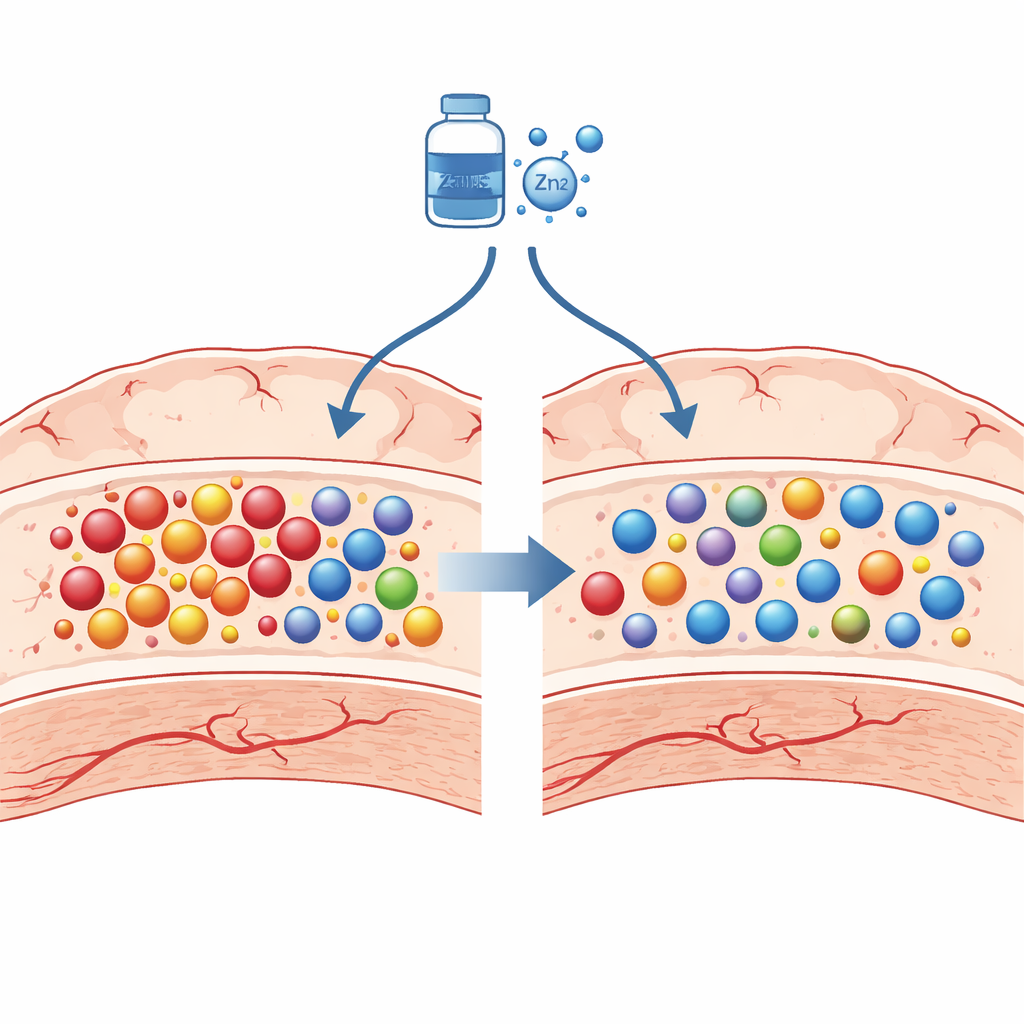
Zinc supplementation shifted many of these disturbed chemicals back toward normal. Lactate and alanine fell, hinting that brain cells were relying less on emergency, inefficient energy pathways and more on healthier energy production. Glutamine and glutamate also moved toward control levels, consistent with better handling of ammonia and reduced stress on the support cells that help clear it. Levels of branched-chain amino acids rose, pointing to a partial repair of the brain’s nitrogen and protein metabolism. When the researchers mapped these shifts onto known chemical routes in cells, the most affected pathways involved sugar breakdown, the major energy cycle inside mitochondria, and the processing of glutamine, glutamate, and branched-chain amino acids.
What this means for patients and future care
Taken together, the findings suggest that zinc does more than nudge blood test numbers; it helps restore the brain’s internal chemistry in the setting of liver disease. By improving how brain cells handle energy and nitrogen waste, zinc supplementation eased memory problems in rats with minimal hepatic encephalopathy and normalized several key metabolic pathways. While this work was done in animals and has limitations, it strengthens the case for zinc as part of a broader strategy to protect the brain in chronic liver disease and may guide more precise treatments in people in the future.
Citation: Zhang, T., Chen, Q. Metabolomics study of the effects of zinc sulfate in minimal hepatic encephalopathy. Sci Rep 16, 13786 (2026). https://doi.org/10.1038/s41598-026-43902-0
Keywords: minimal hepatic encephalopathy, zinc supplementation, brain metabolism, liver disease, ammonia toxicity