Clear Sky Science · en
The use of fish diversity and abundance as environmental indicators in a mining region in Brazilian Amazonia
Why Fish Can Warn Us About Hidden Damage
The remote rivers of the Brazilian Amazon might seem far removed from mining pits and heavy machines, yet the fish living there quietly record what is happening to their world. This study asks a simple but powerful question: can changes in fish communities reveal the subtle, long‑term impacts of large mining operations on freshwater ecosystems, even when the water still looks clear and full of life to us?
A Region Rich in Life and Heavy Industry
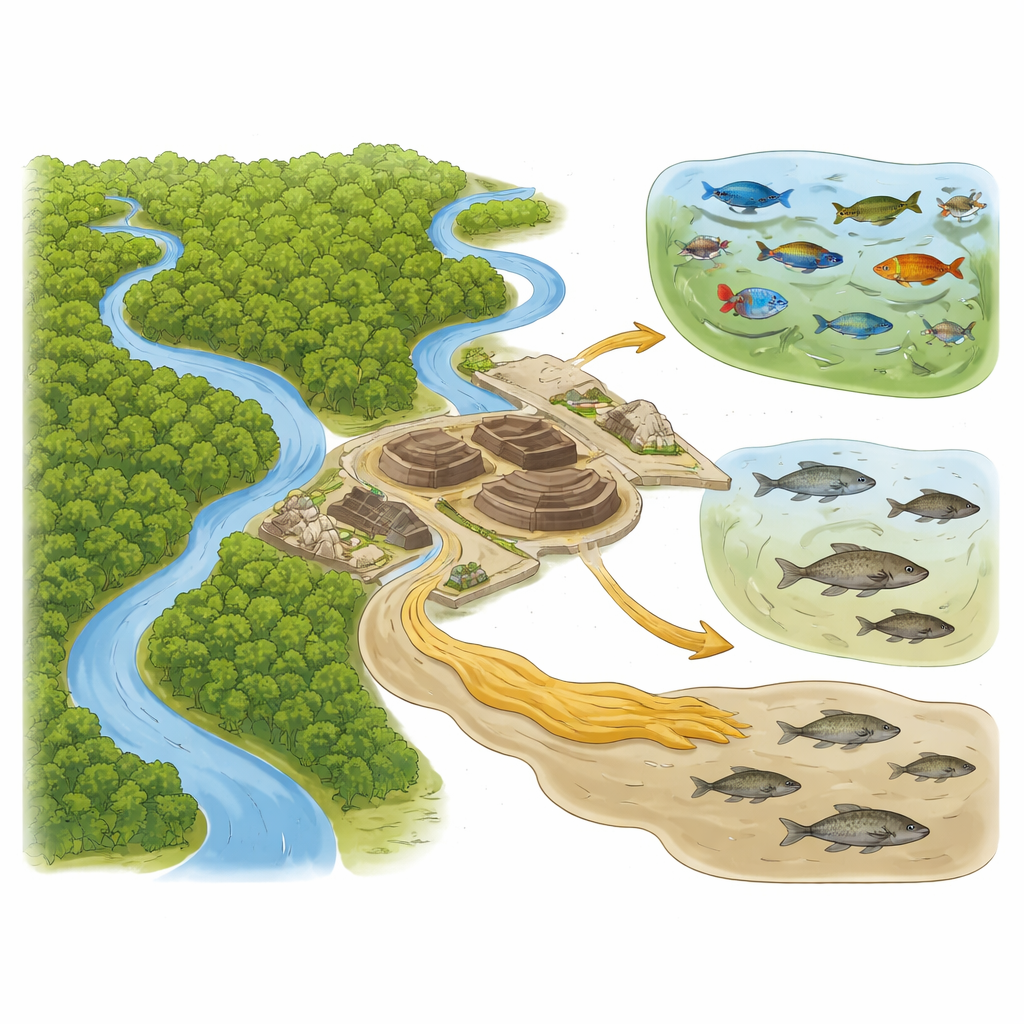
The research took place in the Carajás Mineral Province, one of the most important mining regions in the Amazon, where forests, protected areas, and open‑pit mines sit side by side. Two neighboring river systems, the Itacaiúnas and Parauapebas basins, supply water and habitat for a huge variety of fish. At the same time, they receive runoff from legal and illegal mines, as well as the effects of deforestation and nearby towns. Because these rivers also cross protected areas meant to safeguard biodiversity, understanding how mining may be altering aquatic life is critical for both conservation and local communities.
How Scientists Used Fish as Living Sensors
To probe these impacts, the team compared “control” sites away from mining with “impacted” sites near mining areas in each basin. They sampled four points in each basin—two control and two impacted—during both the rainy and dry seasons. Using standardized gillnet fishing over 12‑hour periods, they captured and identified 766 individual fish from 59 species. At the same time, they measured water conditions such as temperature, salinity, and electrical conductivity. Rather than relying on a single metric, they examined overall fish numbers, how many species were present at each site, how different the species lists were between sites, and which particular species tended to show up under specific conditions.
What the Fish Revealed About Seasons and Mining
The most obvious pattern the researchers found was seasonal. During the rainy season, when rivers rise and spread into floodplains, both the total number of fish and the number of species increased. Many fish take advantage of the temporary expansion of habitat and food, moving into new areas but not necessarily becoming tied to any one spot. In contrast, a handful of species stood out as “indicator” fish for the dry season, when water levels are low and habitats are more isolated. These species included robust herbivores and bottom‑dwellers that can tolerate warmer, quieter, and sometimes poorer‑quality water, and that seem to thrive when conditions are tougher.
Subtle Differences, Not a Simple Collapse
Contrary to expectations, sites near mining operations did not show a simple drop in fish numbers or species counts compared with control areas. Abundance and basic richness were broadly similar between impacted and less‑impacted stretches, and between the two river basins. However, a closer look revealed more nuanced signals. The Parauapebas basin showed higher turnover in species from place to place, suggesting a less stable community. Certain fish emerged as indicators of particular combinations of basin, season, and site type, hinting that some species cope well with disturbed conditions while others avoid them. Statistical analysis also linked changes in fish abundance to shifts in temperature, salinity, and conductivity, variables that are often influenced by mining runoff and altered flow regimes.
Hidden Flexibility and Its Limits
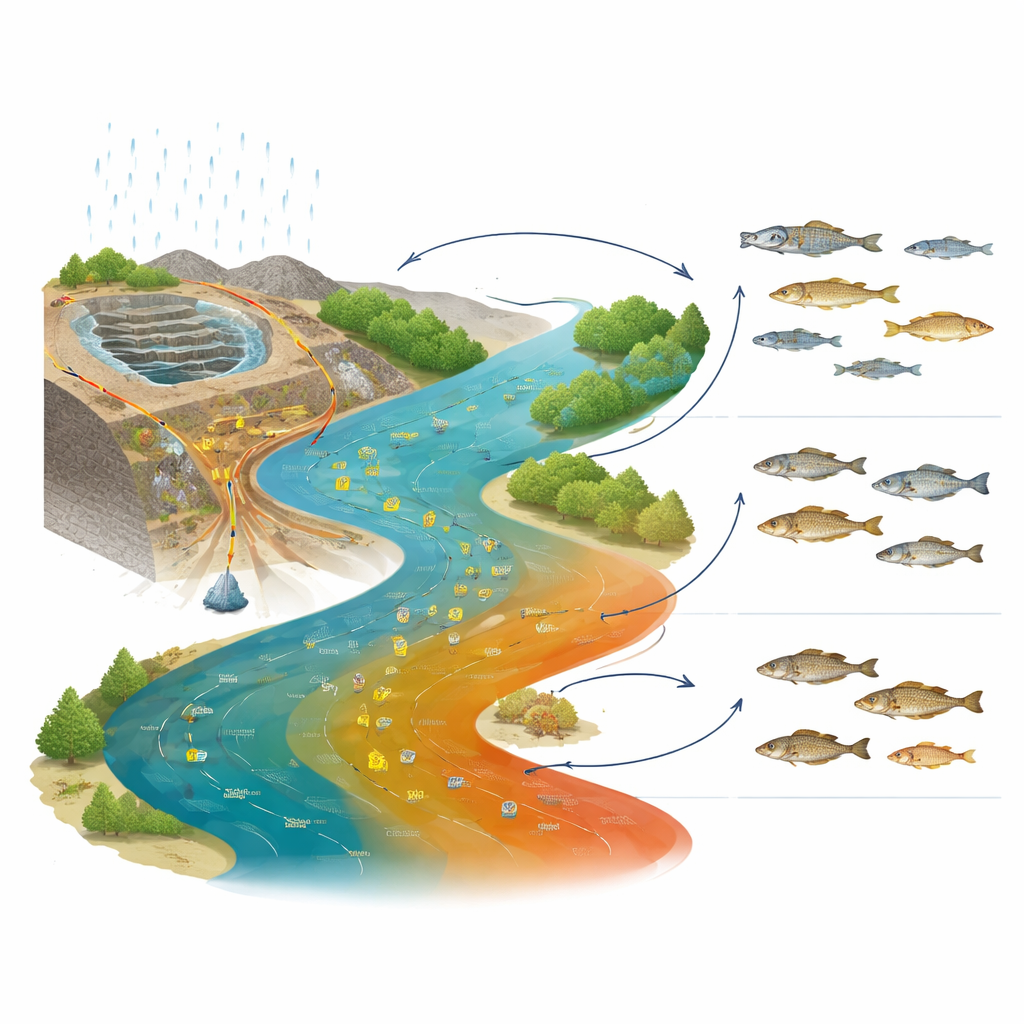
These patterns led the authors to propose that many of the fish in this region display strong “flexibility” in how they respond to changing environments. By adjusting their physiology, behavior, and habitat use, they can survive in waters that are warmer, more mineral‑rich, or otherwise altered by mining. This flexibility can make ecosystems appear healthy in the short term, because total fish numbers and species counts remain high even as more sensitive species quietly disappear. Over time, this can mask the erosion of key functions and reduce the system’s ability to recover from future shocks, such as extreme floods, new pollution events, or further habitat loss.
Why Continuous Watching Matters
For a layperson, the key message is that a river can look full of fish and still be in trouble. In Carajás, mining has not yet produced an obvious collapse of fish life, but the study detects early warning signs: communities that are becoming more uniform, increasing dominance of hardy generalists, and clear links between altered water quality and which species prevail. The authors argue that long‑term, integrated monitoring of fish and water conditions—ideally supported and funded as a requirement for mining licenses—is essential. Only by tracking these living indicators over many years can we tell whether current resilience is genuine health, or a temporary disguise for deeper ecological damage.
Citation: de Oliveira, C.A.C.R., Morais, K.S., de Oliveira, J.P.S. et al. The use of fish diversity and abundance as environmental indicators in a mining region in Brazilian Amazonia. Sci Rep 16, 13208 (2026). https://doi.org/10.1038/s41598-026-43889-8
Keywords: Amazon freshwater fish, mining impacts, biodiversity monitoring, river ecosystems, environmental indicators