Clear Sky Science · en
Modulation of resting macrophage activity via low-level laser therapy (LLLT) and α-lipoic acid: an in vitro study using a PCL-based biomaterial
Why calming guardian cells matters for healing
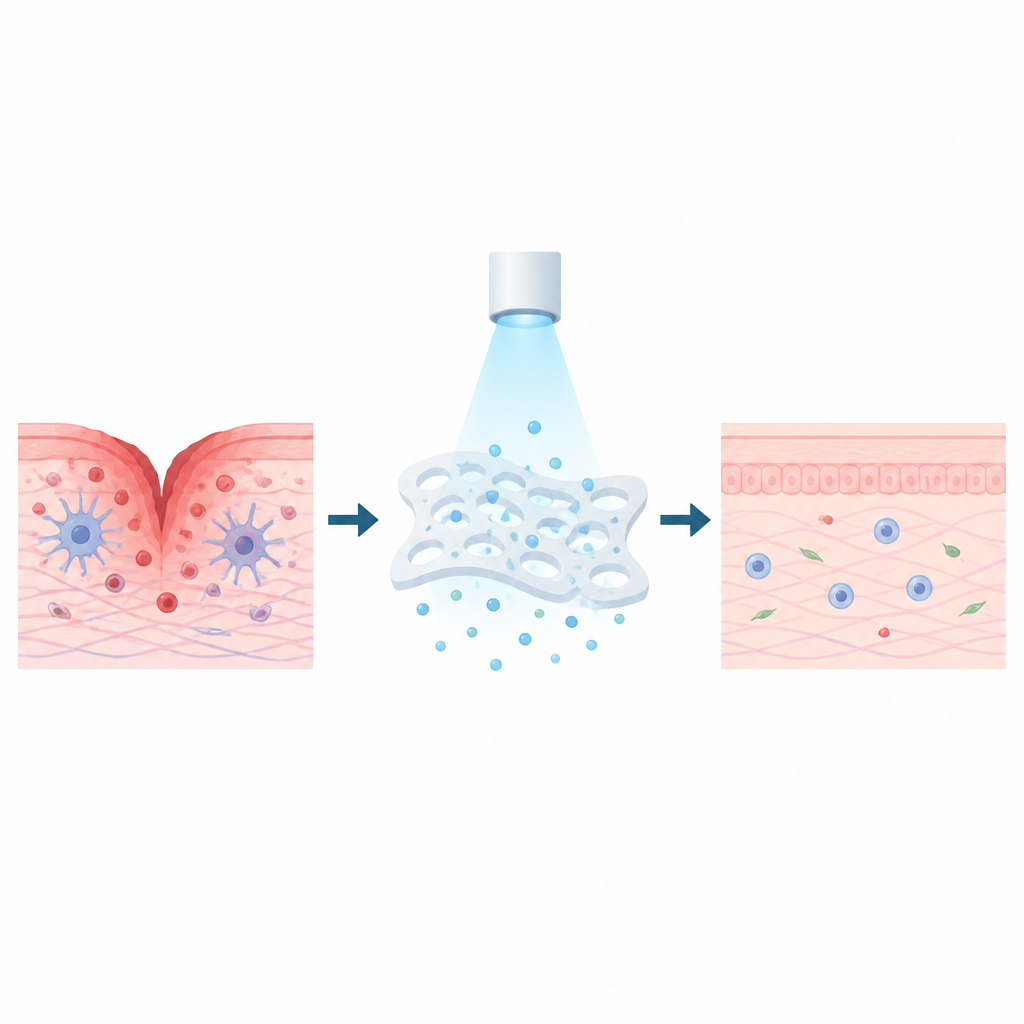
When we cut our skin or damage an organ, the body’s own guardian cells rush in to defend and repair. These cells, called macrophages, can either fuel inflammation or help rebuild tissue. The study described here explores a gentle way to guide these cells toward repair rather than prolonged irritation, using a combination of soft laser light and a common antioxidant carried in a biodegradable plastic film.
A gentle push for the body’s clean-up crew
Macrophages sit quietly in almost every tissue, ready to react to injury or infection. Once activated, they can take on a more aggressive, inflammatory role or a calmer, rebuilding role. Too much inflammation can stall healing and lead to chronic wounds. The researchers wanted to know whether two tools often used in medicine – low-level laser therapy and alpha-lipoic acid, an antioxidant used as a supplement – could gently tune resting macrophages toward a more repair-friendly state.
A smart film that slowly feeds protective molecules
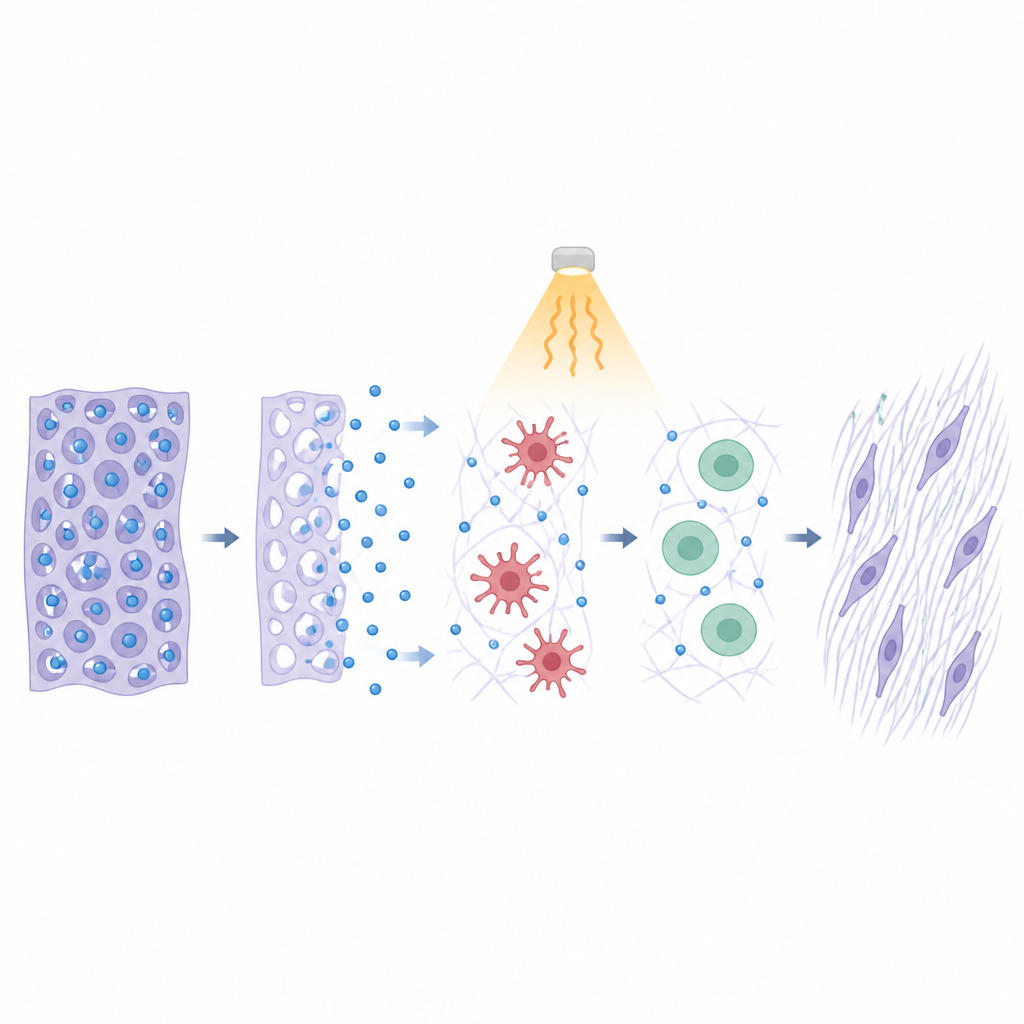
To test this idea, the team built thin, porous films from polycaprolactone, a biodegradable plastic already explored for medical implants and dressings. They mixed a small amount of alpha-lipoic acid into the plastic before forming the films, creating a material that slowly released the antioxidant over several days. Detailed physical tests showed that adding the antioxidant made the film slightly less crystalline and more porous on the surface, which supported an initial burst of release followed by a slower trickle. Importantly, the material remained stable and suitable as a carrier for future medical uses.
How light and antioxidant shape cell behavior
Mouse macrophage cells were grown directly on these films under four conditions: plain plastic, plastic plus laser light, plastic plus alpha-lipoic acid, and plastic with both antioxidant and light. The laser used near-infrared light similar to that already applied in clinics for pain relief and wound care, at settings chosen from earlier work to be safe for cells. On its own, the light did not harm the cells but subtly changed their messaging, including a reduction in a signal that normally calls more immune cells to the area. The antioxidant-containing films increased cell survival and reduced signs of cell damage, while lowering release of nitric oxide and a key inflammatory messenger, suggesting a calmer, less hostile environment.
Fine-tuning the hidden work of repair
Beyond survival and signaling, the researchers examined how the cells handled reactive molecules and enzymes that quietly reshape the tissue scaffold during healing. Alpha-lipoic acid improved the cells’ antioxidant defenses without boosting harmful oxidative activity, while both treatments influenced enzymes that break down and rebuild the surrounding matrix. When light and antioxidant were combined, macrophages showed higher early viability, lower levels of a chemokine that attracts more inflammatory cells, and a coordinated shift in several matrix-remodeling enzymes. Taken together, these patterns point toward a state that limits unnecessary inflammation while keeping the machinery of tissue rebuilding active.
What this could mean for future wound care
In simple terms, this study suggests that pairing a gentle light treatment with a slow-release antioxidant film can nudge guardian cells away from “keep fighting” and closer to “start repairing.” While the work was done in a dish rather than in animals or patients, it highlights a promising strategy: designing smart dressings or implants that both deliver protective molecules and respond well to light-based therapies. Such combinations could one day help create a calmer, more supportive environment for healing stubborn wounds and damaged tissues.
Citation: Ścisłowska-Czarnecka, A., Matuła, A., Stodolak-Zych, E. et al. Modulation of resting macrophage activity via low-level laser therapy (LLLT) and α-lipoic acid: an in vitro study using a PCL-based biomaterial. Sci Rep 16, 15556 (2026). https://doi.org/10.1038/s41598-026-43877-y
Keywords: macrophages, low-level laser therapy, alpha-lipoic acid, biodegradable biomaterials, wound healing