Clear Sky Science · en
Proteomic analysis reveals selenium-induced metabolic alterations in forest-grown ginseng
Why this forest herb and a trace mineral matter to you
Ginseng is best known as a tonic root that shows up in teas, capsules, and traditional remedies promising more energy, sharper thinking, and better overall balance. This study looks at a special kind of forest-grown ginseng that naturally stores high levels of selenium, a trace mineral our bodies need in tiny amounts for immune defense and protection against cellular damage. By peering into the protein machinery inside ginseng roots, the researchers show how added selenium reshapes the plant’s metabolism, potentially boosting both plant vigor in the forest and the nutritional value of the roots that end up on our tables.
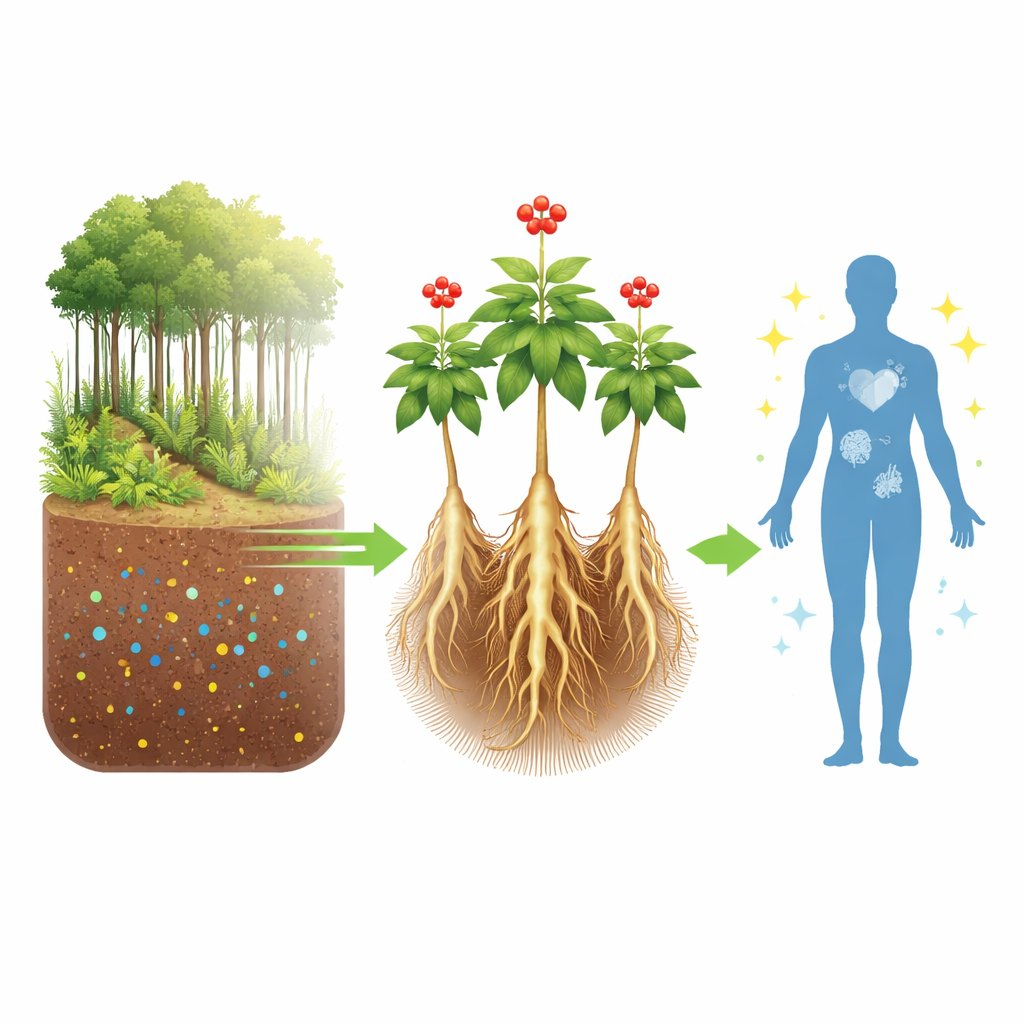
Growing ginseng in a selenium-rich forest bed
The team worked at a ginseng plantation in a forested area of northeastern China, where they grew more than a thousand ginseng plants for eight years. For three of those years, one group of plants received a carefully chosen dose of selenium fertilizer, while another group received only water. After the growing period, the scientists harvested mature roots from both groups, making sure they were similar in size and weight so that any differences could be traced to selenium, not to growth stage. Chemical tests showed that selenium-treated roots accumulated about three times more selenium than untreated ones, yet still stayed within food safety guidelines for so-called selenium-enriched products.
Listening in on the root’s internal machinery
To see what this extra selenium was doing inside the plant, the researchers used state-of-the-art proteomics, a technique that measures thousands of different proteins at once. They chopped and ground the roots in liquid nitrogen, extracted the proteins, broke them into small fragments, and tagged them with molecular barcodes so a mass spectrometer could sort and count them. This approach identified over 7,000 proteins in forest-grown ginseng and revealed 371 that changed noticeably when selenium was added: 132 proteins increased and 239 decreased. These proteins touched many basic jobs in the cell, from how energy is made to how the cell defends itself against stress.
How selenium rewires food, fuel, and defense
Many of the altered proteins were connected to metabolism—the web of reactions that turns water, minerals, and sunlight into living tissue. Key steps in how the plant takes up selenium and builds it into amino acids and protective compounds were strongly boosted. Enzymes that convert incoming selenium into special building blocks, and then into selenium-rich versions of familiar molecules such as methionine and glutathione, were all more abundant. Other proteins tied to the use of nitrogen, phosphorus, and potassium—the main nutrients that drive plant growth—also increased, including transporters that pull these nutrients into cells. At the same time, some proteins linked to routine growth pathways were dialed down, suggesting that the plant shifts resources toward a more defense-oriented, high-value state when selenium is present.

Strengthening the root’s shield against stress
Another major effect showed up in the plant’s antioxidant system, its frontline shield against harmful reactive oxygen species that build up under drought, salinity, or other stresses. Selenium-fed ginseng roots produced more of several protective enzymes, such as superoxide dismutase, catalase, and peroxidases, all of which help neutralize damaging molecules before they can tear holes in membranes or disrupt vital reactions. Proteins involved in cellular energy production, including proton pumps that drive nutrient uptake and maintain internal balance, were also more active. A network analysis of how these proteins interact suggested that a handful of highly connected enzymes sit at the center of this selenium-driven adjustment, coordinating changes across different pathways.
What this means for ginseng lovers and growers
In simple terms, adding the right amount of selenium helped forest-grown ginseng roots pack in more of this valuable mineral while tuning their internal machinery toward stronger nutrient use, better energy management, and heightened self-protection. For consumers, such roots may offer a richer mix of selenium-linked compounds that contribute to ginseng’s reputed health effects, though human studies would be needed to confirm specific benefits. For growers, the work provides a molecular roadmap for how selenium fertilizer can safely enhance both yield and quality, and it highlights protein targets that future breeding or cultivation strategies might optimize. Overall, the study shows that a trace mineral in the soil can quietly but profoundly reshape a traditional medicinal plant from the inside out.
Citation: Wang, J., Lv, M. & Wang, S. Proteomic analysis reveals selenium-induced metabolic alterations in forest-grown ginseng. Sci Rep 16, 13813 (2026). https://doi.org/10.1038/s41598-026-43862-5
Keywords: selenium-enriched ginseng, plant nutrition, antioxidant defense, proteomics, medicinal plants