Clear Sky Science · en
Acute muscle damage responses in elbow flexors following eccentric quasi-isometric exercise
Why gentler strength training matters
Many people want stronger arms but worry about the soreness and strain that often follow hard workouts. This study looked at a newer way of lifting weights for the biceps that may stress muscles less, even when the effort feels just as tough. By comparing two styles of lowering a dumbbell, the researchers explored whether you can get a strong training stimulus while cutting down on short‑term muscle damage and discomfort.
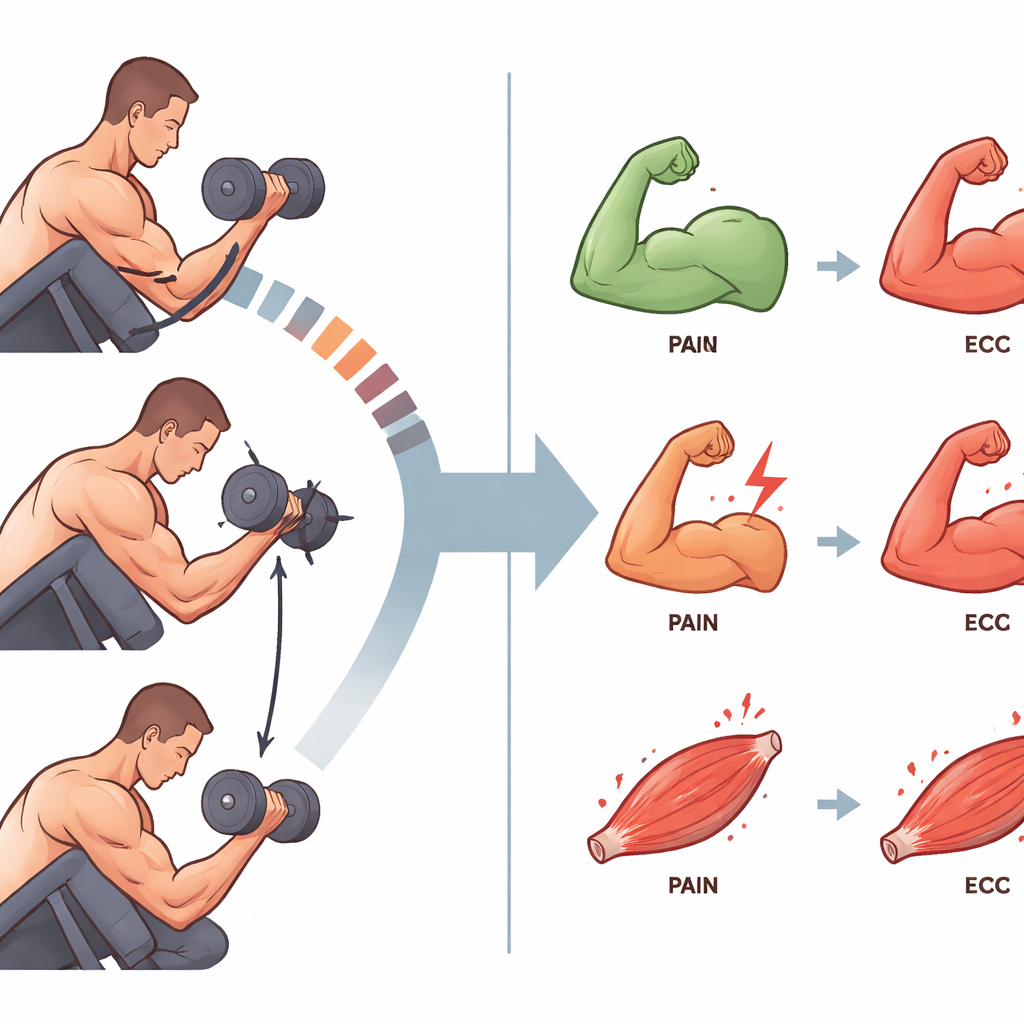
Two ways to lower a weight
When you curl a dumbbell and then slowly lower it, your biceps perform what is called an eccentric contraction. This traditional method, used in the study, involved repeatedly lowering the weight through the full range of motion at a steady pace until the participant could no longer keep the rhythm. The new method, called eccentric quasi‑isometric, looks similar from the outside but feels quite different. Here, each repetition began with holding the elbow at about a right angle and resisting the dumbbell as firmly as possible, trying not to let it move. As fatigue set in and the arm could no longer hold steady, the elbow slowly straightened while the person continued to fight the downward pull all the way to full extension. Each of these long, continuous efforts counted as a single repetition.
Putting the methods to the test
Thirty healthy young men who had not been lifting regularly were randomly assigned to one of the two approaches. Everyone trained one arm on a preacher curl bench using a weight equal to 70 percent of the heaviest load they could lift once. Both groups did five sets to the point where they simply could not continue. The researchers tracked how long the muscle was under tension in each set and measured several signs of muscle damage and soreness before exercise, right after, and over the next week. These included arm strength in a maximal push against a machine, elbow flexibility, arm circumference as a sign of swelling, sensitivity to pressure along different parts of the biceps, and blood levels of two proteins—creatine kinase and myoglobin—that leak out of damaged muscle.
Longer effort, but milder fallout
The new holding‑then‑lowering style kept the biceps working far longer. Across the five sets, time under tension was more than three times greater than with traditional lowering. Despite this, the usual signs of damage were consistently smaller. People in the standard eccentric group lost more strength in the days after exercise, had a bigger drop in elbow range of motion, and showed greater arm swelling. Their blood tests told a similar story: creatine kinase and myoglobin rose sharply, peaking about three days after the workout at levels many times higher than those seen with the quasi‑isometric approach. In contrast, the group using the new method showed little or no meaningful rise in these markers, and most of their measures returned to normal within a week.
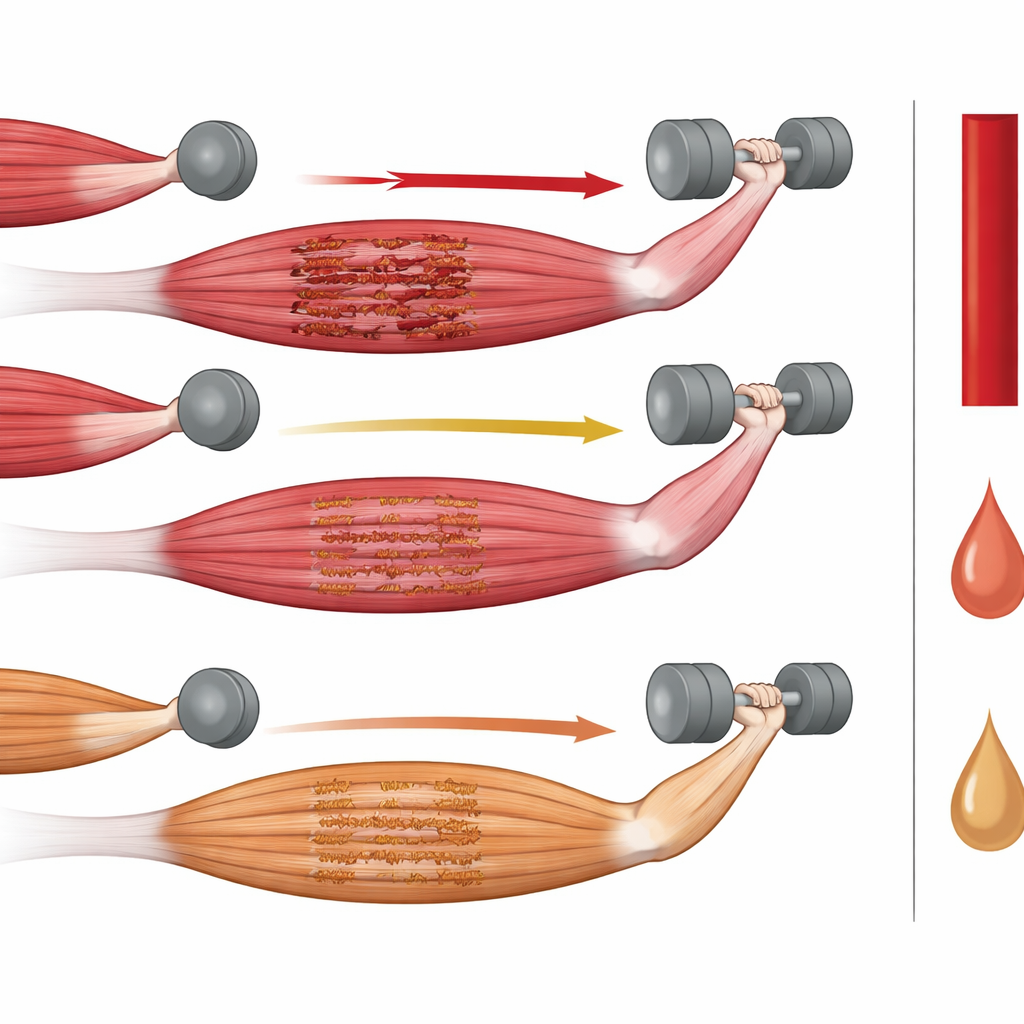
How the gentler method may protect muscle
The findings suggest that how a muscle is loaded may matter more than how long it works. Traditional eccentric lowering uses repeated movements at a moderate speed, which can place high, sudden strain on individual fibers—especially the fast‑twitch fibers that are powerful but fragile. The quasi‑isometric approach, by contrast, combines a steady hold with an extremely slow lengthening. This likely spreads the effort across more fibers over time and avoids sharp spikes in force. The study also found less tenderness near the lower part of the biceps with the new method, hinting that it may reduce stress in regions that are usually more vulnerable to strain.
What this means for everyday training
For people starting strength training, returning from injury, or simply wishing to avoid days of soreness, this work offers encouraging news. A style of exercise that feels demanding and keeps the muscle working longer does not automatically cause more damage. The eccentric quasi‑isometric method appears to deliver a solid training stimulus for the elbow flexors while causing far less short‑term disruption than traditional eccentric lowering. Although the study looked only at a single workout in young men and did not test long‑term muscle growth, it points to a promising way to make upper‑body resistance training safer and more comfortable, especially in early or rehabilitation phases.
Citation: Lin, YC., Chiang, TL., Chan, SH. et al. Acute muscle damage responses in elbow flexors following eccentric quasi-isometric exercise. Sci Rep 16, 13420 (2026). https://doi.org/10.1038/s41598-026-43855-4
Keywords: eccentric training, biceps exercise, muscle soreness, low-damage strength training, rehabilitation fitness