Clear Sky Science · en
Synthesis of some novel coumarin-based heterocycles, elucidation of their antifungal behavior, molecular docking and computational studies
New Helpers for Protecting Plants
Fungi that attack crops can ruin harvests and threaten food supplies, and existing antifungal treatments are losing ground as resistance spreads. This study explores a clever way to build new antifungal molecules from a natural chemical family called coumarins, which already appears in many medicines. By crafting and testing a small library of related compounds, and then probing them with computer models, the researchers look for patterns that could speed up the search for safer, more effective protectants for plants and possibly other uses.
A Natural Starting Point
Coumarins are ring-shaped molecules found in many plants and are already part of well-known drugs for blood thinning, infection control, and other conditions. Their flat, compact structure slips neatly into pockets on the surfaces of proteins inside cells, allowing them to switch biological processes on or off. The team combined this coumarin framework with another highly adaptable building block called cyanoacetohydrazide. This second piece contains several reactive spots, making it an ideal “hub” for attaching extra rings and side chains that could boost antifungal power.
Building a Small Chemical Family
The chemists first prepared a key intermediate, a coumarin linked to cyanoacetohydrazide and capped with a short butyl chain. From this hub, they carried out a series of reactions under relatively mild conditions to generate a variety of new ring systems fused to the original coumarin. These included structures containing nitrogen and sulfur atoms and tightly locked frameworks that make the molecules more rigid. Each product was carefully checked using standard spectroscopic tools to confirm its structure and purity. The result was a focused set of molecules that all shared the same core but differed in their surrounding rings and attachments, allowing subtle comparisons of how shape and electronics influence performance.
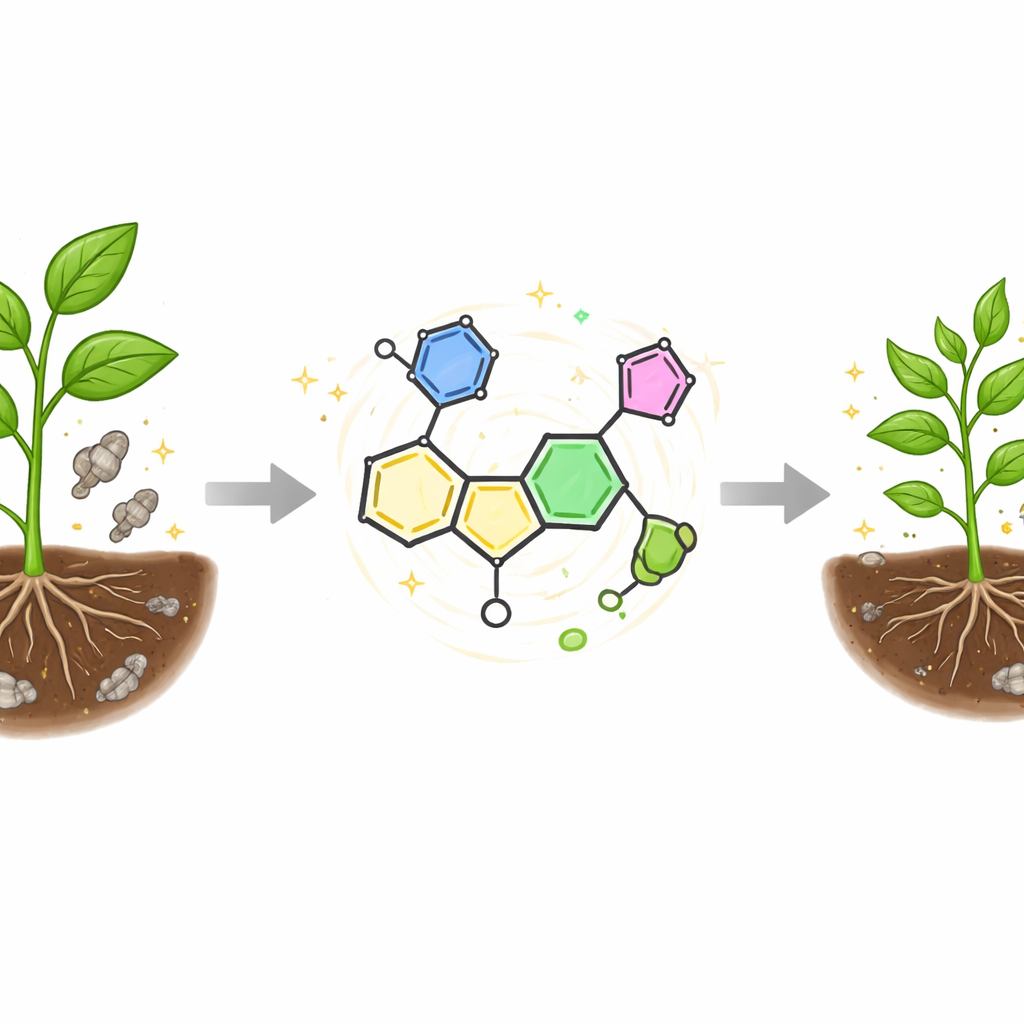
Putting the Molecules to the Test
A subset of the new compounds was tested against five fungi that cause serious diseases in plants, including species of Fusarium, Alternaria, and Rhizoctonia. Several candidates noticeably slowed fungal growth, and two relatively simple members of the series (labeled 2 and 3 in the study) showed the lowest concentrations needed to cut growth in half. Another, more complex, fused-ring compound (compound 8) did not act at the lowest doses but blocked growth of the widest range of fungal species when its dose was increased, suggesting broad-spectrum potential. These differences hint that both overall shape and how easily each molecule moves through fungal cells matter for real-world performance.
Probing How They Work
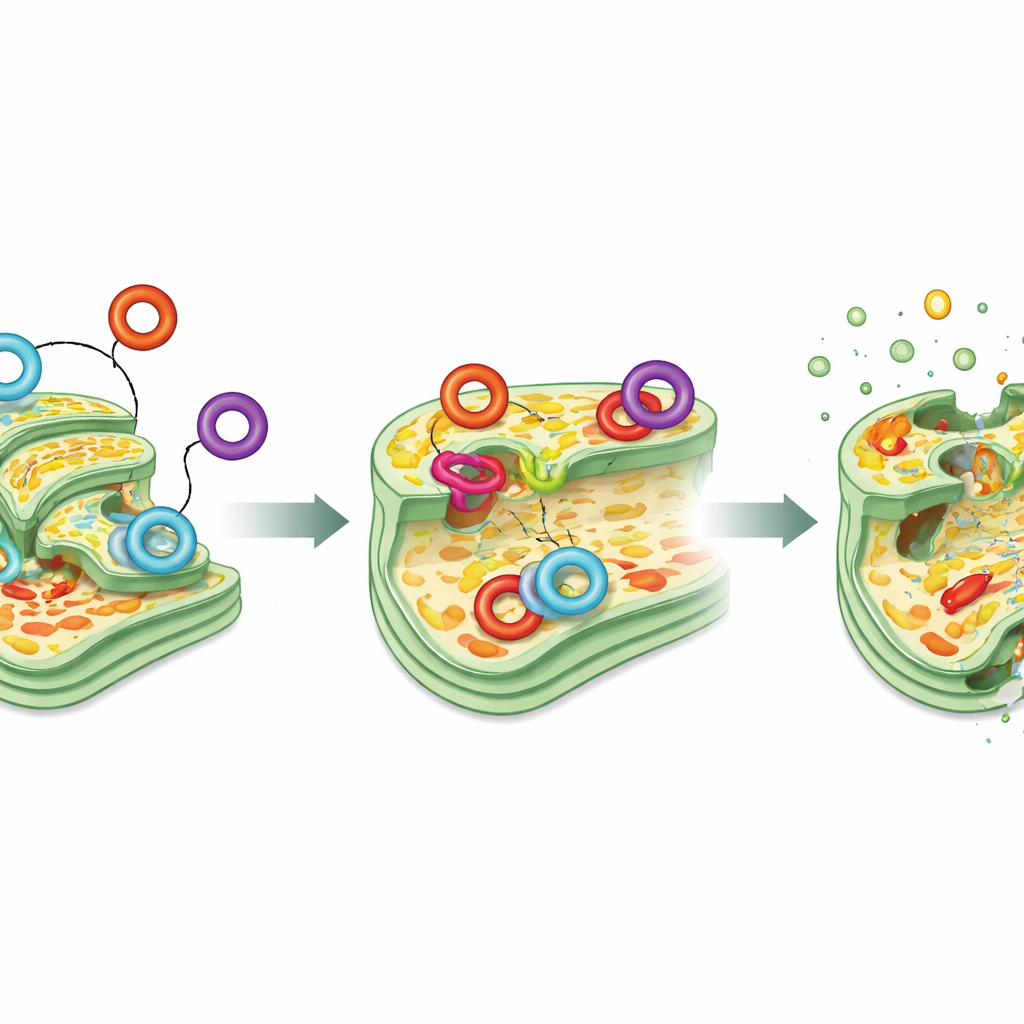
To see how these molecules might act inside fungal cells, the researchers used molecular docking, a computer technique that fits virtual versions of the compounds into three-dimensional models of key fungal enzymes. They examined targets involved in building the cell wall and making vital sterols. Compounds 6, 7, and especially 8 showed strong, multi-target binding in these simulations, in line with their wide-ranging activity in the lab. The team also used quantum chemical calculations to describe how each molecule handles electrons—properties such as the energy gap between filled and empty orbitals, the softness or flexibility of its electron cloud, and its overall polarity. Compounds with smaller energy gaps and higher softness tended to show better antifungal behavior, suggesting that molecules that can more readily share or accept electrons form stronger contacts with their targets.
What This Means for Future Treatments
Taken together, the synthesis, biological testing, docking, and electronic calculations converge on compound 8 as a particularly promising lead: it binds tightly to several fungal enzymes, displays broad activity across multiple crop pathogens, and has electronic features associated with strong interactions in cells. While it is not yet as potent as existing drugs and still needs optimization for potency, safety, and delivery, the study provides a clear roadmap. By fine-tuning coumarin-based frameworks and using computers to predict which tweaks will matter most, chemists can more efficiently design the next generation of antifungal agents to help safeguard crops and, potentially, address other fungal threats.
Citation: Ismail, M.F., Salem, M.A.I., Marzouk, M.I. et al. Synthesis of some novel coumarin-based heterocycles, elucidation of their antifungal behavior, molecular docking and computational studies. Sci Rep 16, 12185 (2026). https://doi.org/10.1038/s41598-026-43854-5
Keywords: coumarin antifungals, plant pathogenic fungi, heterocyclic chemistry, molecular docking, DFT calculations